
The Sun rises with a regularity that has shaped calendars, daily routines, and spiritual traditions for centuries. In Vedic astrology, Surya (the Sun) is traditionally associated with vitality, confidence, leadership, clarity, and personal discipline. These associations form part of the cultural and astrological context in which Surya Yantras are used.
A Pocket Numerical Surya Yantra offers a portable way to incorporate a traditional solar symbol into a personal devotional routine. Rather than replacing practical effort or discipline, it can serve as a reminder to pause, reflect, and maintain a consistent practice.
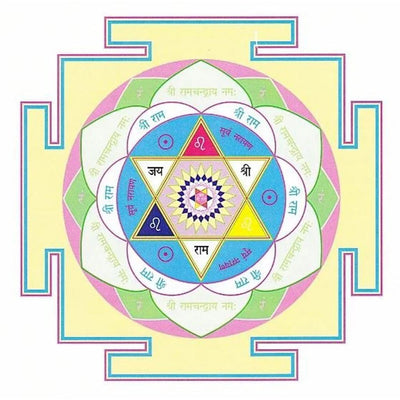
This guide explores the meaning of a Surya Yantra, the traditional significance of numerical designs, commonly used mantras, portable use, copper care, and considerations when comparing pocket-sized and larger yantras.
What Is a Surya Yantra?
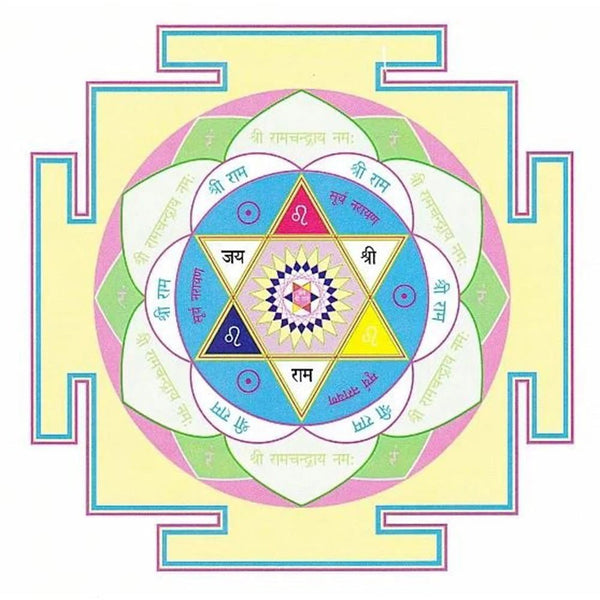
A yantra is a diagram used in some Hindu spiritual traditions as a focus for worship, meditation, and mantra recitation. Depending on the tradition, its design may include geometric shapes, circles, lotus petals, borders, or numerical arrangements.
A Surya Yantra is associated with Surya, the Sun deity. Within traditional Vedic astrological interpretations, Surya is linked with vitality, self-confidence, authority, clarity, and leadership. Devotional practices involving a Surya Yantra may include mantra recitation, prayer, and contemplation.
A yantra is not a substitute for action, nor should it be presented as a device that automatically produces success. For many practitioners, its value lies in its traditional symbolism and its role as a focus for a regular spiritual routine.
For a broader introduction, read the aDvaar Knowledge Hub article What Is a Yantra?.
Why Choose a Pocket Numerical Surya Yantra?
A larger yantra may be intended for a home altar or dedicated prayer space. A pocket-sized version prioritises portability and can be more convenient for people who travel, commute, or prefer a discreet devotional object.
The Pocket Numerical Surya Yantra is presented as a compact option for carrying in a wallet, purse, pouch, or travel bag. Check the current product listing to confirm its exact dimensions, material, finish, and intended use.
Understanding the numerical matrix
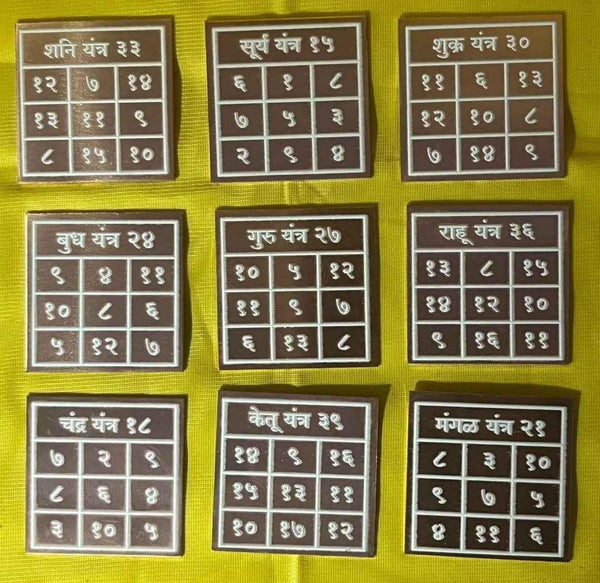
Some yantras use numerical grids rather than elaborate geometric arrangements. A magic square is a mathematical arrangement in which the numbers in each row and column, and usually the principal diagonals, have the same sum.
A well-known 3 × 3 magic square using the numbers 1 through 9 has a common sum of 15. This mathematical property can be checked independently. However, the exact layout and mathematical properties of a particular product must be verified from its design.
Numerical patterns also carry traditional interpretations in some spiritual systems. The association between a particular grid and a planet belongs to that traditional framework; it should not be confused with evidence that the grid produces a measurable physical or energetic effect.
Portability and everyday practice
A pocket yantra can accompany a person through a commute, workday, or journey. It may serve as a reminder to recite a mantra, take a quiet moment, or return attention to a chosen intention.
A larger yantra and a pocket yantra differ mainly in practical use, visibility, and placement. There is no established scientific measure that proves one size to be spiritually more effective than the other.
Traditional Associations and Benefits of Surya Yantra
In Vedic astrology, Surya is traditionally associated with several personal qualities and areas of life. Practitioners may use a Surya Yantra as part of a devotional routine connected with these themes.
Confidence and leadership
Surya is commonly associated with confidence, authority, responsibility, and leadership. Some practitioners use Surya-related worship as a way to reflect on these qualities and cultivate a disciplined daily routine.
Recognition and professional aspirations
Popular astrological interpretations connect Surya with authority figures, public roles, and recognition. A Surya Yantra may have devotional significance for people who identify with these traditional associations, but it cannot guarantee career advancement, favourable decisions, or recognition from employers or public authorities.
Traditional responses to challenging Sun placements
Within Jyotish, some practitioners interpret particular birth-chart placements as indicating a need for additional Surya-related worship. Practices may include mantra recitation, offerings of water to the rising Sun, or other rituals according to a person’s tradition.
These interpretations are part of astrology and religious practice, not scientifically established diagnoses or predictions.
A consistent morning routine
Some people incorporate Surya-related prayer into a morning routine. A regular time for quiet reflection can provide structure to the day, independently of any astrological interpretation.
The practical value of a routine should be distinguished from claims that a yantra changes planetary conditions or guarantees a particular result.
Who Might Prefer a Pocket Surya Yantra?
A portable format may suit people who want to keep a devotional object with them rather than maintain a fixed altar arrangement.
-
Frequent travellers and commuters: A small object may be easier to carry between home, work, and travel destinations.
-
Working professionals: It may serve as a discreet reminder to pause or reflect during the workday.
-
Students: Those who already follow Surya-related devotional practices may find a pocket format convenient during study or travel.
-
People developing a personal routine: A compact yantra may suit someone who prefers a simple, portable practice.
If you already have a dedicated prayer space and prefer a more visible object for worship or meditation, a larger Surya Yantra may be worth considering instead.
How to Use a Pocket Surya Yantra
Practices differ by family custom, teacher, and spiritual tradition. If your product includes specific instructions, consult those instructions and follow a routine appropriate to your beliefs.
1. Choose a clean place
For home worship, some practitioners place the yantra in a prayer room, home temple, meditation corner, or another clean and peaceful location. East-facing placement is commonly recommended in popular Surya worship guidance, although practices vary.
For daily carry, use a clean compartment or protective pouch. Follow the product’s material and care instructions.
2. Recite a Surya mantra
A commonly used mantra is:
Om Suryaya Namah
Other mantras used in Surya-related devotional practice include:
Om Hram Hreem Hraum Sah Suryaya Namah
Om Ghrini Suryaya Namah
Pronunciation, repetition counts, and instructions can differ between traditions. If you follow a specific lineage, use its guidance, especially for practices that your tradition recommends learning from a qualified teacher.
3. Establish a manageable routine
Some practitioners choose Sunday or the early morning for Surya-related worship. Others include mantra recitation in a daily routine.
You may begin with a short period of quiet prayer or reflection. There is no need to treat a particular repetition count or duration as a guarantee of spiritual, professional, or personal results.
4. Understand consecration practices
Formal consecration is often referred to as Prana Pratishtha. Procedures vary, and some traditions recommend guidance from a qualified priest or teacher.
Do not assume that a product is pre-consecrated or has undergone a particular ritual unless the seller explicitly documents that claim. A simple personal devotional routine and a formal consecration are not necessarily the same practice.
Placement and Daily Carry
For home use, traditional guidance often recommends a clean, peaceful setting. Some practitioners prefer an east-facing position for Surya worship.
For a pocket yantra:
-
Keep it in a clean, dedicated compartment.
-
Use a protective pouch if it may rub against coins, keys, or other objects.
-
Avoid bending, scratching, or exposing the object to unnecessary moisture.
-
Follow the product’s care instructions rather than assuming that every finish can be rinsed or polished.
Placement customs vary by tradition. These recommendations should be understood as customary devotional guidance rather than scientifically required conditions.
Care and Maintenance of a Copper Yantra
Copper is a workable metal that can develop a natural patina over time. The correct care method depends on the product’s material, finish, and construction.
Before cleaning your yantra, check the seller’s instructions. If the product guidance permits water cleaning, use clean water and dry it gently with a soft cloth. Avoid harsh chemicals, abrasive materials, and unnecessary immersion unless the product instructions explicitly allow them.
Store the yantra in a dry place and protect it from scratches or bending. Do not assume that a surface colour change automatically indicates that a product is genuine or counterfeit; material authenticity requires appropriate evidence.
For more background, see aDvaar’s guide on the benefits of pure copper yantras.
Surya Worship in Maharashtra: Festivals and Temples
Sun worship has a long history across the Indian subcontinent, with regional traditions, temples, and festivals reflecting different forms of devotion.
Rath Saptami
Rath Saptami is observed on the seventh day of the bright fortnight of the Hindu lunar month of Magha, typically falling in January or February. The festival is associated with Surya’s chariot and is marked by devotional observances in various parts of India.
The festival’s timing follows the Hindu lunar calendar, so its Gregorian date changes from year to year. For current dates and local observances, consult a reliable calendar or official tourism source.
Sun temples in Maharashtra and beyond
Several temples and regional traditions are associated with Surya worship. Examples discussed in travel and cultural writing include:
-
Kanakaditya Sun Temple, Kasheli, Ratnagiri district: A regional Sun shrine associated with local worship traditions.
-
Adinarayan Sun Temple, Parule, Sindhudurg district: A temple discussed in travel writing about the Konkan region.
-
Bhuleshwar Sri Suryanarayana Mandir, Mumbai: A site referenced in published writing about Surya worship in an urban setting.
-
Konark Sun Temple, Odisha: A major historic Sun temple recognised as a UNESCO World Heritage Site.
Temple histories, dates, architectural attributions, and claims about particular festivals should be checked against reliable sources before being presented as established facts. Local tradition and archaeological evidence may offer different kinds of information.
For readers in Maharashtra, these traditions provide cultural context for the continued importance of Surya worship in regional religious life.
Pocket Surya Yantra vs. Advanced Surya Yantra
The choice between a pocket-sized and a larger yantra depends on how you intend to use and store it.
Pocket Numerical Surya Yantra
A pocket variant is designed around portability. It may be appropriate if you want a compact object for daily carry or travel. Confirm the actual dimensions, material, design, and current price on the Pocket Numerical Surya Yantra product page.
Advanced Surya (Sun) Yantra
A larger product may be more suitable for a home altar, a dedicated prayer space, or a more visible meditation focus. Compare the current dimensions, construction, material details, and price on the Advanced Surya (Sun) Yantra product page.
Do not assume that specifications such as copper purity, thickness, weight, warranty, or design certification apply equally to both products. Compare each product’s documented details before making a decision.
Interested in the complete Nav Graha range?
The Pocket Nav Graha Collection is relevant if you want to explore pocket-format yantras associated with the nine celestial bodies in Vedic astrology. Check the current product page for the exact contents, dimensions, pricing, and included accessories.
How to Evaluate a Surya Yantra Before Buying
When comparing products, focus on details that can be checked rather than relying only on broad spiritual or marketing claims.
Material and dimensions
Check the product-specific material description, exact dimensions, finish, and any available supporting documentation for purity claims. Specifications for a larger product should not automatically be applied to a pocket variant.
Design and workmanship
Review the product photographs and description. If the seller describes a design as a specific magic square or as certified according to a traditional standard, look for evidence supporting that description.
Seller and commercial terms
Check the seller’s identity, contact information, invoice details, shipping terms, return policy, and warranty conditions. Verify registrations or certifications independently if they matter to your purchase.
Price and comparison
Compare products with similar dimensions, material, workmanship, and included items. A low or high price alone does not establish authenticity, material quality, or spiritual significance.
The aDvaar Knowledge Hub provides additional introductory information about yantra traditions. For product-specific decisions, rely on the current listing and supporting documentation.
Why Consider aDvaar?
If you are considering aDvaar’s Pocket Numerical Surya Yantra, review the official listing for the information most relevant to your decision:
-
Product dimensions and numerical design.
-
Stated material and available supporting specifications.
-
Current price, availability, and delivery terms.
-
Product care guidance and included items.
-
Return policy, warranty conditions, and customer support details.
Claims about copper purity, manufacturing location, business registrations, certification, customer ratings, or warranty coverage should be checked against current official information before relying on them.
You can view the Pocket Numerical Surya Yantra and compare it with the Advanced Surya Yantra.
Common Questions and Misconceptions
Is a pocket yantra too small to use?
A pocket yantra is designed for portability, while a larger yantra may be easier to see during visual meditation or altar worship. There is no established scientific measure proving that a larger yantra has greater spiritual effectiveness.
Must a priest consecrate a yantra?
Requirements differ by tradition. Some practices include formal consecration, while individuals may follow simpler personal devotional routines. Do not treat one procedure as universal across all traditions.
Does a change in copper colour mean the yantra is fake?
Not necessarily. Copper can develop a patina, but colour alone cannot establish material authenticity. Refer to product documentation and appropriate verification when necessary.
Are results instant or guaranteed?
A yantra should not be marketed as guaranteeing career progress, authority, confidence, financial success, or changes to astrological conditions. Spiritual interpretations and personal experiences vary.
Scientific Perspective: Mathematics, Material, and Belief
It is useful to distinguish three different topics.
Mathematics: A magic square is a mathematical arrangement with defined numerical properties. Whether a specific product uses a particular magic square can be checked by examining its numbers and calculating the relevant sums.
Material: Copper is a physical metal used in many decorative and religious objects. Its composition, thickness, dimensions, and finish are product-specific properties that can be documented or tested.
Spiritual interpretation: The association of a yantra with Surya, planetary influences, or particular personal outcomes belongs to religious and astrological traditions. The mathematical properties of a grid or the physical presence of copper do not independently demonstrate a measurable spiritual or astrological effect.
Respecting a tradition does not require presenting its interpretations as established scientific mechanisms. Keeping these categories distinct supports clear and responsible product information.
Frequently Asked Questions
1. What is the difference between a pocket Surya Yantra and a full-size Surya Yantra?
A pocket Surya Yantra is intended for portability, while a larger yantra may be better suited to a dedicated prayer space or a more visible meditation focus. Compare the actual dimensions and specifications of each product rather than assuming that all pocket or full-size variants are identical.
2. Can I carry a Surya Yantra in my wallet every day?
If the product is designed for pocket carry, you can follow the seller’s instructions for daily storage. Keep it in a clean, protective compartment and avoid unnecessary bending, scratching, and moisture.
3. Which mantra is used with a Surya Yantra?
A commonly used mantra is “Om Suryaya Namah.” Other Surya-related mantras include “Om Hram Hreem Hraum Sah Suryaya Namah” and “Om Ghrini Suryaya Namah.” Practices vary by tradition, so follow the guidance appropriate to your practice.
4. Where should I place a Surya Yantra at home or work?
Some traditions recommend a clean, peaceful place and east-facing placement for Surya worship. A home temple, prayer room, or suitable meditation space may be used according to personal custom.
5. How is a Surya Yantra consecrated?
Formal consecration is often called Prana Pratishtha, and procedures vary by tradition. If formal consecration matters to you, consult a qualified priest or teacher and verify any claim that a purchased product has already undergone a specific ritual.
6. Which metal is best for a Surya Yantra?
Material preferences vary across traditions and products. Copper is used in many religious and decorative objects, but suitability depends on the intended use, workmanship, composition, finish, and care requirements. Verify the actual material instead of relying only on the product title.
7. Who might choose a Surya Yantra?
Someone who values Surya-related devotional practice may choose a yantra as a focus for prayer, mantra recitation, or reflection. Traditional astrological recommendations are matters of belief and should not be treated as guarantees of personal or professional outcomes.
8. How should I clean and care for a copper pocket yantra?
Follow the product-specific care instructions. Avoid harsh chemicals and abrasive cleaners. If water cleaning is permitted, dry the item thoroughly and store it in a clean, dry place.
9. Where can I buy a Pocket Surya Yantra online in India?
You can review aDvaar’s Pocket Numerical Surya Yantra product listing. Confirm current availability, price, dimensions, material specifications, shipping terms, and warranty conditions on the official page before ordering.
10. Does Surya Yantra worship require a particular date?
Some traditions give special significance to Sunday, Saptami tithi, or festivals such as Rath Saptami. Practices vary, and these observances should be understood within their religious and cultural context rather than as a guarantee of a particular result.