
What Is a Yantra? Meaning, Purpose, Types, Sacred Geometry & How to Use One
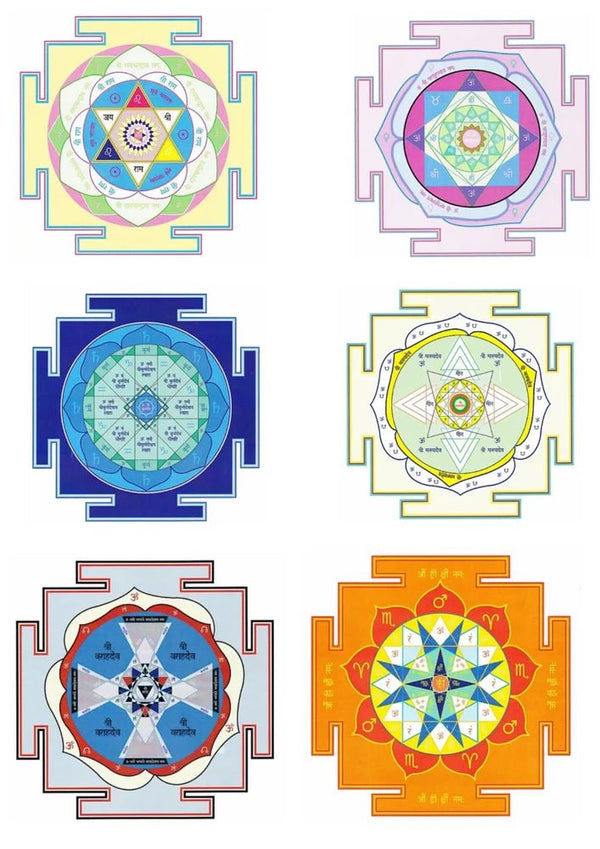
A Yantra is a sacred geometric design traditionally used in Indian spiritual practices as a support for concentration, meditation, contemplation and worship.
At first glance, a Yantra may look like a simple arrangement of triangles, circles, lotus petals, lines and a central point. But traditionally, its geometry is not considered merely decorative. Every part of a Yantra has a place, a relationship and a meaning within the particular tradition to which it belongs.
 −28%
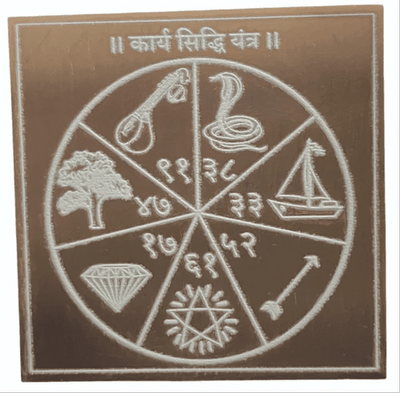
−28%Advaar Karya Siddhi Yantra
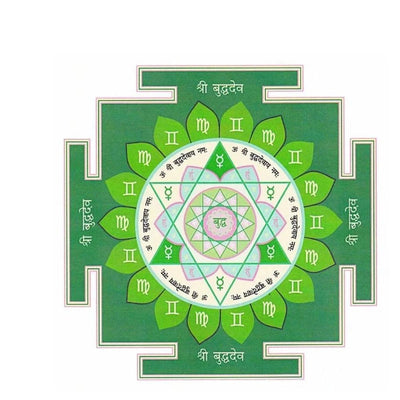 −17%
−17%Advanced Budh (Mercury) Yantra
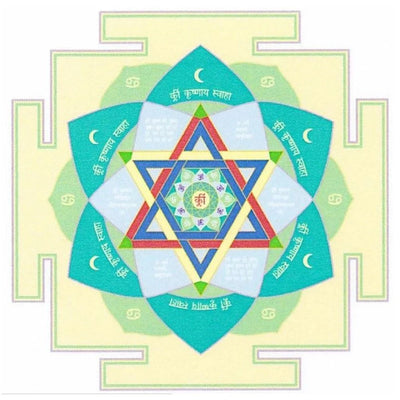 −17%
−17%Advanced Chandra (Moon) Yantra
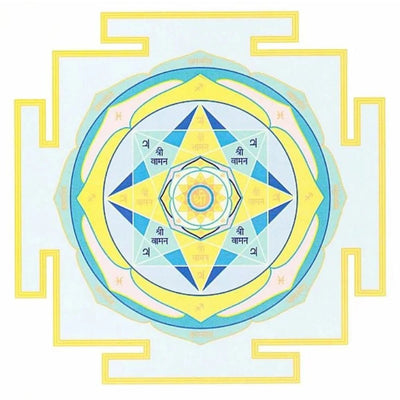 −17%
−17%Advanced Guru (Jupiter) Yantra
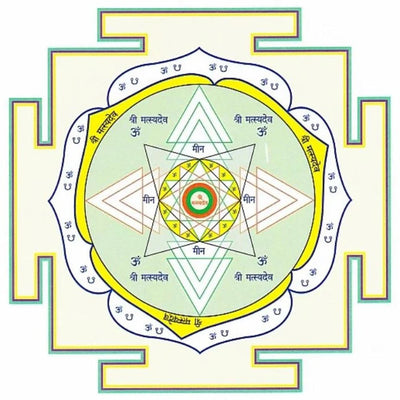 −17%
−17%Advanced Ketu Yantra
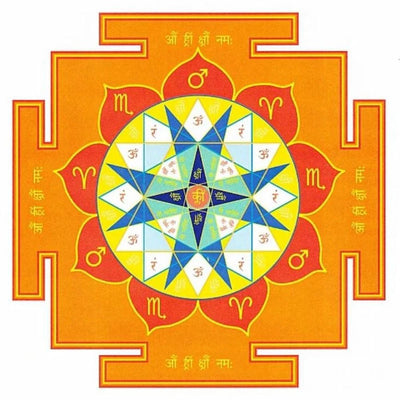 −17%
−17%Advanced Mangal (Mars) Yantra
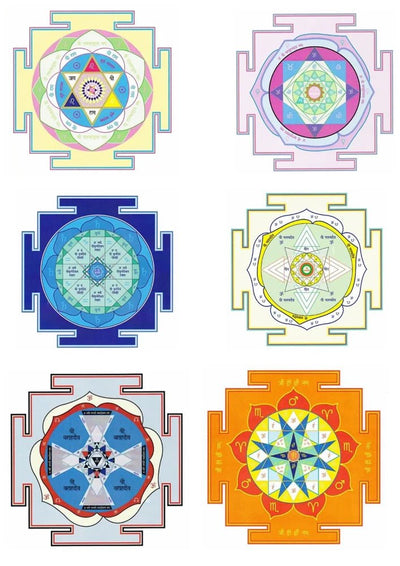 −20%
−20%Advanced Nav Graha Yantra Collection
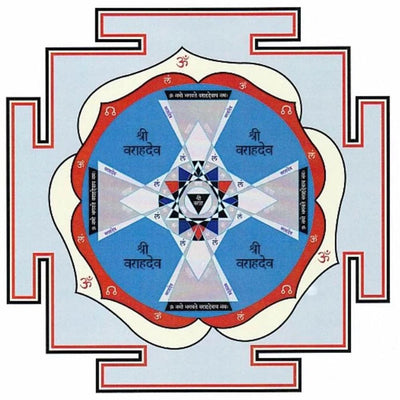 −17%
−17%Advanced Rahu Yantra
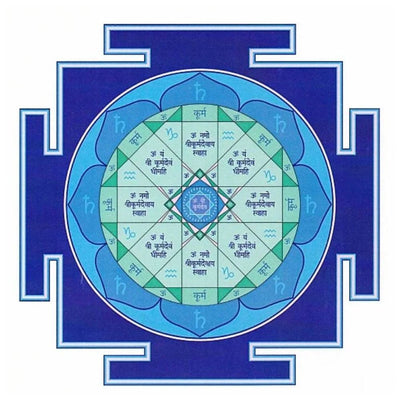 −17%
−17%Advanced Shani (Saturn) Yantra
 −17%
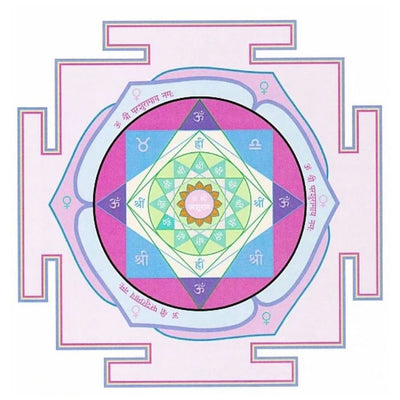
−17%Advanced Shukra (Venus) Yantra
 −16%
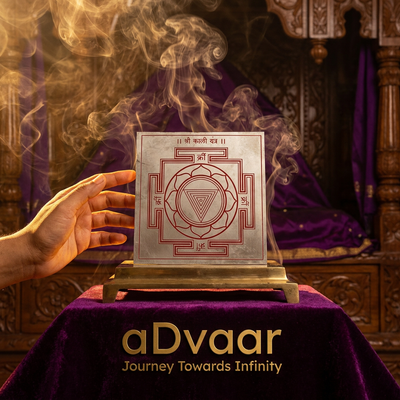
−16%Pure Silver Yantra (Customisation possible)
 −16%
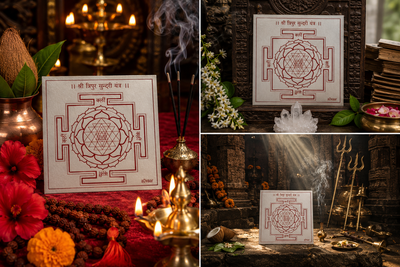
−16%Exclusive Financial Abundance Set — Pure Silver Kuber, Sri & Lakshmi Yantra
 −28%
−28%Pure Silver Coated Copper Yantras

Pure Silver Dashakshar Lakshmi Yantra (Laxmi Yantra)

Pure Silver Kuber Yantra (Kubera Yantra)
Pure Silver Sri Yantra (Sri Chakram, Shri Yantra, Tripura Sundari Yantra)
For someone seeing a Yantra for the first time, the natural question is: What does a Yantra actually mean, and how is it used?
This guide explains the traditional understanding of Yantras, their geometry, different types, materials, authenticity and the way they are approached in spiritual practice — and how aDvaar’s handcrafted copper, silver and gold Yantras bring that tradition into the modern home and workspace.
What Does the Word Yantra Mean?
The word Yantra (यंत्र) comes from Sanskrit and is traditionally understood in connection with an instrument, device or means of support.
In spiritual practice, a Yantra can therefore be understood as a sacred instrument for focusing the mind.
Rather than trying to understand the entire meaning of a spiritual tradition through words alone, a practitioner may use a Yantra as a visual point of concentration.
The eye follows the geometry.
The mind becomes quieter.
Attention gradually moves towards the centre.
That centre is often represented by a Bindu, the central point of the Yantra.
Different Yantras have different designs and traditional associations, so there is no single meaning that applies equally to every Yantra.
What Is the Purpose of a Yantra?
Traditionally, Yantras are used as visual supports for:
- meditation and concentration
- contemplation
- worship and devotional practice
- mantra practice
- creating a focused spiritual environment
- working with a particular deity or spiritual tradition
- maintaining attention on a particular intention or form of practice
The purpose depends on the Yantra.
A Sri Yantra, for example, belongs to a different spiritual tradition and symbolism from a Kuber Yantra or a Bhairav Yantra.
It is therefore useful to understand the particular Yantra rather than treating all Yantras as interchangeable objects.
Yantra and Deity: How Are They Connected?
In many Indian spiritual traditions, a Yantra is associated with a particular deity, Shakti, planetary principle or spiritual intention.
The geometry provides the visual form through which the practitioner focuses attention.
For example:
Sri Yantra is traditionally associated with Tripura Sundari and is one of the best-known forms of sacred geometry in the Indian spiritual tradition.
Kuber Yantra is traditionally associated with Kubera and themes of prosperity and abundance.
Bhairav Yantras are associated with different forms and traditions of Bhairava worship — from Kaal Bhairav and Batuk Bhairav to Akash Bhairav and Krodh Bhairav.
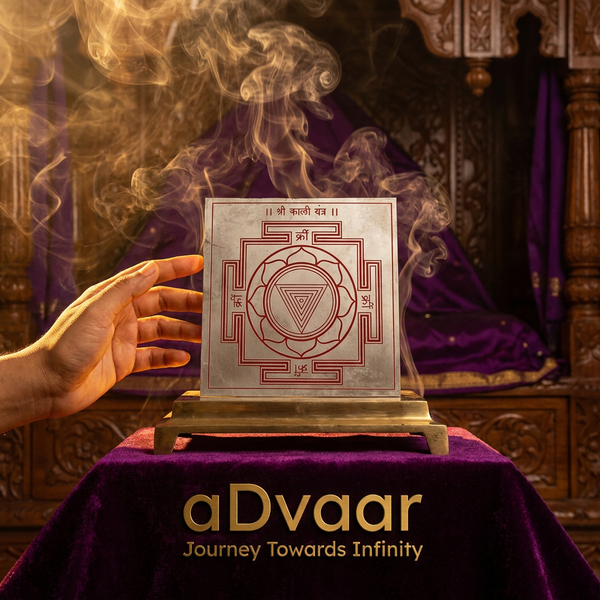
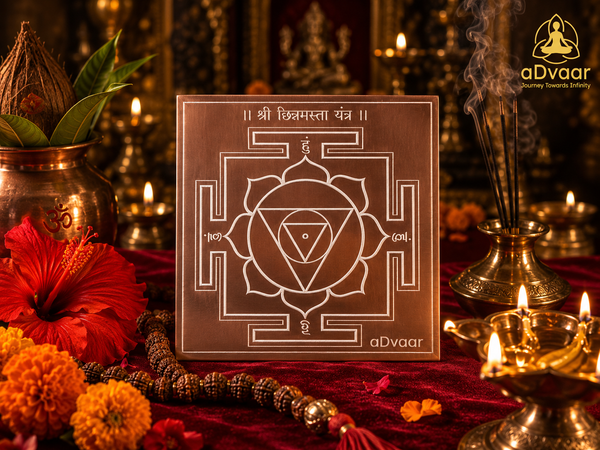
Dus Mahavidya Yantras correspond to the ten Mahavidya forms of Shakti, each with its own symbolism and spiritual context, including Ma Kali.
This is why the geometry, name, deity association and traditional method of use should be considered together.
Understanding Yantra Geometry
One of the most fascinating aspects of a Yantra is its geometry.
Depending on the particular Yantra, the design may contain:
- a central Bindu
- triangles
- circles
- lotus petals
- squares
- intersecting lines
- enclosing boundaries
- directional elements
These are not random decorative patterns.
Traditional Yantra designs follow established geometric relationships, and the specific arrangement varies according to the Yantra and its tradition.
The Bindu, or central point, is especially important in many Yantras. It can be understood as the point towards which attention is gradually drawn during contemplation.
The surrounding geometry creates layers of visual attention.
This is one reason Yantras can be deeply engaging to look at during meditation or Trataka practice.
What Is the Bindu in a Yantra?
The Bindu is the central point found in many important Yantras.
Traditionally, the Bindu represents the centre or source from which the surrounding manifestation is contemplated.
From a practical point of view, it also provides an exceptionally simple object for concentration.
When practising visual concentration, the practitioner may gradually bring attention towards the Bindu rather than allowing the mind to move constantly between different objects.
The meaning of the Bindu varies somewhat according to the spiritual tradition and Yantra being used, so it is better understood within its specific context.
Sri Yantra and Sacred Geometry
The Sri Yantra, also known as Shri Yantra or Sri Chakra, is perhaps the most widely recognised Yantra in Indian spiritual traditions.
Its central structure consists of interlocking triangles surrounded by other geometric elements and lotus forms.
The geometry is traditionally associated with Tripura Sundari, also known as Lalita Tripurasundari.
For many practitioners, the Sri Yantra represents a movement from the outer layers of perception towards the centre, represented by the Bindu.
This makes it particularly significant in meditation, contemplation and Sri Vidya-related traditions.
The Sri Yantra is also widely discussed today in the context of sacred geometry because of its intricate construction and visual symmetry.
Different Types of Yantras
Yantras can broadly be understood through several categories, although these categories can overlap depending on the tradition.
1. Deity Yantras
These are associated with particular deities or forms of Shakti.
Examples include:
- Sri Yantra
- Lakshmi Yantra
- Ganesh Yantra
- Ma Kali Yantra
- Matangi Yantra
- Baglamukhi Yantra
- Bhairav Yantra
- Tripura Sundari Yantra
Each has its own symbolism and traditional context.
2. Planetary Yantras
Planetary or Graha Yantras are associated with the Nav Graha traditions.
These may include Yantras connected with:
Their traditional use is generally connected with the corresponding planetary principle and astrological practice. aDvaar’s complete Advanced Nav Graha Yantra Collection brings all nine together, and a compact Pocket Nav Graha Collection is available for practitioners who travel.
3. Purpose-Oriented Yantras
Some Yantras are traditionally associated with particular intentions or areas of life.
These may include themes such as:
- prosperity
- protection
- knowledge
- success
- business
- relationships
- spiritual practice
- concentration
The traditional association should always be understood before selecting a Yantra.
What Is the Difference Between a Yantra and an Idol?
A Yantra and a deity idol serve different purposes and are approached differently in traditional practice.
An idol or Murti/Vigraha provides a symbolic or physical representation of a deity.
A Yantra primarily uses geometry as the visual form.
Neither is simply a decoration.
The appropriate approach depends on the tradition, the practitioner’s purpose and the particular deity or spiritual practice involved.
Yantras are traditionally made using different materials depending on the tradition, purpose and form of the Yantra.
Common materials include:
Copper
Copper has a long-standing place in the traditional manufacture of Yantras and is widely used for engraved and etched Yantra plates. aDvaar’s copper Yantra collection is made from 95%+ pure electrolytic copper — the same purity grade used in semiconductor manufacturing — at 1mm+ engineered thickness, rather than the thin, foil-pressed plates common in the market.
Silver
Silver Yantras are valued for their appearance, durability and association with auspicious and devotional use. Pure silver is also used for premium Yantra craftsmanship, as seen in aDvaar’s Pure Silver Yantra range.
Gold
Gold Yantras represent a more premium form of traditional Yantra craftsmanship and have historically been associated with sacred objects, temple traditions and high-value devotional use. aDvaar also offers bespoke silver and gold commissions for collectors and patrons who want a Yantra built entirely to their own specification.
Other Materials
Depending on the tradition, Yantras may also be represented on paper, cloth, stone or other suitable surfaces.
The material itself does not determine the spiritual meaning of the Yantra. The geometry, tradition, deity association and manner of practice are equally important.
Why Do People Choose Silver Yantras?
Silver has a long history in Indian religious and ceremonial objects.
Today, many people choose silver Yantras because they appreciate:
- the beauty of the metal
- its durability
- the premium finish
- its suitability for devotional spaces
- its value as a meaningful gift
- the combination of traditional geometry and fine craftsmanship
At aDvaar, Pure Silver Yantras are created for customers who are looking for a more substantial and premium form of Yantra craftsmanship.
Where purity, dimensions or other specifications are stated for a product, these should always be checked against the specific product details rather than assumed to apply to every Yantra.
How Can You Tell if a Yantra Is Well Made?
There is no single visual test that can establish the spiritual authenticity of every Yantra.
However, when purchasing a physical Yantra, it is sensible to look carefully at its:
1. Geometry
The lines, proportions and intersections should be clean and consistent with the intended design.
2. Material
The seller should clearly state what material is being used and, where relevant, provide appropriate information about purity and specifications.
3. Thickness and weight
For metal Yantras, thickness and weight can provide useful information about the physical construction of the piece.
4. Engraving or finishing
The geometry should be clearly defined, with careful finishing and without obvious distortions or rough workmanship.
5. Source and transparency
A trustworthy seller should be willing to explain the Yantra’s traditional association, material, dimensions and other relevant specifications.
6. Purpose
A good seller should help you understand why a particular Yantra may be relevant rather than simply telling you that one Yantra is “best” for everyone.
At aDvaar, we believe that customers should be able to understand what they are purchasing before making a decision — which is why every listing on our product pages states material purity, thickness, weight and manufacturing origin directly, and why we built Yantramitra, a guided tool to help you understand which Yantra actually fits your situation instead of guessing.
Is a Yantra Just a Decorative Object?
Traditionally, no.
A Yantra may be beautifully crafted, and its geometry can certainly be appreciated as art, but its traditional purpose goes beyond decoration.
For a practitioner, the Yantra may become a visual focus for meditation, worship, mantra practice or contemplation.
This distinction is important.
A Yantra kept only as a decorative object is being approached differently from a Yantra used as part of a spiritual practice.
How Is a Yantra Traditionally Used?
The exact method depends on the Yantra and the spiritual tradition associated with it.
A simple approach for someone beginning to understand Yantras is to first learn:
- what the Yantra represents
- which deity or tradition it is associated with
- its traditional significance
- where it is traditionally placed
- whether any specific mantra or practice is associated with it
For visual concentration, a practitioner may sit comfortably before the Yantra and observe its geometry without forcing the eyes or mind.
The Bindu can become a natural point of focus.
With regular practice, the visual complexity of the Yantra can gradually become less important than the stillness and concentration it encourages.
Can a Yantra Be Used for Meditation?
Yes.
Yantras have traditionally been used as visual supports for concentration and meditation.
One common approach is to look steadily at the Yantra and gradually bring one’s attention towards its centre.
This is closely related to the broader Indian practice of Trataka, where sustained visual concentration is used as a meditation technique.
If you are new to the practice, there is no need to make it complicated.
Begin with a few quiet minutes.
Sit comfortably.
Keep the Yantra at a suitable distance.
Allow your attention to rest on the geometry.
When the mind wanders, gently bring it back.
The practice is about steadiness, not force.
Where Should a Yantra Be Placed?
Placement depends on the particular Yantra and the tradition being followed.
Many people keep Yantras in:
- a home prayer or meditation space
- a personal altar
- an office
- a study or contemplation area
- a dedicated spiritual space
If a particular Yantra has specific traditional placement guidance, that should take precedence over a generic rule.
For someone purchasing a Yantra for the first time, understanding its traditional purpose is more important than simply placing it in a particular direction because of a general online recommendation.
Should a Yantra Be Energised or Consecrated?
Different traditions follow different practices for Prana Pratishtha, activation, energisation or consecration.
Some practitioners follow elaborate rituals involving mantra, puja and specific procedures.
Others use a simpler devotional or meditation practice.
There is no single method that should be presented as universally applicable to every Yantra.
If your spiritual tradition or Guru has given you a particular method, follow that guidance.
For a new practitioner, it is useful to first understand the Yantra and its traditional purpose before worrying about elaborate rituals.
Which Yantra Should I Choose?
There is no universally “best” Yantra.
The right choice depends on what you are looking for and which spiritual tradition resonates with you.
For example:
Interested in Sri Vidya and sacred geometry? You may wish to explore the Sri Yantra and its connection with Tripura Sundari.
Interested in prosperity and abundance? Kuber Yantra is traditionally associated with Kubera and prosperity.
Interested in Mahavidya traditions? Explore the ten forms represented through the Dus Mahavidya Yantras.
Interested in Bhairava traditions? Explore the different Bhairav Yantras and understand their specific associations.
Looking for a premium material? You may wish to consider a Pure Silver Yantra after checking its actual purity, dimensions, weight and craftsmanship.
The best starting point is understanding the tradition rather than choosing purely on claims of “maximum power” or guaranteed results. If you would rather be guided than choose alone, Yantramitra can help match a Yantra to your intention.
Can a Yantra Guarantee Wealth, Success or Healing?
A responsible spiritual brand should not promise guaranteed financial, health or personal outcomes from a Yantra.
Yantras belong to spiritual and traditional practices.
People may experience them differently, and personal experiences should not be presented as guaranteed results for everyone.
At aDvaar, we prefer to explain the traditional significance, craftsmanship and intended use of a Yantra so that people can make an informed choice.
Faith and spiritual practice are deeply personal.
Why Yantra Geometry Still Fascinates People Today
One reason Yantras continue to attract attention is that they sit at an interesting meeting point between spiritual practice, geometry, art and meditation.
A carefully constructed Yantra can be visually intricate while remaining remarkably balanced.
The practitioner is not required to understand every geometric relationship before using one.
Simply observing the design can reveal how the eye naturally moves between its outer boundaries, repeating forms and central Bindu.
For people interested in sacred geometry, Yantras also offer a fascinating example of how mathematical structure can become part of a spiritual tradition.
Yantra, Sacred Geometry and Modern Spaces
Yantras are increasingly being explored beyond traditional prayer spaces.
Architects, interior designers and homeowners sometimes incorporate sacred geometry into spaces intended for meditation, reflection and wellbeing.
A Yantra can therefore become both a spiritual object and a carefully crafted element within a personal environment.
When used in this way, it is worth respecting both sides of the object:
the geometry should be treated with care, and the spiritual tradition behind it should not be reduced to decoration.
Frequently Asked Questions About Yantras
What is a Yantra?
A Yantra is a sacred geometric design traditionally used as a visual support for meditation, concentration, worship and spiritual practice.
What does Yantra mean?
Yantra is a Sanskrit term traditionally understood in connection with an instrument, device or means of support. In spiritual practice, it refers to a sacred geometric instrument used for focused contemplation and related practices.
What is the purpose of a Yantra?
The purpose depends on the particular Yantra. Traditionally, Yantras are used for concentration, meditation, worship, mantra practice and contemplation of a particular deity, principle or spiritual intention.
What is Sri Yantra?
Sri Yantra, also called Shri Yantra or Sri Chakra, is a sacred geometric design traditionally associated with Tripura Sundari and important within Sri Vidya traditions.
What is Kuber Yantra?
Kuber Yantra is traditionally associated with Kubera and themes of prosperity, abundance and material wellbeing.
What is Bhairav Yantra?
Bhairav Yantra refers to Yantras associated with Bhairava traditions. Different forms may have different traditional associations and practices.
What are Dus Mahavidya Yantras?
Dus Mahavidya Yantras are Yantras associated with the ten Mahavidya forms of Shakti. Each form has its own symbolism, mantra traditions and spiritual context.
Which metal is best for a Yantra?
There is no single answer for every tradition or practitioner. Copper, silver and gold all have long-standing associations with sacred objects and Yantra craftsmanship. The appropriate choice depends on the Yantra, tradition, intended use and personal preference.
Can I keep a Yantra at home?
Yes. Many people keep Yantras in a prayer room, meditation space or other clean and respectful area. Specific placement guidance can vary according to the Yantra and tradition.
Can I use a Yantra for meditation?
Yes. Yantras have traditionally been used as visual supports for concentration and meditation. The Bindu can provide a natural focal point.
Does every Yantra need to be energised?
Practices differ between traditions. Some Yantras are formally consecrated or energised, while individual practitioners may follow simpler devotional practices. Specific guidance should come from the relevant tradition or qualified spiritual teacher.
Can a Yantra guarantee success or wealth?
No responsible source should guarantee a particular financial, health or personal outcome from a spiritual object. Yantras belong to traditional spiritual practices, and individual experiences vary.
Why should I buy a Yantra from aDvaar instead of a regular market seller?
Much of the market is flooded with thin, foil-pressed or mixed-alloy plates sold as “copper Yantras” with no stated purity or thickness. aDvaar was founded precisely because its founder, a practising Ma Kali sadhak, struggled to find Yantras with correct geometry and honest material. Every aDvaar Yantra states its material purity, thickness and weight directly on the product page, and every design carries a Guru’s sign-off before it goes into production — so you know exactly what you are buying and why the proportions matter.
What makes aDvaar Yantras more authentic than mass-produced market Yantras?
Three things, all independently checkable: the material (95%+ pure electrolytic copper, the same grade used in semiconductor manufacturing, or genuine 95% silver and 24K gold for premium pieces), the thickness (1mm+, engineered rather than foil-pressed), and the geometry (verified against traditional Yantra Shastra proportions rather than approximated). aDvaar is also MSME-registered and GST-compliant under Lakhlani International Pvt. Ltd., with a GST invoice provided on every order — details that many unregistered market sellers cannot offer.
Are aDvaar Yantras suitable for Interior Designers, Architectcs, Professional practitioners, astrologers and Vastu consultants?
Yes. aDvaar’s copper, silver and gold Yantras are used by astrologers, Vastu consultants, occult practitioners, tantra students, interior designers, architects and temple administrations, in addition to individual sadhakas and collectors. For patrons and family offices seeking a fully bespoke piece — a specific size, deity or metal combination — aDvaar’s customisation service builds the Yantra to specification.
Does aDvaar offer a guarantee on its Yantras?
Yes. aDvaar backs the material quality of every Yantra with a lifetime guarantee, and each order ships with care instructions and a GST-compliant invoice. If you are unsure which Yantra fits your practice, Yantramitra can help you choose before you buy, rather than after.
Exploring Yantras at aDvaar
At aDvaar, we look at Yantras from both sides: the spiritual tradition behind them and the physical craftsmanship of the object itself.
That means paying attention to the geometry, material, proportions, finishing and the traditional significance of each Yantra.
Our collections include traditional deity Yantras, planetary Yantras, purpose-oriented Yantras and premium metal Yantras, including Pure Silver options.
If you are unsure which Yantra is appropriate for your practice, we encourage you to first understand its traditional meaning and then choose based on your personal requirement.
A Yantra should not be selected simply because somebody says it is “the most powerful.”
It should have meaning for you.
It should be made with care.
And you should understand how it is traditionally approached.
Explore aDvaar Yantras
Explore Sri Yantra / Tripura Sundari
Not sure where to start? Ask Yantramitra
A Final Thought
A Yantra is easy to look at but not always easy to understand.
Its lines and shapes may be visible within seconds, but the tradition behind those shapes can take years to appreciate.
Perhaps that is part of the beauty of a Yantra.
It invites the eye to become still, the mind to become attentive and the practitioner to look a little deeper.
Whether you approach a Yantra through devotion, meditation, sacred geometry, tradition or simply an appreciation of Indian spiritual craftsmanship, it is worth approaching it with understanding and respect.
The geometry is the form. The tradition gives it meaning. The practice gives it life.
Continue Reading on the aDvaar Knowledge Hub
- What Is Kubera Yantra? aDvaar’s Complete Kuber Yantra Guide
- Kuber Yantra for Prosperity — Nashik, Pune & Kolhapur Guide
- Navi Mumbai Penthouse Vastu Correction with Nav Graha Yantra Arrays
- Kochi: Balancing Modern Trading Horizons with Coastal Spiritual Shastra
- Browse the full aDvaar Knowledge Hub
- Explore the Bigger Havan Kund