
Saturn, known as Shani in Vedic astrology, is traditionally associated with discipline, patience, responsibility, and the consequences of one's actions. During periods such as Sade Sati, Dhaiya, or Shani Mahadasha, some practitioners turn to prayer, mantra recitation, charity, and other devotional practices for reflection and spiritual support.
The Pocket Numerical Shani (Saturn) Yantra offers a portable format for people who want to incorporate a symbolic devotional object into their everyday routine. Designed to fit in a wallet or purse, it brings traditional Shani symbolism into a compact form.
This guide explores the Pocket Shani Yantra's meaning, numerical design, mantra practices, placement, care, and buying considerations. It also distinguishes traditional beliefs from product specifications and outcomes that can be independently verified.
What Is a Pocket Shani Yantra?
A Shani Yantra is a symbolic diagram associated with Lord Shani in Vedic astrology. Shani is one of the Navagrahas, the nine celestial influences represented in this tradition. Yantras are used by some practitioners as focal points for prayer, mantra recitation, meditation, and ritual observance.
The pocket-size format is intended for carrying rather than being permanently placed on an altar. The aDvaar product is described as a two-inch copper plate with a numerical matrix design.
The main difference between a pocket yantra and a larger yantra is its size and intended use. A pocket version can accompany a person during work, travel, or daily activities, while a larger plate may be more convenient for a dedicated devotional space.
Explore the Pocket Numerical Shani (Saturn) Yantra for current product details.
How a Pocket Yantra Fits Everyday Life
Not everyone has a dedicated prayer room or follows a fixed daily schedule. A pocket yantra offers a compact option for those who want a physical reminder of their spiritual practice.
It can be kept in a wallet, purse, card holder, or protective pouch, provided the material and finish are protected from moisture, scratches, and bending.
Carrying a yantra is a devotional choice. Its presence should not be understood as a guarantee of protection or a change in external circumstances.
Understanding Shani in Vedic Astrology
In Vedic astrology, Shani is traditionally associated with discipline, patience, responsibility, perseverance, service, and long-term effort. Astrological interpretations often describe Saturn-related periods as opportunities to reflect on habits, commitments, and personal responsibilities.
Sade Sati, Dhaiya, and Shani Mahadasha
Sade Sati is traditionally described as a period spanning Saturn's transit through the zodiac sign before a person's natal Moon sign, the Moon sign itself, and the sign after it. This period is commonly described as lasting approximately seven and a half years.
Dhaiya and Shani Mahadasha are other concepts used in Vedic astrology to interpret Saturn's influence. Their meanings and interpretations depend on the astrological system and the practitioner's approach.
These are traditional astrological frameworks, not scientifically established methods for predicting individual difficulties or future events. Experiences during these periods vary, and challenges in work, finances, relationships, or health should not automatically be attributed to Saturn.
The Traditional Perspective on Shani's Lessons
Within Shani-related traditions, patience, honest effort, responsibility, and service are often emphasized. Some practitioners combine these values with mantra recitation, prayer, charity, and yantra worship.
A Shani Yantra can serve as a physical reminder to approach responsibilities thoughtfully and maintain a consistent routine. It does not replace practical planning, professional advice, or the actions required to address real-world problems.
The Numerical Matrix Design: Numbers and Geometry
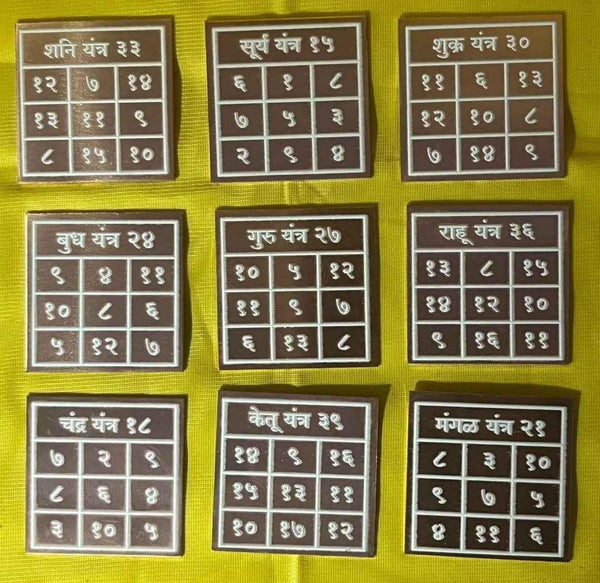
Unlike yantras that use elaborate geometric shapes or deity imagery, a numerical matrix yantra uses an arrangement of numbers as its central design.
The draft identifies the traditional Saturn-associated numerical format as Shani Pachisi. However, the exact grid displayed on the product should be checked before publishing claims about its dimensions, mathematical properties, or correspondence to a particular traditional format.
Understanding Magic Squares
A magic square is a mathematical arrangement in which the numbers in each row and column—and, in a normal magic square, the principal diagonals—have equal sums.
Magic squares have a documented history in mathematics across multiple cultures. Their mathematical properties can be tested independently of any spiritual interpretation.
In devotional traditions, numerical arrangements may be given symbolic or religious meaning. The belief that a numerical grid represents planetary energy belongs to that spiritual framework; it is not a scientifically established mechanism.
Before describing the Pocket Shani Yantra as a particular type of magic square, verify the actual numerical layout and calculate its row, column, and diagonal sums.
Copper Material and Product Specifications
Copper is a metal commonly used in yantra products. It has measurable physical properties, including high electrical and thermal conductivity, and it develops a surface patina over time under certain conditions.
These physical properties do not establish that copper absorbs or transmits divine vibrations. Such descriptions should be presented as traditional beliefs rather than material-science findings.
The supplied draft describes the pocket product as a two-inch copper plate. It also includes a claim of 95% or greater electrolytic copper purity. Before publishing that percentage, confirm that it applies specifically to this pocket-size product and is supported by current product documentation.
Do not automatically transfer the material specifications of a larger Shani Yantra to the pocket version. If thickness, weight, purity, surface finish, or coating are not clearly stated, ask the seller to confirm them.
Traditional Associations and Practical Significance
Shani Yantras are used in some devotional traditions as focal points for worship and meditation, particularly by people who follow Saturn-related astrological practices.
Reflection During Difficult Periods
Some practitioners use Shani-related rituals during periods they interpret as astrologically challenging. These rituals may provide structure for reflection, prayer, and maintaining a consistent personal routine.
A yantra can be used as a reminder to approach difficult decisions patiently, review commitments, and focus on actions within one's control.
Discipline and Consistency
The symbolic association between Shani and discipline can be incorporated into a personal routine. For example, someone might use a short daily practice as a reminder to review priorities, follow through on responsibilities, or set aside time for reflection.
Any benefits from these practical habits should not be attributed automatically to the yantra itself.
Protection, Obstacles, and Delays
Some traditional and commercial descriptions associate Shani Yantras with protection from obstacles, negative influences, or difficult planetary periods. These are spiritual beliefs, not established scientific outcomes.
A responsible product description should not promise that carrying a yantra will remove delays, prevent misfortune, eliminate Sade Sati, or guarantee success.
How to Prepare and Use a Pocket Shani Yantra
Ritual practices vary across families, regions, and spiritual traditions. If you follow a particular tradition, use its guidance as appropriate.
1. Prepare the Yantra
The supplied product draft describes gently rinsing the yantra with clean water, drying it with a soft cotton cloth, and placing it on a clean red or yellow cloth.
Before using water or another ritual substance, confirm that the cleaning method is appropriate for the product's actual material and finish. Dry the plate completely before returning it to a wallet or pouch.
2. Mantra Recitation
The draft identifies the following mantra as a Shani mantra:
Om Sham Shanicharaya Namah
Mantra spelling, transliteration, and pronunciation can vary between sources and traditions. Check the wording on the product's supplied mantra card or consult a reliable traditional source before presenting a particular version as the manufacturer's official instruction.
3. A Simple Daily Practice
A personal devotional routine might involve sitting quietly, placing the yantra in front of you, reciting a chosen mantra, and reflecting on the values associated with Shani in your tradition.
The supplied draft mentions reciting a mantra 11 or 108 times. These counts are traditional practice conventions rather than scientifically established requirements.
Choose a routine that is comfortable and consistent with your beliefs and circumstances.
4. Saturday Worship
Saturday is associated with Shani in many Hindu devotional traditions. Some practitioners observe the day through prayer, mantra recitation, offerings, or acts of service and charity.
The particular rituals, offerings, directions, and mantra counts differ across traditions. Verify specific ritual instructions against an appropriate source before presenting them as universal requirements.
Where to Keep Your Pocket Shani Yantra
The pocket-size format is designed to make carrying the yantra convenient.
-
Wallet or purse: Store it in a protected compartment or small pouch to prevent scratches and bending.
-
Desk or workspace: Place it nearby if you prefer to use it as a visual reminder during reflection or prayer.
-
Home altar: Use a clean, dedicated space if that is consistent with your devotional practice.
-
Travel bag: Protect the plate from moisture, pressure, and contact with other metal objects.
Some Vastu and astrological traditions recommend specific directions or locations for yantras. These recommendations vary and should be treated as traditional guidance, not universally established rules.
Pocket Shani Yantra vs. Full-Size Shani Yantra
The choice between a pocket-size and larger yantra depends on how you intend to use it.
When the Pocket Format May Suit You
-
You want a compact object to carry during everyday activities or travel.
-
You prefer a discreet format.
-
You want a portable focus for a personal devotional routine.
-
You do not have a dedicated altar or permanent display space.
When a Larger Yantra May Suit You
-
You prefer a larger object for a dedicated altar or devotional space.
-
You want a design that is easier to view during meditation.
-
You want a product intended for stationary display.
The Advanced Shani (Saturn) Yantra is a separate product to compare with the pocket version.
Check the actual dimensions, material, finish, weight, thickness, warranty, and price of each product. Do not assume that the specifications of one product apply to the other.
Buying Guide: What to Check Before Ordering
Before purchasing a Shani Yantra, review the following details:
-
Dimensions: Confirm the actual plate size.
-
Material: Check whether the product is copper, plated metal, an alloy, or another material.
-
Purity and thickness: Ask for documentation if the seller advertises a specific percentage or thickness.
-
Numerical design: Review the actual grid if a particular mathematical structure is claimed.
-
Package contents: Confirm whether a mantra card, care instructions, pouch, or other accessory is included.
-
Warranty: Read the actual coverage, exclusions, and claim procedure.
-
Price and delivery: Check current pricing, shipping charges, delivery estimates, and return terms.
-
Seller information: Verify the business identity and contact details.
Claims about certification, specialist verification, customer reviews, registration, and manufacturing location should be confirmed against current documentation rather than accepted solely from marketing copy.
The Pocket Nav Graha Collection
The Pocket Numerical Shani Yantra is presented in the supplied draft as part of a wider Pocket Nav Graha collection.
The Navagraha tradition includes Surya, Chandra, Mangala, Budha, Guru, Shukra, Shani, Rahu, and Ketu. Some practitioners use individual yantras, while others prefer a set representing all nine grahas.
If you are considering a collection, check the current listing for the number of items, dimensions, material specifications, package contents, and price. Do not rely on historical prices or discount calculations without verifying the current offer.
Choosing an individual yantra or a complete collection is a personal preference. Neither format should be presented as universally necessary or guaranteed to produce a particular result.
About aDvaar
The supplied draft identifies Lakhlani International Pvt. Ltd. in Pune, Maharashtra, as the business associated with aDvaar. Before publishing company-specific statements, verify the current business details, manufacturing claims, registrations, invoice arrangements, warranty terms, delivery estimates, and customer support information.
For current product specifications and purchase terms, refer to the official Pocket Numerical Shani Yantra page.
Conclusion
The Pocket Numerical Shani Yantra combines a compact format with traditional symbolism associated with Shani in Vedic astrology. Its principal practical distinction is portability: it can accompany a personal devotional routine without requiring a permanent altar.
For people who value Shani-related traditions, it may serve as a reminder of patience, responsibility, consistency, and reflection. Its religious meaning depends on the practitioner's beliefs and tradition.
Before purchasing, verify the actual product specifications, numerical design, warranty, price, and package contents directly with the seller. Approach spiritual associations respectfully while keeping expectations about measurable outcomes realistic.
The object offers a focus. Tradition provides its context. Personal practice gives it meaning.
Scientific Perspective
This article distinguishes between physical properties, mathematical structures, and traditional interpretations.
-
Mathematics: Magic squares are verifiable mathematical structures. The specific numerical grid on the product should be checked before assigning it a particular mathematical property.
-
Material: Copper has measurable physical properties, including electrical and thermal conductivity. These properties do not demonstrate the transmission of divine or planetary energy.
-
Astrology: Shani, Sade Sati, Dhaiya, and related concepts belong to Vedic astrological traditions. They are not scientifically established methods for predicting individual life outcomes.
-
Meditation and ritual: A person may choose to use a yantra as a focal point for prayer, reflection, or concentration. Such personal use does not establish that the object causes specific external results.
-
Limits of evidence: No established scientific evidence demonstrates that carrying a yantra guarantees protection, wealth, career advancement, or relief from astrological difficulties.
Frequently Asked Questions
1. What is a Pocket Shani Yantra?
A Pocket Shani Yantra is a compact object associated with Shani in Vedic astrological and devotional traditions. The aDvaar product is described in the supplied draft as a two-inch copper plate with a numerical matrix design. Confirm the current product listing for exact specifications.
2. How is a pocket Shani Yantra different from a regular Shani Yantra?
The primary difference is the intended format. A pocket yantra is designed for carrying, while a larger yantra may be more suitable for a dedicated altar or display. Compare each product's actual dimensions and material specifications.
3. Which mantra is associated with Shani?
The supplied draft identifies Om Sham Shanicharaya Namah as a Shani mantra. Mantra variants and transliterations can differ, so verify the wording against your chosen tradition or the supplied mantra card.
4. Can I carry the Shani Yantra in my wallet or purse?
The pocket product is intended for portable use. Keep it in a protected compartment or pouch and protect it from moisture, scratching, and bending.
5. How do I prepare the Pocket Shani Yantra?
The supplied draft describes gently rinsing the plate with clean water, drying it with a soft cloth, placing it on a clean cloth, and reciting a chosen mantra. Confirm that the cleaning method is suitable for the product's actual finish.
6. How often should I recite the Shani mantra?
The draft mentions 11 or 108 repetitions. These are traditional practice conventions, not scientific requirements. Follow the practice appropriate to your tradition and personal circumstances.
7. Is the Shani Yantra useful during Sade Sati?
Some practitioners use Shani Yantras during Sade Sati or other Saturn-related astrological periods as part of devotional practice. There is no established scientific evidence that a yantra changes the effects of a planetary transit or guarantees relief from difficulties.
8. Does the Shani Yantra protect against obstacles or negative influences?
Such protection is described in some traditional and commercial interpretations. It should be understood as a spiritual belief, not a guaranteed or scientifically established effect.
9. What is a numerical matrix yantra?
A numerical matrix yantra uses a grid of numbers as its central design. Some numerical yantras are associated with magic squares, but the actual grid must be checked before claiming that every row, column, and diagonal has an equal sum.
10. What should I check before buying a Shani Yantra?
Confirm the dimensions, material, purity, thickness, numerical design, package contents, current price, warranty, shipping, return policy, and seller information. Ask for supporting documentation for specific material or certification claims.