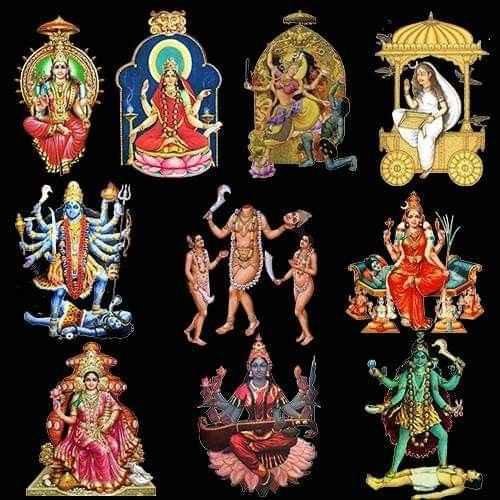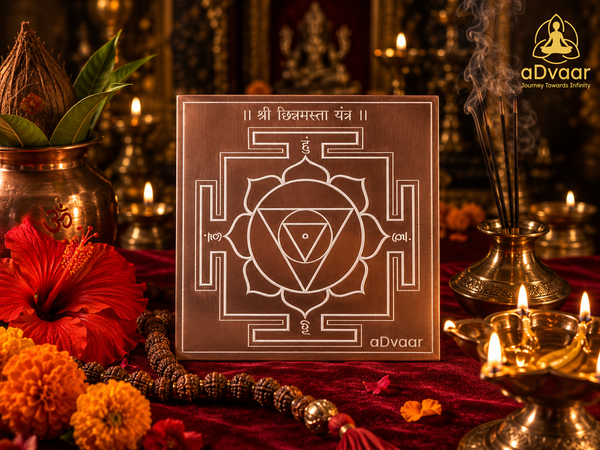

Explore Tara, one of the ten Mahavidyas—her names, symbolism, worship traditions, colour, flowers, naivedya, temples in India and the meaning of her Yantra.
Meeting Tara
The ten Mahavidyas are ten distinct ways of encountering Shakti. They are not a uniform checklist of rituals: stories, iconography, offerings and methods of worship differ across texts, temples, regions and living lineages. Tara occupies a particular place in that larger family, and understanding her requires both reverence and context.


For aDvaar, a Yantra is approached as a sacred geometric support for contemplation and worship, not simply as decorative metalwork. The articles in this series therefore distinguish devotional tradition from historical evidence and avoid presenting lineage-specific Tantric practice as a do-it-yourself ritual.
Who is Tara?
Tara is known as Tara Ma, Ugra Tara, Nil Saraswati, Ekajata. These titles can describe related forms, regional names or specific theological traditions; they are not necessarily interchangeable in every lineage.
Her story and significance
A widely told tradition connects Tara with saving Shiva in a moment of cosmic danger. The story expresses the Mother who carries beings across difficulty; details vary by lineage. Sacred narratives have multiple versions. They are best understood as theological and devotional stories rather than as independently verifiable biographies.
Colour, iconography and symbolism
Tara is commonly associated with blue, blue-black, indigo. The colour is symbolic rather than a universal compulsory rule. Temple iconography can change substantially by region and tradition.
How devotees worship her
Devotees may address her as Maa Tara, Ma Tara or by the traditional names above. Public devotion may include a lamp, incense, flowers, prayer, meditation, recitation and naivedya. More specialised Shakta or Tantric observances are lineage-specific and traditionally learned through qualified guidance.
Flowers and bhog / naivedya
Flowers: local practice varies; blue lotus is a classic symbolic association.
Naivedya: rice-based food, sweets and fruit vary by temple. There is no single offering menu that applies to every shrine. Where worship is performed in a temple, the temple tradition should take precedence.
A significant Indian temple
Tarapith, Birbhum, West Bengal, is a major Tara shrine. West Bengal Tourism describes its long tantric association and adjoining cremation-ground landscape.
Tara and her Yantra
A Yantra provides a geometric focus for attention, prayer and contemplative practice. Its significance lies in the relationship between geometry, the associated deity and the practitioner's intention—not in the object alone.
Start with What Is a Yantra? and then read How to Use a Yantra.
Choosing a Yantra with care
For a premium Yantra, examine geometry, material disclosure, thickness, weight, manufacturing provenance, finish and supporting documentation. Transparency matters more than decorative claims.
Read aDvaar's Yantra Authenticity Guide
The relevant aDvaar Yantra
Explore the relevant offering: aDvaar Tara Yantra / collection. You can also explore the complete Das Mahavidya Collection.
aDvaar's perspective
At aDvaar, Tara is approached with reverence rather than as a shortcut to a guaranteed outcome. A Yantra can become a steady visual point in daily practice, but its meaning develops through attention, consistency, gratitude and an understanding of the tradition. The intention is to make ancient symbolism accessible without reducing it to a marketing promise. aDvaar's Dus Mahavidya Yantras dont have deity image inscribed along with yantra. Hence, these are ideal choices for Sadhakas and everyone who wish to get the blessings of Ma.
Frequently asked questions
Who is Tara?
Tara is one of the ten Mahavidyas, with distinctive symbolism and traditions that vary across Shakta lineages.
What colour is associated with Tara?
blue, blue-black, indigo; regional and lineage variations exist.
Which flowers are offered?
local practice varies; blue lotus is a classic symbolic association. There is no universal rule.
What bhog is offered?
rice-based food, sweets and fruit vary by temple.
Can the Yantra be kept at home?
A Yantra may be kept as a devotional and contemplative object. Follow the specific product guidance and seek qualified instruction for formal or advanced practice.
Are the stories historical?
They are sacred narratives with multiple versions. They should not be presented as single verified historical biographies.
Is advanced Tantric worship suitable for self-study?
Advanced practices are traditionally learned within a qualified lineage and should not be improvised from an online article.
Research basis
Core scholarship: David Kinsley, Tantric Visions of the Divine Feminine: The Ten Mahavidyas; Jae-Eun Shin, Change, Continuity and Complexity: The Mahāvidyās in East Indian Śākta Traditions. Temple context was cross-checked with official/government sources including Maa Kamakhya Devalaya, Ministry of Tourism / Incredible India, West Bengal Tourism and Government of Tripura material.
Editorial standard: traditional belief is identified as tradition; historical claims are limited to supported evidence; lineage-specific advanced rituals are not given as DIY instructions.