
In Vedic astrology, Shukra (Venus) is traditionally associated with love, relationships, beauty, artistic expression, refinement, and material comforts. Shukra also holds an important place in Hindu mythology as Shukracharya, the preceptor of the Asuras. Across different traditions, Venus is connected with the appreciation of beauty, the arts, diplomacy, and the pleasures of everyday life.
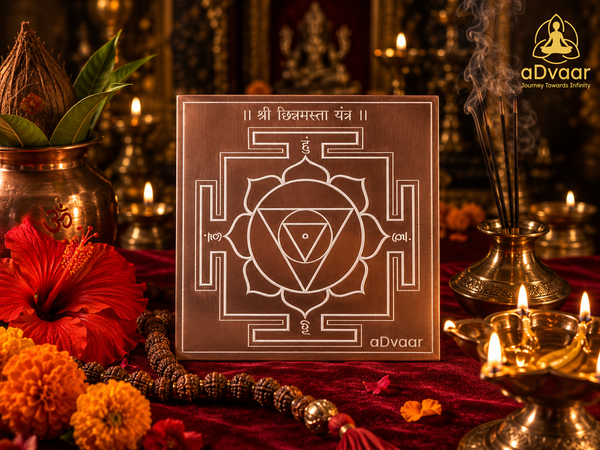
The Shukra Yantra is a sacred geometric diagram associated with Shukra Dev. In traditional practice, it may be used as a focal point for prayer, mantra recitation, meditation, and Vastu-related rituals. Devotees may incorporate it into their spiritual routines as a reminder to cultivate harmony, creativity, gratitude, and thoughtful relationships.
If you are exploring Navagraha worship, learning about Venus in Jyotish astrology, or considering a traditional placement for your home or workspace, this guide explains the Shukra Yantra's symbolism, customary placement, mantras, worship practices, and material considerations.
What Is the Shukra Yantra?
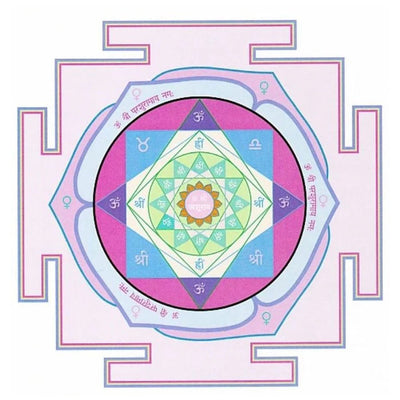
The Shukra Yantra is a sacred geometric diagram dedicated to Shukra, the planetary deity associated with Venus in Hindu traditions and Jyotish astrology. Its geometric forms are understood within yantra worship as symbolic elements that provide a visual focus for prayer, contemplation, and ritual practice.
In traditional astrological interpretations, Venus is associated with relationships, marriage, beauty, music, art, creativity, luxury, and material comfort. The yantra may be used by devotees who wish to include these themes in their spiritual routines.
The central point of a yantra is often called the Bindu. In various sacred-geometry traditions, the Bindu represents a point of concentration or symbolic potential. The interpretation of a particular yantra's shapes and proportions depends on the design and the tradition in which it is used.
Some practitioners use the Shukra Yantra during Friday worship, Venus Mahadasha, or other periods identified by an astrologer. Its use should be understood as a religious or spiritual practice, not as a scientifically established way to change planetary influences or guarantee particular outcomes.
Why Venus Matters in Vedic Astrology
Shukra holds a distinctive place in Hindu mythology and Jyotish astrology. Shukracharya is traditionally described as the teacher or preceptor of the Asuras and is associated in mythology with knowledge, counsel, and the Sanjeevani Vidya.
In Jyotish, Venus is associated with several aspects of life:
-
Love and relationships: Partnership, affection, marriage, and interpersonal harmony.
-
Beauty and refinement: Aesthetic appreciation, style, design, and personal presentation.
-
Art and creativity: Music, dance, visual arts, performance, and other creative pursuits.
-
Material comfort: Pleasure, luxury, enjoyment, and the appreciation of quality.
-
Diplomacy and social interaction: Courtesy, negotiation, and the ability to appreciate different perspectives.
In traditional Jyotish, Venus rules Vrishabha (Taurus) and Tula (Libra), is considered exalted in Meena (Pisces), and debilitated in Kanya (Virgo). An individual's astrological interpretation depends on multiple chart factors, and astrologers may differ in how they assess Venus's influence.
Venus Mahadasha is a 20-year planetary period in the Vimshottari Dasha system. People who follow this system may explore Venus-related worship during this period or during Venus Antardasha. These interpretations belong to astrology and should not be treated as certain predictions about relationships, finances, health, or professional success.
Shukra Yantra Benefits: Traditional Associations
The benefits associated with the Shukra Yantra come primarily from religious and astrological traditions. Devotees may incorporate the yantra into a regular routine involving prayer, reflection, and meditation.
Love, Marriage, and Relationship Harmony
Venus is traditionally associated with affection, marriage, romance, and partnership. Some devotees use the Shukra Yantra as a focus for prayer when reflecting on their relationships or seeking to cultivate patience, consideration, and mutual understanding.
A regular spiritual routine can provide an opportunity to reflect on communication, expectations, and personal responsibilities within a relationship. The yantra does not guarantee marriage, resolve relationship conflicts, or change another person's feelings or behaviour.
Beauty, Luxury, and Artistic Refinement
In Jyotish, Venus is associated with beauty, art, music, design, fashion, and aesthetic enjoyment. Artists, musicians, designers, and other creative practitioners may choose to include the Shukra Yantra in a dedicated worship or meditation space.
For some people, the yantra can serve as a visual reminder to make time for creativity, appreciate craftsmanship, and approach their work with care. These are personal or spiritual uses rather than guaranteed effects on artistic ability or professional success.
Creative Expression and Professional Artistry
Venus is traditionally connected with artistic expression and refinement. People working in design, music, performance, architecture, fashion, or visual arts may find meaning in incorporating Venus-related symbolism into their personal practice.
A yantra can be used as a focal point for setting intentions before creative work or taking a few moments for quiet reflection. Actual professional outcomes depend on skills, experience, opportunities, practice, and other practical factors.
Financial Prosperity and Material Comfort
Traditional astrological interpretations associate Venus with luxury, enjoyment, material comforts, and the appreciation of quality. Some devotees include Shukra worship in a broader spiritual routine related to gratitude, responsible spending, and their aspirations for a comfortable life.
A Shukra Yantra is not a guaranteed wealth generator and has not been scientifically demonstrated to improve income, attract customers, or produce financial gains. Financial decisions should be based on practical planning and appropriate professional advice.
Shukra Dosha and Planetary Worship
In Jyotish astrology, certain chart placements or planetary relationships may be interpreted as challenging for Venus. Different astrologers use the term Shukra Dosha in different contexts, so its meaning should be clarified within the relevant tradition.
Some practitioners use the Shukra Yantra as part of worship during Venus Mahadasha, Antardasha, or other periods they consider significant. Such worship may be meaningful as a devotional practice, but it should not be presented as a proven way to correct a horoscope or guarantee a specific result.
South-East Placement in Vastu Traditions
Some Vastu and planetary-remedy traditions associate Venus with the South-East direction. In Vastu Shastra, this direction is also commonly associated with the Agneya zone and the fire element.
Within traditions that recommend South-East placement, the Shukra Yantra may be positioned in a dedicated worship space or an appropriate section of the home or workspace. Vastu interpretations differ, and claims that a yantra corrects directional defects are traditional beliefs rather than scientifically established effects.
Which Direction and Where to Place the Shukra Yantra
The South-East direction is the placement described in the supplied guidance for this yantra. Placement recommendations can differ across traditions, so consider following the instructions supplied with the product or consulting a knowledgeable practitioner if you follow a particular Vastu system.
Pooja Room Placement
A clean, dedicated pooja room or worship shelf is a common location for a Shukra Yantra. Place it securely on a stable surface at a respectful height.
White or light-coloured cloth is used in some Venus-related worship practices, while other traditions may recommend different colours. Keep the area clean and protect the yantra from damage, excessive moisture, and accidental falls.
Bedroom Placement
Some practitioners prefer to keep Venus-related devotional objects in a private worship or reflection area. If you choose to place the Shukra Yantra in a bedroom, follow your own religious or Vastu tradition and ensure that the object is secure and protected.
Claims that a particular bedroom wall or direction will improve marital harmony should be understood as traditional guidance, not as a guaranteed relationship outcome. Consider the layout and purpose of the room before choosing a location.
Office and Workspace
Creative professionals may choose to keep the Shukra Yantra in a workspace as a visual focus for prayer, contemplation, or setting intentions before beginning work.
Before installing it, check the product's actual dimensions, weight, mounting requirements, and care instructions. The current aDvaar product listing should be used to confirm the specifications of the Advanced Shukra Yantra.
Locations to Avoid
Many worship traditions recommend keeping sacred objects in clean, orderly places. Avoid locations where the yantra may be stepped on, knocked over, damaged, or exposed to spills and harsh cleaning products.
If you follow a particular religious or Vastu tradition, consult its placement recommendations rather than treating a single placement rule as universal.
How to Prepare and Worship Your Shukra Yantra
Ritual procedures vary by family, regional custom, and spiritual lineage. The following is a general worship routine, not a universal or mandatory activation procedure.
A Simple Step-by-Step Routine
-
Prepare the space: Choose a clean, quiet area for worship.
-
Check the care instructions: Follow the manufacturer's recommendations before cleaning the yantra. If water is appropriate for its material and finish, dry it thoroughly with a soft cloth.
-
Set up the altar: Place the yantra securely on a clean surface. A white or light-coloured cloth is used in some Shukra worship traditions.
-
Begin with prayer: Sit comfortably, settle your attention, and offer a short prayer according to your tradition.
-
Recite a mantra: Choose a Shukra mantra you are familiar with and recite it at a comfortable pace. Some devotees use 11 or 108 repetitions.
-
Conclude mindfully: Spend a short time in silent reflection and return the yantra to its designated place.
Flowers, incense, lamps, and other offerings may be used according to personal and regional customs. Follow fire-safety precautions, and never leave a burning lamp or incense unattended.
Commonly Used Shukra Mantras
Mantras associated with Shukra vary across sources and lineages. Examples commonly found in devotional practice include:
-
Shukra Beeja Mantra: “Om Draam Dreem Draum Sah Shukraya Namah”
-
Shukra Moola Mantra: Some traditions use the same or a closely related form of the Shukra Beeja Mantra.
-
Shukra Name Mantra: “Om Shukraya Namah”
-
Lakshmi Mantra: “Om Shreem Mahalakshmyai Namah”
Mantra transliteration, pronunciation, and wording may vary. The mantra supplied in the current aDvaar product instructions should be checked against a reliable religious source before it is presented as an authoritative version. If you follow a particular lineage, use the wording and pronunciation recommended by that tradition.
Some practitioners undertake extended mantra recitation under the guidance of a teacher. A particular repetition count is not necessary for everyone and should not be presented as a universal requirement.
A Simple Friday Practice
Friday, or Shukravara, is traditionally associated with Shukra. A simple routine may include preparing a clean worship space, offering flowers if appropriate, reciting a chosen mantra, and spending a few moments reflecting on relationships, creativity, gratitude, or personal responsibilities.
Consistency and personal meaning matter more than adopting an elaborate routine that does not suit your circumstances. Spiritual practice should complement, rather than replace, practical steps needed to address relationship, financial, or professional challenges.
Shukra Yantra Meditation and Trataka
Trataka is a traditional yogic practice involving focused visual attention. Some practitioners use a yantra as the object of concentration, directing their gaze toward its central point or another chosen feature.
A Gentle Visual Focus Practice
-
Place the yantra securely at a comfortable viewing distance in a quiet, well-lit room.
-
Sit upright in a relaxed position.
-
Look at the yantra gently for a short period without straining your eyes.
-
Blink naturally when needed. Do not force an unblinking gaze.
-
Close your eyes briefly afterward if comfortable, then rest your vision.
Stop if you experience eye pain, headaches, dizziness, or visual discomfort. Anyone with an eye condition should seek appropriate professional guidance before attempting prolonged fixed-gaze practices.
The phrase “Trataka-compatible geometry” should be used as a product claim only if the design has been specifically evaluated for that purpose. Symmetry or material quality alone does not establish a particular meditation benefit.
Shukra Yantra for Weak Venus: Traditional Astrological Practices
In Jyotish astrology, Venus may be interpreted differently depending on its placement, relationships with other planets, and the overall birth chart. Some astrologers may recommend Shukra-related worship during periods they consider challenging.
Traditional devotional practices may include:
-
Friday prayer or observance, according to one's tradition.
-
Reciting a Shukra mantra.
-
Offering flowers or other customary items.
-
Worshipping Goddess Lakshmi as part of a broader devotional routine.
-
Reflecting on relationships, values, creative interests, and the use of material resources.
The Shukra Yantra may serve as a visual focus for these practices. It should not be relied upon to resolve relationship difficulties, guarantee marriage, correct a planetary placement, or improve financial circumstances.
Gemstones such as diamonds are treated differently from yantras in some astrological traditions. Neither a gemstone nor a yantra has been scientifically established as a way to control planetary effects. Decisions about religious objects should be based on your beliefs, budget, and trusted guidance rather than fear of an astrological prediction.
Copper Shukra Yantras: Material and Craftsmanship
Copper is widely used in religious objects, ritual vessels, and yantras in Indian traditions. Its ability to conduct heat and electricity is a measurable physical property. These properties do not establish that copper transmits planetary or supernatural energy.
When choosing a copper yantra, consider practical factors such as:
-
Material composition: Check whether the seller provides a clear, verifiable description of the metal.
-
Thickness and weight: These affect the object's sturdiness and handling.
-
Design and finish: Review product images, dimensions, and design details.
-
Care instructions: Confirm how the object should be cleaned and stored.
-
Seller information: Review the manufacturer's identity, contact details, return policy, and warranty terms.
-
Product documentation: Look for evidence supporting specific certification or material-purity claims.
The aDvaar Advanced Shukra Yantra is described by the brand as a copper yantra. Claims regarding 95%+ electrolytic copper, 1 mm or greater thickness, 90+ gram weight, certified Vedic geometry, and a lifetime material warranty should be checked against the current product listing and supporting documentation before publication.
Avoid assuming that a product's weight, appearance, or conductivity proves its purity or spiritual efficacy.
Who May Choose to Use the Shukra Yantra?
People who follow Shukra worship traditions may choose to incorporate the yantra into their routine for a variety of reasons, including:
-
Devotion to Shukra Dev.
-
Interest in Navagraha worship and Jyotish traditions.
-
A regular prayer or meditation practice.
-
Reflection on relationships, creativity, beauty, or material comfort.
-
An interest in traditional Vastu practices.
-
Personal observance during Venus Mahadasha or Antardasha.
A person does not need to assume that Venus is weak in their horoscope to learn about Shukra worship. If you follow a specific astrological tradition, consult a knowledgeable practitioner for an interpretation of your own chart. Avoid making important medical, financial, legal, or relationship decisions solely on the basis of astrological predictions.
Shukra Worship Traditions and Temples
Shukra-related worship forms part of broader Hindu religious and astrological traditions. Temple customs, devotional narratives, and ritual practices differ across regions. Stories associated with a temple should be attributed to the relevant religious tradition rather than presented as independently verified historical events.
Agniswarar Temple, Kanjanur, Tamil Nadu
The Agniswarar Temple at Kanjanur, in Tamil Nadu, is widely associated with Shukra worship and is included among the Navagraha temples of the Cauvery Delta region.
The temple's religious traditions connect the site with Shiva worship and Shukra. Devotees visit for prayer and observances associated with Venus in Jyotish astrology. The details of the temple's legends, architecture, history, and rituals should be verified through reliable temple or tourism sources before publication.
If planning a visit, consult current official information for opening hours, worship arrangements, travel details, and special observances.
Friday Worship Traditions
Shukravara, or Friday, is traditionally associated with Shukra. Depending on family and regional custom, devotees may:
-
Offer white flowers or other customary items.
-
Recite Shukra mantras.
-
Observe a personal fast or devotional routine where appropriate.
-
Worship Goddess Lakshmi as part of their religious practice.
-
Visit a temple or spend time in prayer and reflection.
These practices vary by tradition and should be presented as devotional customs rather than guaranteed remedies.
Why Consider the aDvaar Advanced Shukra Yantra?
When evaluating the aDvaar Advanced Shukra Yantra, review the current product page for the exact material description, dimensions, weight, finish, care instructions, warranty, and included items.
Potential purchase considerations include:
-
Material information: Confirm the stated copper composition and whether supporting documentation is available.
-
Dimensions and thickness: Check the listed measurements to ensure the yantra suits your intended location.
-
Design details: Review the product images and any specific explanation of its geometric pattern.
-
Care and worship guidance: Check whether instructions or a mantra card are included.
-
Warranty and customer support: Read the current warranty terms and exclusions.
-
Manufacturer information: Verify the business details and any registration or certification claims relevant to your purchase.
Claims such as “certified Vedic geometry,” “Trataka-compatible geometry,” 95%+ copper purity, a lifetime material warranty, and specific manufacturing or registration credentials should be supported by current records before being used as differentiators.
For a broader planetary worship arrangement, you can also explore the Advanced Nav Graha Yantra Collection. Review the product page to confirm which yantras are included and the recommended placement guidance.
Explore the Advanced Nav Graha Yantra Collection
The Shukra Yantra is associated with Venus within the Navagraha tradition. People who follow planetary worship practices may choose to learn about the other planetary yantras as well.
Explore the Advanced Nav Graha Yantra Collection for product details, material information, and current availability. Follow the placement and care instructions relevant to each item, and consult a trusted practitioner if you follow a particular Vastu or religious system.
Frequently Asked Questions
What is the Shukra Yantra?
The Shukra Yantra is a sacred geometric diagram associated with Shukra, the deity linked with Venus in Hindu traditions and Jyotish astrology. Some devotees use it as a focus for prayer, mantra recitation, meditation, and traditional Vastu practices.
Which direction is recommended for placing a Shukra Yantra?
The South-East direction is recommended in some Vastu and planetary-remedy traditions. Placement guidance varies, so check the instructions supplied with the product or follow the advice of a practitioner from your chosen tradition.
How do I worship or prepare a Shukra Yantra?
A simple routine may involve preparing a clean worship space, placing the yantra securely, offering a prayer, and reciting a chosen Shukra mantra. Specific cleansing and activation rituals differ across traditions. Follow appropriate material-care instructions and verify mantra wording with a trusted source.
What are the traditional benefits of a Shukra Yantra?
Traditional associations include love, relationships, beauty, creativity, material comfort, and devotion to Shukra Dev. Some practitioners use the yantra during Venus-related astrological periods. These are religious and astrological beliefs, not guaranteed or scientifically established outcomes.
Can I keep a Shukra Yantra in my bedroom?
Some practitioners choose to keep Venus-related devotional objects in a private worship or reflection area. If you place the yantra in a bedroom, follow the placement guidance of your own religious or Vastu tradition and ensure that the object is secure. A particular placement cannot guarantee relationship harmony.
Is the Shukra Yantra effective for a weak Venus in a horoscope?
Some practitioners use the Shukra Yantra as part of their spiritual routine when an astrologer interprets Venus as weak or challenged. There is no scientific evidence that a yantra changes a planetary placement or guarantees a specific result.
How is a Shukra Yantra different from wearing a diamond gemstone?
A Shukra Yantra is a geometric object used in worship and meditation, while a diamond is a gemstone associated with Venus in certain astrological traditions. Their traditional uses and interpretations differ. Neither has been scientifically established as a way to control planetary effects or guarantee specific outcomes.
How often should I recite a Shukra mantra?
There is no single repetition count followed by everyone. Some devotees recite a chosen mantra 11 or 108 times, while others follow practices taught by their family, temple, or spiritual teacher. Choose a routine that is comfortable and appropriate to your tradition.
Can the Shukra Yantra help with marriage or relationship difficulties?
Some people use the yantra as a spiritual focus when reflecting on relationships, partnership, and personal responsibilities. It does not guarantee marriage, resolve relationship conflicts, or change another person's behaviour. Communication, mutual effort, and appropriate professional support may be important when addressing relationship difficulties.
What makes the aDvaar copper Shukra Yantra different from others?
Review the current aDvaar product listing for its material description, dimensions, weight, design, care instructions, warranty, and included items. Claims about copper purity, certification, geometry, and manufacturing credentials should be checked against supporting documentation before publication.
Scientific Perspective
Copper's electrical and thermal conductivity, along with a yantra's physical dimensions and geometric pattern, can be examined using ordinary measurement and material-testing methods. Those properties do not establish that a yantra transmits planetary energy, changes astrological influences, or guarantees spiritual, financial, or relationship outcomes.
It is useful to distinguish between verifiable product characteristics and traditional beliefs. The religious meaning of the Shukra Yantra may be important to practitioners, while claims about planetary effects or Vastu correction remain within the domain of spiritual and astrological belief rather than established scientific evidence.
Traditional References and Further Reading
Traditional and Astrological Sources
-
Sukraniti: A text traditionally attributed to Shukracharya and associated with governance and statecraft.
-
Vimshottari Dasha system: An astrological framework in which Venus Mahadasha is traditionally assigned a period of 20 years.
-
Jyotish literature: References concerning Venus, its traditional zodiac rulerships, and its astrological associations.
-
Yantra traditions: Religious and ritual practices involving sacred geometric diagrams.
Verify specific scriptural attributions, quotations, mantra wording, and historical dates against reliable editions or translations before publication. Do not attribute a modern interpretation to an ancient text unless the relevant passage supports that attribution.
Official aDvaar Sources
-
What Are the Benefits of Pure Copper Yantras? — aDvaar Knowledge Hub
-
Where Can I Buy Pure Copper Yantras Online? — aDvaar Knowledge Hub
-
How Can I Find Certified Yantra Shastra Products? — aDvaar Knowledge Hub
Temple Reference
-
Agniswarar Temple, Kanjanur, Tamil Nadu — verify temple history, location, ritual details, and current visiting information through a reliable temple or tourism source.