
What Is the Pocket Mangal Yantra?
For people who travel frequently, maintaining a daily spiritual routine away from home can be challenging. A portable devotional object offers one way to keep a familiar practice close, even when a dedicated prayer space is unavailable.
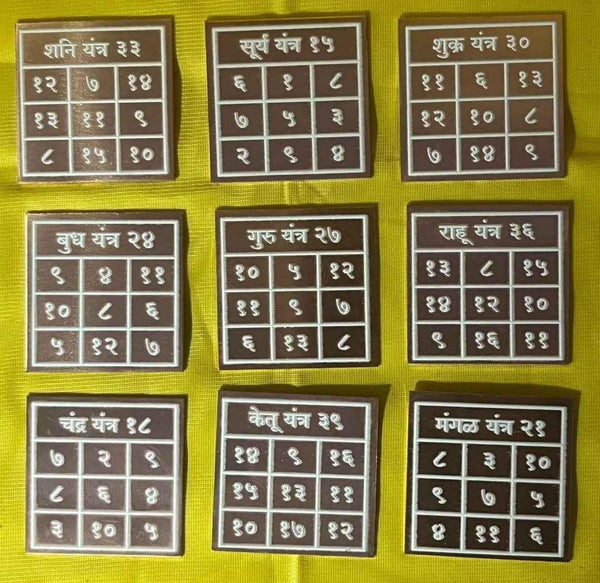
The Pocket Numerical Mangal (Mars) Yantra from aDvaar is designed as a compact yantra associated with Mangal, or Mars, in Vedic astrology. Its pocket-size format is intended for carrying in a wallet, purse, or bag. The numerical design connects the product with the tradition of planetary yantras and their use in personal devotional practice.
In Vedic astrology, Mangal is associated with courage, initiative, physical energy, competition, and determination. These are traditional astrological associations, not scientifically established effects of carrying a yantra. For practitioners who follow this tradition, a yantra can serve as a reminder to pause, recite a mantra, or reconnect with a personal intention during the day.
Mangal in Vedic Astrology: The Planet of Action
Mangal is also known by names such as Bhauma, Angaraka, and Kuja. Within the Navagraha system, it represents Mars and is traditionally associated with action, strength, assertiveness, and the ability to face challenges.
The name Bhauma is associated with Bhumi, or the Earth, and traditional accounts describe Mars as the son of the Earth. Mars is commonly associated with the colour red, the direction south, the gemstone red coral, and Tuesday, known as Mangalvar.
In devotional practice, the mantra Om Bhaumaya Namah is used as a salutation to Bhauma. Some practitioners include mantra recitation on Tuesdays as part of their Mangal-related worship.
These associations vary across astrological traditions. They are best understood as elements of a religious and astrological framework rather than as predictions or guarantees about a person's circumstances.
What Is a Mangal Yantra?
A Mangal Yantra is a ritual or devotional object associated with Mars in Vedic astrology. Yantras are used in different Hindu spiritual traditions as supports for worship, concentration, meditation, and mantra practice.
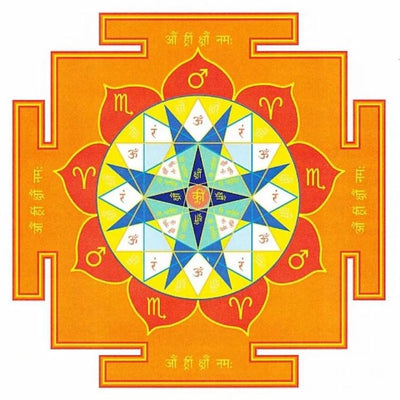
The Sanskrit word yantra is commonly understood as an instrument or device. Traditional yantra designs can include squares, circles, triangles, lotus motifs, and a central point known as the bindu. Numerical yantras use numbers arranged in a structured grid.
The symbolism and interpretation of a particular yantra depend on its design and the tradition in which it is used. A numerical Mangal Yantra should therefore be described according to its actual layout rather than assuming that every planetary yantra uses the same geometry.
Why Choose a Pocket Format?
A pocket yantra is designed for portability rather than permanent display. Its smaller size may suit people who travel, commute, work across multiple locations, or prefer to keep a devotional object with them.
The practical difference is straightforward: a pocket-size object can accompany a person throughout the day, while a larger yantra may be more appropriate for a home shrine or dedicated practice space.
For some practitioners, carrying a meaningful object provides a reminder to pause, reflect, or maintain a personal routine. The value of that reminder is subjective, and carrying a yantra should not be represented as guaranteeing safety, courage, success, or protection from external events.
The Numerical Matrix: Sacred Geometry in Numbers
Numerical yantras use a grid of numbers associated with a religious or astrological tradition. Some use mathematical arrangements known as magic squares.
A magic square is a grid in which the numbers in each row and column—and, in a normal magic square, the principal diagonals—produce the same total. A familiar 3×3 magic square using the integers 1 through 9 has a line sum of 15.
Planetary numerical yantras can use different number arrangements, depending on the tradition and design. The exact grid and its mathematical properties should be verified against the specific product before publishing a numerical total or claiming that all rows, columns, and diagonals have matching sums.
The mathematical properties of a grid can be checked independently. Its religious or astrological meaning, however, comes from the tradition in which it is interpreted. Mathematical structure alone does not demonstrate that a yantra changes planetary influence or produces supernatural effects.
A numerical design can also be practical at a small scale because numbers and grid lines can be engraved in a compact format. For a pocket yantra, legibility, engraving quality, and durability are useful product considerations.
Copper as a Yantra Material
Copper has a long history of use in Hindu ritual objects, including vessels, lamps, and other devotional implements. It is also widely used in electrical and industrial applications because of its physical properties.
Understanding Copper's Physical Properties
Copper is an excellent conductor of electricity and heat. These properties are measurable and help explain its widespread use in electrical wiring, electronics, and industrial manufacturing.
Copper's electrical conductivity does not establish that it transmits planetary influence or spiritual energy. Such interpretations belong to traditional belief systems and should be distinguished from scientific descriptions of the material.
Verify the Product Specifications
Copper products can vary in purity, thickness, finish, weight, and manufacturing method. Before purchasing a copper yantra, review the specifications listed for the exact product.
For the Pocket Numerical Mangal Yantra, verify the current product listing for:
-
Dimensions: confirm the actual size of the pocket version.
-
Material composition: confirm the stated copper grade and whether supporting documentation is available.
-
Thickness and weight: check the values specified for this particular product.
-
Surface finish: confirm whether the surface is coated, polished, or left uncoated.
-
Numerical design: inspect the product images and description for the exact engraved layout.
-
Warranty and certification: review the terms and evidence provided by the manufacturer.
Specifications for a standard-size or advanced yantra should not automatically be applied to the pocket version. Clear, product-specific information allows customers to compare materials and construction more accurately.
How to Use a Pocket Mangal Yantra
Practices for using a Mangal Yantra differ across traditions. If the product fits your devotional routine, you can incorporate it into a simple practice without making the routine elaborate.
Personal Preparation
You may begin by gently wiping the yantra with a clean, soft cloth and placing it in your prayer space. If your tradition includes ritual preparation, follow the guidance appropriate to that practice.
Some practitioners use clean water, flowers, incense, a lamp, or mantra recitation. These are devotional choices rather than universal requirements for every pocket yantra. Avoid exposing a metal object to unnecessary moisture, and dry it thoroughly if it becomes wet.
Daily Mantra Practice
Om Bhaumaya Namah is a commonly used salutation in Mangal-related devotional practice.
A simple routine might include:
-
Sit comfortably in a quiet place.
-
Hold the yantra or place it in front of you.
-
Recite the mantra slowly for a count that feels appropriate to your practice.
-
Spend a few moments reflecting on an intention, such as patience, determination, or responsible action.
Some practitioners choose to recite a mantra 11 or 108 times, while others prefer a shorter practice. These counts are devotional conventions, not scientifically established requirements.
Carrying the Yantra
Keep the yantra in a wallet, purse, bag, or suitable protective covering where it will not be bent or scratched. You do not need to handle it repeatedly throughout the day.
If you carry it as a reminder of a personal intention, you can use a moment during a commute, work break, or trip to pause and reflect. Treat the object as part of a personal spiritual routine rather than as a substitute for practical travel precautions or other safety measures.
Trataka Meditation
Trataka is a traditional yogic practice involving steady visual attention on an object. If you choose to use the yantra as a focus, place it at a comfortable viewing distance with adequate lighting.
Gaze gently at the design, blink naturally, and stop if your eyes become dry, strained, or uncomfortable. You may close your eyes afterward and observe any visual impressions. Avoid forcing yourself to remain unblinking for a fixed period. A symmetrical numerical design can serve as a visual focus, but it is not proven to create special psychological or spiritual effects.
Caring for Copper
-
Wipe the surface with a clean, soft cloth.
-
Keep the yantra dry when it is stored.
-
Avoid abrasive cleaning materials that could damage the engraving.
-
Check the manufacturer's care instructions before using polishing agents.
-
Store the yantra separately from objects that may scratch or bend it.
Copper can change colour over time because of reactions with its environment. A change in appearance does not, by itself, establish the purity or quality of the underlying metal.
Mangal Dosha and Traditional Remedies
Mangal Dosha, also known as Kuja Dosha, is a concept in Vedic astrology relating to the placement of Mars in a birth chart. A commonly discussed interpretation considers Mars in certain houses from the ascendant or Moon, although calculation methods and interpretations can vary across traditions.
Mangal Dosha is frequently discussed in the context of marriage compatibility. Some practitioners recommend devotional practices, mantra recitation, temple worship, or yantras as part of a traditional astrological remedy.
These practices should be understood within their religious and astrological context. A yantra cannot be presented as a guaranteed way to change a horoscope, resolve relationship difficulties, or determine marriage outcomes. For a specific chart interpretation, someone who follows Vedic astrology may choose to consult a qualified practitioner.
Who Might Consider a Pocket Mangal Yantra?
A portable Mangal Yantra may be relevant to people who want a small devotional object to accompany a personal routine.
-
Frequent travellers: people who prefer to keep a familiar devotional object with them while away from home.
-
Students and professionals: individuals who use mantra recitation or quiet reflection as part of their daily routine.
-
Spiritual practitioners: people who follow Navagraha worship or are exploring traditional planetary symbolism.
-
People with limited space: anyone who prefers a portable object rather than a permanent display.
-
People exploring Mangal-related traditions: those learning about the symbolism of Mars in Vedic astrology.
A yantra is not essential to meditation or spiritual reflection. If you are primarily looking for a decorative object, compare the design and finish. If you are interested in a devotional practice, consider the traditions and routines that are meaningful to you.
Pocket vs. Standard-Size Mangal Yantra
The choice between a pocket yantra and a larger version mainly depends on how you intend to use and store it.
A pocket version is designed for portability and may fit into a wallet or bag. A standard-size yantra may be more suitable for a home shrine, desk, or dedicated practice space where the engraved design can be viewed more easily.
Before choosing, compare the actual product dimensions, material specifications, engraving, price, and warranty terms on the relevant product pages. Do not assume that a larger version and a pocket version share identical thickness, weight, purity, certification, or construction details.
If you are considering a collection of planetary yantras, check the current collection listing to confirm which products are included and whether each is available individually.
Mangal Worship and Temple Traditions
Mangal-related worship forms part of the wider Navagraha tradition. The Mangalnath Temple in Ujjain, Madhya Pradesh, is associated with Mars and is an important site in regional devotional traditions. Accounts linking the site with the birthplace of Mars are traditionally attributed to the Matsya Purana.
The Mangal Grah Mandir in Amalner, Maharashtra, is another site associated with Mangal Dev worship. Devotees visit temples such as these for prayer and rituals, including practices connected with planetary worship.
Temple histories, scriptural attributions, ritual details, and claims about a temple's unique status should be checked against reliable official sources before publication. Devotional traditions can explain the cultural significance of Mars worship without requiring claims of guaranteed astrological effects.
About aDvaar
aDvaar offers products for people interested in yantras, sacred geometry, and Vedic devotional traditions. When evaluating a product, customers should be able to review its dimensions, materials, design, price, and care instructions.
Before publishing company-specific claims, confirm the current information about Lakhlani International Pvt. Ltd., manufacturing location, registrations, material certifications, warranty, delivery estimates, and customer ratings against official records and the live website.
For product details, consult the relevant aDvaar product page. Clear specifications help customers understand what they are buying and decide whether it fits their personal practice.
Conclusion: A Portable Reminder for Daily Practice
In Vedic astrology, Mangal is traditionally associated with action, determination, courage, and initiative. A Pocket Numerical Mangal Yantra brings that symbolism into a compact format for people who prefer to keep a devotional object with them throughout the day.
Its practical considerations include portability, legible engraving, verified material specifications, and appropriate care. The astrological meaning of the yantra belongs to a traditional belief system, while claims about dimensions, material composition, and mathematical properties can be checked independently.
If a pocket-size yantra fits your personal practice, compare the product specifications and current price before purchasing. If you prefer a permanent display, a larger format may suit your space better. In either case, choose an approach that reflects your interests, beliefs, and practical needs.
Scientific Perspective
It is useful to distinguish measurable properties from traditional interpretations.
What can be checked:
-
Copper's electrical and thermal conductivity are established physical properties.
-
A numerical grid can be tested to determine whether its rows, columns, and principal diagonals produce the claimed totals.
-
Product dimensions, weight, thickness, material composition, finish, and warranty can be checked against the manufacturer's documentation.
-
Trataka is a traditional visual-attention practice, though the effects of any particular yantra design should not be assumed without evidence.
What is not scientifically established:
-
That carrying a copper yantra changes planetary forces or a person's horoscope.
-
That a yantra guarantees protection during travel, courage, career success, or relationship outcomes.
-
That a specific copper purity or numerical layout proves spiritual effectiveness.
A yantra may hold religious, cultural, or personal significance for someone who follows the tradition. That significance should be distinguished from independently measurable product properties and scientifically demonstrated outcomes.
Frequently Asked Questions
1. What is a Pocket Mangal Yantra?
A Pocket Mangal Yantra is a portable yantra associated with Mars, known as Mangal, Bhauma, or Kuja in Vedic astrology. It is intended for people who want a small devotional object that can be carried in a wallet, purse, or bag. Confirm its exact dimensions, material, and numerical layout on the current product page.
2. What are the traditional associations of a Mangal Yantra?
In Vedic astrology, Mars is traditionally associated with courage, initiative, determination, physical energy, and competition. A Mangal Yantra may be used as a focus for mantra recitation or devotional practice. These associations are traditional beliefs rather than guaranteed outcomes.
3. Can I carry a Mangal Yantra in my wallet?
A pocket-size yantra is designed for portability. Store it where it will not bend or become scratched. Some practitioners use a carried devotional object as a reminder of a personal intention, but it should not replace practical precautions during travel or other activities.
4. How do I prepare a copper Mangal Yantra for personal use?
Preparation practices differ. You may gently wipe the yantra, place it in your prayer space, and recite a mantra if that fits your tradition. Some practices include water, flowers, incense, or a lamp. Follow the guidance of the tradition you observe and dry the metal thoroughly if it becomes wet.
5. Which mantra is used for Mangal Yantra worship?
Om Bhaumaya Namah is a commonly used salutation associated with Mangal. Some traditions also use longer seed-mantra forms. Wording, pronunciation, and repetition counts may vary, so follow the guidance of your preferred tradition if you observe a specific lineage.
6. What is a numerical yantra?
A numerical yantra uses a structured grid of numbers associated with a religious or astrological tradition. Some designs use magic squares, in which rows, columns, and principal diagonals have matching totals. The actual layout and its mathematical properties should be verified for the specific product.
7. Can a Mangal Yantra help with Mangal Dosha?
Some Vedic astrological traditions include yantra worship among devotional remedies associated with Mangal Dosha. This is a traditional practice, not a scientifically established or guaranteed way to change a birth chart or resolve relationship concerns. Someone seeking an astrological interpretation may choose to consult a qualified practitioner.
8. What is the difference between a pocket and standard-size Mangal Yantra?
A pocket yantra is designed for portability, while a larger version may be more appropriate for a dedicated prayer space or display. Compare the dimensions, material composition, engraving, price, and warranty listed for each product. Specifications for one size should not automatically be applied to another.
9. How should I care for a copper Mangal Yantra?
Wipe it with a soft cloth, keep it dry when stored, and avoid abrasive cleaning materials. Copper may change colour over time. Check the manufacturer's care instructions before using polishing agents, especially if the product has a special finish.
10. What should I check before buying a Pocket Mangal Yantra?
Review the product's dimensions, material composition, finish, numerical design, current price, shipping information, and warranty terms. Confirm any claims about purity, certification, manufacturing location, or traditional verification against the seller's published documentation.