
What Is the Pocket Ketu Yantra?
When people hear the word yantra, they may picture a large metal plate displayed in a home shrine. The Pocket Ketu Yantra offers a portable alternative: a compact copper disc designed to fit in a wallet, purse, or bag. Its numerical matrix represents Ketu, one of the nine grahas in the Navagraha system of Vedic astrology.
The Pocket Ketu Yantra belongs to aDvaar's Pocket Nav Graha Collection, a series of portable yantras associated with the nine grahas. In traditional astrological interpretation, Ketu is linked with detachment, introspection, spiritual inquiry, and liberation. For people who follow these traditions, a pocket yantra can serve as a physical reminder of their spiritual intentions throughout the day.

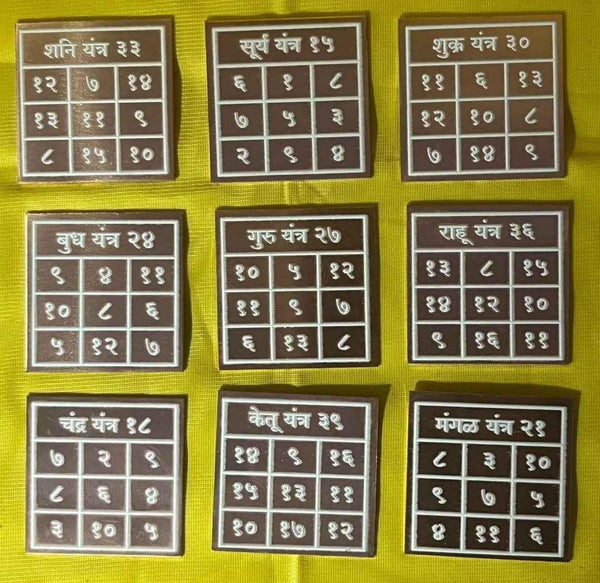
Numerical yantras use numbers arranged in a defined grid rather than relying exclusively on geometric lines, triangles, or lotus patterns. Their meaning comes from the tradition associated with the arrangement. The exact numerical layout and its mathematical properties should be checked against the specific design before publication.
A pocket-sized yantra is intended for portability and personal devotional practice. It can accompany a morning prayer, meditation routine, or quiet moment of reflection without requiring a permanent shrine.
Who Is Ketu in Vedic Astrology?
Ketu is one of the nine grahas in Vedic astrology. Astronomically, it corresponds to the south lunar node, the point where the Moon's orbital path crosses the ecliptic while moving southward. Unlike a physical planet, the lunar node is a calculated point in the Earth-Moon system.
Within Vedic astrology, however, Ketu has a distinct symbolic and mythological identity. Its interpretation is associated with detachment, past experiences, introspection, spiritual inquiry, and the pursuit of liberation.
Ketu's Mythological Origin
A widely known account of Ketu's origin is connected with the Samudra Manthan, or churning of the cosmic ocean. In this narrative, the asura Svarbhanu disguises himself among the devas to drink amrita, the nectar of immortality. After the deception is discovered, Vishnu separates Svarbhanu's head from his body. In the resulting tradition, the head becomes Rahu and the body becomes Ketu.
Rahu and Ketu are consequently represented as complementary forces in Vedic astrology. Rahu is often associated with desire, worldly involvement, and expansion, while Ketu is associated with detachment, inward reflection, and spiritual inquiry. Interpretations vary across astrological schools and texts.
Ketu is also represented in traditional iconography in forms that may include a headless figure or a flag-like symbol. These representations communicate its distinctive place within Hindu religious and astrological traditions.
Ketu's Role in the Navagraha System
Ketu is classified as a Chhaya Graha, commonly translated as a shadow planet. Traditional astrological associations connect it with the nakshatras Ashvini, Magha, and Mula, and with the gemstone known as Cat's Eye or Lehsunia.
Ketu is often called a Moksha Karaka, or significator of liberation, in Vedic astrological interpretation. Its symbolism can include releasing attachments, examining habitual patterns, and exploring spiritual questions. Some traditions also associate difficult Ketu placements with uncertainty or disruption.
These are astrological interpretations rather than scientifically established descriptions of how a celestial body affects an individual's personality or circumstances. A yantra can be used as part of a personal spiritual routine without treating astrological interpretations as guaranteed outcomes.
The Ketu Temple Tradition
The Naganathaswamy Temple at Keezhaperumpallam in Tamil Nadu is widely associated with Ketu worship and is included in the region's Navagraha pilgrimage traditions. Devotees visit such temples to pray, make offerings, and participate in rituals associated with planetary worship.
Temple traditions, ritual details, travel distances, and specific claims about remedies should be checked against reliable temple or tourism sources before publication. The practices followed by devotees may vary.
Why Use a Numerical Matrix Design?
Yantras are represented in different forms. Some use intersecting lines, triangles, circles, and lotus motifs, while numerical yantras use a grid of numbers associated with a particular traditional system.
Understanding the Mathematics
A magic square is a mathematical arrangement in which the values in each row and column—and, in a normal square, the principal diagonals—have the same total. A familiar 3×3 magic square uses the integers 1 through 9 and has a line sum of 15.
Planetary numerical yantras may use different arrangements or number sets depending on the tradition and design. The specific grid used for a Ketu yantra should therefore be checked directly. Do not assume that every Ketu numerical yantra uses the same total or that a particular sum proves a design's religious authenticity.
Numerical yantras combine a structured mathematical arrangement with traditional religious or astrological symbolism. The mathematical properties of a grid can be tested independently; its spiritual meaning belongs to the tradition in which it is used.
Why Numbers Instead of Lines?
A numerical matrix can be practical on a small surface because its cells and numbers can be engraved in a compact format. A line-based yantra, by contrast, may use a more intricate pattern of geometric forms.
Neither format should automatically be considered more authentic or effective than the other. The significance of a yantra depends on the particular design, its traditional context, and the way a practitioner chooses to incorporate it into spiritual practice.
For a portable yantra, size and legibility are practical considerations. Check the actual product image to confirm that the numerical layout is clear and accurately described.
How to Include the Pocket Ketu Yantra in Daily Practice
The Pocket Ketu Yantra is designed for portability rather than permanent installation. If it fits your personal practice, you can use it as a reminder to pause, reflect, or reconnect with an intention during the day.
A Simple Morning Practice
Before leaving home, hold the yantra comfortably in your hands, if you wish. Take a few calm breaths and silently repeat the mantra Om Ketave Namah, traditionally used in Ketu-related devotional practice.
You can use this brief moment to set an intention for the day, such as approaching uncertainty with patience or making time for reflection. The practice can take less than a minute and does not need to be complicated.
Carrying the Yantra Through the Day
Keep the yantra in a wallet, purse, pocket, or bag, provided it is stored safely and does not scratch other belongings. You do not need to look at it or handle it repeatedly.
Some practitioners find that carrying a meaningful object helps them remember a personal intention. In this sense, the pocket yantra can act as a physical reminder of a devotional or reflective routine. Claims that carrying it guarantees protection or changes external events should be understood as beliefs rather than established facts.
Evening Reflection
At the end of the day, you may take a moment to reflect on your experiences, acknowledge what you learned, and consider what you want to approach differently tomorrow. If it is part of your practice, hold the yantra while reciting your chosen mantra.
This is an optional personal routine, not a requirement for owning or carrying a yantra.
Trataka Meditation
Trataka is a traditional yogic practice involving steady, comfortable gazing at an object. If you choose to use the yantra as a focus, place it at a comfortable viewing distance with adequate lighting and look at it without forcing your eyes to remain open.
Blink naturally, and stop if your eyes become dry, strained, or uncomfortable. Closing your eyes afterward and noticing any visual impressions is optional. Trataka should be approached gently rather than as a test of endurance, and a numerical design is not proven to produce special visual or psychological effects.
Mantra and Meditation: Om Ketave Namah
Om Ketave Namah is a commonly used invocation in Ketu-related devotional practice. It can be understood as a respectful salutation to Ketu within the Vedic astrological tradition.
A Simple Practice
-
Sit comfortably in a quiet place.
-
Hold the yantra or place it in front of you.
-
Recite Om Ketave Namah slowly, for example, 9 or 108 times if that count fits your practice.
-
Allow a few moments of quiet reflection afterward.
The number of repetitions is a matter of devotional convention and personal preference. A short, consistent routine may be easier to maintain than an elaborate ritual.
Beej Mantra and Extended Mantra
One mantra used in some Ketu-related practices is Om Sraam Sreem Sraum Sah Ketave Namah. Mantra wording and pronunciation can vary across traditions, so practitioners who follow a particular lineage may prefer guidance from a knowledgeable teacher.
Neither mantra should be presented as a scientifically proven method for activating a physical object or guaranteeing a particular result. For many devotees, the value of mantra practice lies in devotion, repetition, attention, and the meaning it holds within their tradition.
Copper as a Yantra Material
Copper has a long history of use in religious objects, vessels, lamps, and ritual implements across Hindu traditions. It is also widely used in modern electrical and industrial applications because of its physical properties.
Copper's Physical Properties
Copper is an excellent conductor of heat and electricity. These are measurable material properties that make it useful in wiring, electronics, and many industrial applications.
Electrical conductivity does not establish that copper transmits planetary influence or spiritual energy. Such interpretations belong to religious or spiritual belief systems and should be distinguished from scientific claims.
Understanding Copper Purity Claims
Copper products can differ in composition, thickness, finish, and manufacturing method. Terms such as pure copper or 95%+ electrolytic copper should be used only when the relevant specification is confirmed for the exact product being sold.
The specifications of a standard-size yantra should not automatically be applied to a pocket-size version. Before publishing product details, verify the pocket yantra's material composition, dimensions, finish, and any supporting documentation against the current product listing or manufacturer records.
When comparing products, look for clear material descriptions and transparent specifications rather than relying only on colour, appearance, or marketing terminology.
How to Prepare and Care for Your Yantra
Personal Preparation
Practices for preparing a yantra differ across traditions. If you would like to include the Pocket Ketu Yantra in your devotional routine, you can begin by gently wiping it with a clean, dry cloth, placing it in your prayer space, and reciting a mantra or setting a personal intention.
Some traditions include water, offerings, sunlight, or formal consecration ceremonies. These are not universal requirements, and you should follow the guidance of your own tradition if you choose to perform a more formal ritual. Avoid leaving a metal object in direct sunlight for long periods if it becomes uncomfortably hot to handle.
Daily Care
-
Wipe the surface with a clean, soft cloth.
-
Keep the yantra dry when it is not being used.
-
Avoid abrasive materials that may scratch the engraved design.
-
Store it separately from objects that could bend or damage it.
-
Expect copper's surface appearance to change over time as it reacts with its environment.
If you want to polish the copper, check the manufacturer's care guidance first, especially if the product has a coating or special finish. Avoid assuming that every copper-coloured item is solid copper or that patina alone proves material purity.
Who Might Choose a Pocket Ketu Yantra?
A portable Ketu yantra may be relevant to people who want a small object to accompany their personal devotional or reflective practice, including:
-
Spiritual seekers and meditators who follow Vedic or yogic traditions.
-
People who travel frequently and prefer to keep a devotional object with them.
-
Individuals going through a period of change who want a physical reminder to pause and reflect.
-
Practitioners exploring Navagraha worship who wish to learn more about Ketu's traditional symbolism.
-
People observing Ketu-related astrological practices who want to incorporate a yantra into a broader routine.
If you are seeking advice about a specific astrological concern, you may choose to consult a qualified practitioner. A yantra should not be presented as a guaranteed remedy for personal, financial, medical, or professional difficulties.
aDvaar's YantraMitra may also help visitors explore products based on the information available through the website. Product recommendations should be treated as informational assistance, not as a substitute for individual religious or astrological guidance.
The Pocket Nav Graha Connection
Ketu is one of the nine grahas represented in the Navagraha tradition: Surya (Sun), Chandra (Moon), Mangal (Mars), Budh (Mercury), Guru (Jupiter), Shukra (Venus), Shani (Saturn), Rahu, and Ketu.
The Pocket Ketu Yantra can be explored alongside other planetary yantras by people who follow Navagraha worship. Rahu and Ketu are commonly discussed together because they represent the ascending and descending lunar nodes, respectively, and their symbolism is often interpreted in relation to desire and detachment.
If you are considering a complete set, confirm the current collection contents, individual product specifications, and availability before purchasing. Each product should be evaluated according to its own documented materials and design.
About aDvaar
aDvaar presents yantras and related products for people interested in sacred geometry, Vedic traditions, and personal devotional practice. Before publishing specific company claims, confirm the current details about the manufacturer, place of manufacture, registrations, material specifications, guarantees, customer ratings, and delivery timelines against official company records and the live website.
For product details, consult the relevant product page and its published specifications. Clear product information helps customers understand what they are buying and how the item may fit into their own practice.
Conclusion
The Pocket Ketu Yantra combines a portable format with symbolism drawn from the Navagraha tradition. For people who follow Vedic astrology or devotional practices, it can serve as a reminder to make space for reflection, mantra recitation, and spiritual inquiry throughout the day.
Its numerical layout, material composition, and dimensions should be described according to the actual product specifications. Spiritual interpretations of Ketu and yantra practice belong to traditional belief systems, while mathematical and material claims can be checked independently.
Whether you carry a pocket yantra or keep one in a personal prayer space, the most important practical considerations are understanding the tradition, caring for the object appropriately, and choosing a routine that is meaningful and comfortable for you.
Frequently Asked Questions
1. What is a Pocket Ketu Yantra?
The Pocket Ketu Yantra is a portable yantra associated with Ketu, the south lunar node in Vedic astrology. It is intended for people who want to keep a devotional object with them in a wallet, purse, or bag. Confirm its dimensions, material, and numerical design against the current product listing.
2. What mantra is used for Ketu?
Om Ketave Namah is a commonly used invocation in Ketu-related devotional practice. Some traditions also use the extended mantra Om Sraam Sreem Sraum Sah Ketave Namah. Pronunciation and practice may vary across lineages.
3. Can I carry a Ketu yantra in my pocket or wallet?
A pocket-size yantra is designed for portability. Keep it in a suitable place where it will not be bent, scratched, or damaged. Some people use a carried object as a reminder of their spiritual intention; claims of guaranteed protection should be understood as traditional belief, not established fact.
4. How do I prepare my Pocket Ketu Yantra for personal use?
You can begin by gently cleaning the surface, placing it in your prayer space, and reciting a mantra if that fits your tradition. Formal preparation or consecration practices differ, so follow the guidance of your own tradition if you prefer a specific ritual.
5. What is a numerical yantra?
A numerical yantra uses a structured arrangement of numbers associated with a religious or astrological tradition. Some numerical designs use magic squares, in which rows, columns, and principal diagonals have matching totals. The specific arrangement and mathematical properties should be verified for the actual design.
6. Which direction should a Ketu yantra face?
Directional recommendations vary across traditions and specific yantra practices. Since a pocket yantra is designed to be carried, fixed placement directions may be less relevant to its everyday use. For a home shrine, follow the guidance of the tradition you observe rather than treating one direction as universally required.
7. Is copper the best material for a Ketu yantra?
Copper is commonly used in traditional ritual objects and has well-established physical properties, including high electrical and thermal conductivity. Whether a particular material is preferred for a yantra depends on the tradition and product design. Verify any copper-purity claim against the specification for the exact item.
8. How should I care for a copper pocket yantra?
Wipe it with a soft cloth, keep it dry when stored, and avoid abrasive cleaning. Copper may change colour over time. Before using polishing agents, check the manufacturer's instructions to avoid damaging the engraved design or any surface finish.
9. Do I need an astrologer's advice before using a Ketu yantra?
You can include a devotional object in a personal spiritual routine according to your own beliefs. If you are seeking a specific astrological interpretation or remedy, you may choose to consult a qualified practitioner. A yantra should not be treated as a guaranteed solution to personal or professional problems.
10. What is the difference between a pocket yantra and a standard-size yantra?
A pocket yantra is intended for portability, while a larger yantra may be more suitable for a dedicated prayer space or display. Compare the actual dimensions, weight, material composition, engraving, and finish listed for each product rather than assuming that specifications for one size apply to the other.