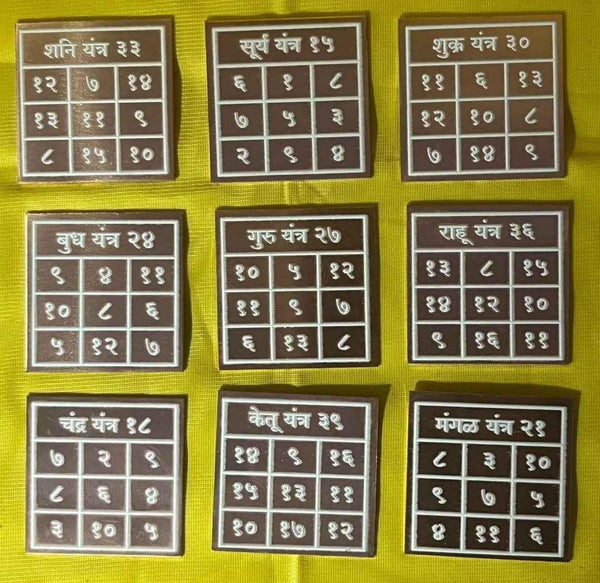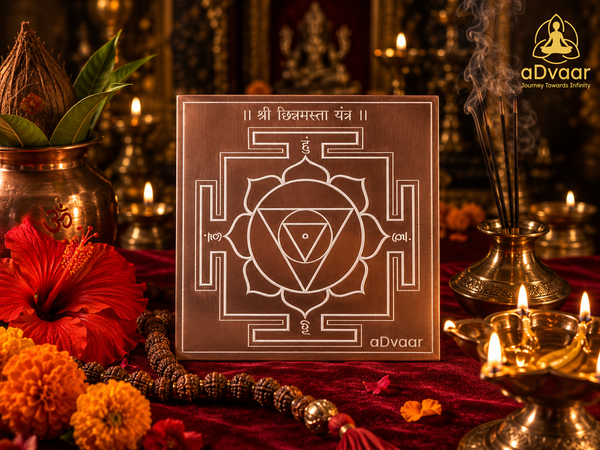

Knowledge, sound judgment, and guidance are important in everyday life—from preparing for an examination to making a business decision or learning from a mentor. In Vedic astrology, these qualities are traditionally associated with Guru, or Jupiter, a graha linked with wisdom, learning, prosperity, and spiritual growth.
For people who want a portable reminder of this tradition, the Pocket Numerical Guru (Jupiter) Yantra offers a compact format. Described as a 2-inch copper yantra featuring a numerical matrix design, it is intended for carrying in a wallet or purse or keeping on a desk as part of a personal devotional routine.

A yantra does not guarantee fortune, opportunities, or success. Its meaning comes from the spiritual tradition and practice with which it is used. This guide explores the traditional symbolism of Guru, the numerical design, mantra practice, everyday use, and the differences between pocket and larger yantras.
What Is a Pocket Guru Yantra?
A yantra is a geometric diagram used in Hindu spiritual traditions for worship, meditation, and concentration. Depending on the tradition, a yantra may include geometric shapes, intersecting lines, numbers, lotus patterns, or a central point known as the bindu.
A Pocket Guru Yantra is a portable version associated with Guru, the Sanskrit name commonly used for Jupiter in Vedic astrology. The pocket format is intended for people who prefer to carry a small spiritual object rather than keep a yantra exclusively on a home altar.
The aDvaar Pocket Numerical Guru (Jupiter) Yantra is described as a 2-inch copper plate with a numerical matrix design. The product information supplied for this article identifies its mantra focus as Om Gurave Namah.
It is part of the Pocket Nav Graha Collection, which brings together pocket-size yantras associated with the nine grahas in Vedic astrology. Check the current product listing for the exact materials, included accessories, dimensions, price, and collection contents.
The Significance of Guru (Jupiter) in Vedic Tradition
In the Navagraha tradition, Guru is associated with Brihaspati, the teacher of the devas. Jupiter is traditionally connected with wisdom, education, ethical judgment, generosity, spiritual development, and expansion.
In Jyotisha, Jupiter is associated with Sagittarius (Dhanu) and Pisces (Meena). Astrological interpretations may consider Jupiter's placement in a birth chart when discussing education, teachers, religious life, prosperity, and personal development. These interpretations belong to the astrological tradition and should not be treated as scientifically established predictions.
Guru-related worship may include prayer, mantra recitation, offerings, temple visits, and the use of devotional objects such as yantras. Some practitioners regard Thursday, known as Guruvar or Brihaspativar, as a day for Guru-related worship.
The pocket yantra adapts this symbolism to a mobile lifestyle. Rather than being a fixed installation intended to represent a room or building, it can serve as a personal reminder to pause, reflect, chant a mantra, or reconnect with a spiritual routine during a busy day.
Numerical Matrix Design: Mathematics and Traditional Meaning
The numerical matrix is a defining feature of the Pocket Numerical Guru Yantra. Numerical grids have appeared in different mathematical and cultural traditions, including traditions associated with magic squares.
A magic square is a grid of numbers in which the numbers in each row and column share a common sum. In a normal magic square, both main diagonals also have the same sum. Whether a particular product's numerical pattern meets this definition depends on the actual numbers and their arrangement.
Within some spiritual and astrological traditions, numerical grids are associated with particular planetary deities or symbolic meanings. These interpretations give the design religious or devotional significance for practitioners.
It is useful, however, to distinguish three different ideas:
-
Mathematical structure: The numbers and their sums can be checked directly.
-
Visual use: A structured design can provide a consistent focal point for meditation or reflection.
-
Spiritual interpretation: The meaning attributed to a planetary grid depends on the tradition in which it is used.
The mathematical properties of a grid do not demonstrate that it changes a horoscope, transmits planetary energy, or guarantees wisdom, prosperity, or good fortune.
A numerical design can be practical in a compact format because it can remain recognisable at a small scale. For the pocket version, refer to the product photographs and current listing to understand the actual layout.
Why Copper Is Used for Yantras
Copper has a long history of use in ritual objects and devotional items. It is workable, durable under suitable care, and a well-established conductor of heat and electricity. Copper can also develop a natural patina as it ages.
In Hindu spiritual traditions, the choice of material for a devotional object may carry symbolic or ritual significance. That cultural meaning should be distinguished from copper's measurable physical properties.
The supplied product description identifies the Pocket Numerical Guru Yantra as a copper plate. The specifications mentioned for aDvaar's larger yantras—including particular copper-purity percentages or thickness measurements—should not automatically be applied to the pocket version unless the product listing explicitly confirms them.
Likewise, copper's electrical conductivity does not establish that a yantra stores or transmits spiritual or planetary energy. Buyers who value material specifications should review the product description and ask the seller for documentation where necessary.
Mantra and Traditional Preparation
The mantra focus supplied for the Pocket Guru Yantra is:
Om Gurave Namah
This is an invocation associated with Guru. Another mantra used in some Guru-related practices is:
Om Graam Greem Graum Sah Gurave Namah
Mantra wording, pronunciation, repetition counts, and ritual requirements can vary across traditions. If you follow a particular teacher, priest, or family practice, use the guidance appropriate to that tradition.
A Simple Personal Routine
If you wish to incorporate the pocket yantra into a devotional routine, you may choose to:
-
Place it on a clean, stable surface.
-
Sit comfortably in a quiet place.
-
Take a few natural breaths to settle your attention.
-
Repeat Om Gurave Namah at a comfortable pace.
-
Use the yantra as a visual focal point if it helps you remain attentive.
-
End the practice in accordance with your own tradition or simply return to your day.
Some devotional practices include washing the yantra, placing it on a yellow cloth, lighting a lamp, or reciting a mantra 108 times. These are traditional ritual choices, not scientifically established activation requirements. Use fire and incense safely, and follow the product's care instructions before exposing a copper plate to water or other substances.
A shorter routine can be easier to maintain than an elaborate ritual. Choose a practice that is comfortable, meaningful, and consistent with your beliefs.
How to Carry and Care for a Pocket Guru Yantra
The pocket format is intended for portability, making it suitable for a wallet, purse, card holder, or travel bag if the plate fits securely.
Daily carry: You may keep the yantra with other personal belongings as a reminder of your spiritual practice. Protect it from bending, scratching, and prolonged moisture.
Desk or altar: At home or in the workplace, place it on a clean, stable surface. If your tradition specifies an altar arrangement or direction, follow the guidance you normally use.
Meditation: If you use the yantra as a visual focus, keep your gaze comfortable and blink naturally. Stop if your eyes feel dry or strained. There is no need to stare without blinking or force a particular sensation.
Care: Follow the manufacturer's instructions. In general, handle copper gently, use a soft cloth for wiping, avoid abrasive cleaners, and store the plate in a clean, dry place. Copper may gradually change colour or develop a patina.
The product is designed for portable devotional use; it should not be treated as a guarantee of continuous spiritual protection or a substitute for practical judgment.
Who Might Consider a Pocket Guru Yantra?
A pocket Guru Yantra may interest people who are drawn to Jupiter's traditional associations or want a small object to incorporate into their personal practice.
Students and educators: The symbolism of Guru is associated with learning, knowledge, and teachers. A yantra may serve as a personal reminder of the effort, discipline, and curiosity involved in learning.
Professionals and business owners: Some practitioners connect Jupiter with judgment, ethical conduct, and opportunities. The yantra may be used as a devotional reminder before a meeting or during a daily reflection routine, but it cannot guarantee a business outcome or better decision.
Spiritual practitioners: Those who already practise mantra recitation or worship may appreciate a portable object that accompanies them while travelling.
Travellers: A small yantra can make it easier to keep a familiar devotional object nearby when away from home.
Beginners: A pocket-size product may be a manageable way to explore yantra traditions without committing to a larger installation.
No one should feel that they must purchase a yantra to achieve educational success, prosperity, or spiritual development. These outcomes depend on many factors, and spiritual objects should be understood within the context of personal belief.
Pocket Guru Yantra vs. a Standard Guru Yantra
The main difference between pocket and larger yantras is their intended format and placement.
The Pocket Numerical Guru (Jupiter) Yantra is designed for portable use. Its compact format can suit a wallet, purse, travel bag, or personal desk.
The Advanced Guru (Jupiter) Yantra is a larger product described by aDvaar as intended for fixed placement within its Navagraha and Vastu system. Its current product page should be consulted for dimensions, material details, price, and placement instructions.
For people interested in all nine grahas, aDvaar also lists the Pocket Nav Graha Collection and the Advanced Nav Graha Yantra Collection.
A larger yantra is not scientifically established to be more powerful than a smaller one. Choose a format based on your intended use, available space, budget, and the practices you follow.
Guru Worship and Temple Traditions
Guru or Brihaspati is honoured in several Indian devotional traditions. Alangudi in Tamil Nadu is associated with Guru Bhagavan in the Navagraha temple tradition. Thursday worship and offerings involving yellow-coloured items are also found in some Guru-related practices.
Temple histories and ritual explanations may differ between sources. If you plan to include a specific legend, historical claim, or ritual instruction in published content, verify it against reliable temple or cultural sources and present devotional narratives as traditional accounts rather than independently verified historical facts.
The wider Guru tradition emphasises learning, guidance, and the role of teachers. For many practitioners, the meaning of a yantra is connected to this broader devotional context rather than to the physical object alone.
Why Consider aDvaar?
aDvaar offers pocket-size numerical yantras and larger products associated with individual grahas and the Navagraha tradition. The Pocket Numerical Guru Yantra is intended for people who prefer a portable format for personal devotional use.
Before purchasing, review the official product page for the latest price, material specifications, dimensions, included items, shipping details, warranty terms, and availability. Claims about certification, copper purity, registration, reviews, or guarantees should be supported by current documentation.
Conclusion
The Pocket Guru Yantra is a portable devotional object associated with Jupiter's traditional symbolism of wisdom, learning, guidance, and expansion. Its compact format is designed for people who want to carry a yantra or keep one nearby while studying, working, or travelling.
If it fits your beliefs, you can incorporate it into a personal routine using Om Gurave Namah, quiet reflection, or another practice from your tradition. The significance of the yantra comes from the meaning and discipline you bring to it—not from a guarantee of fortune, career progress, or educational success.
Explore the Pocket Numerical Guru (Jupiter) Yantra or browse the Pocket Nav Graha Collection for more information about aDvaar's portable yantras.
Scientific Perspective
Copper's conductivity, the mathematical properties of numerical grids, and the historical use of visual objects in meditation can be discussed independently of spiritual interpretations.
A numerical grid can be checked mathematically, but that does not establish that it produces planetary effects. Similarly, a yantra can serve as a visual focal point during a personal meditation routine without proving that it changes a person's health, finances, career, or destiny.
Traditional claims about Jupiter's blessings, prosperity, and planetary remedies should be understood as religious or astrological beliefs rather than scientifically verified outcomes.
Frequently Asked Questions
1. What is a Pocket Guru Yantra?
A Pocket Guru Yantra is a compact yantra associated with Guru, or Jupiter, in Vedic astrology. The supplied aDvaar product description identifies the pocket version as a 2-inch copper plate featuring a numerical matrix design.
2. What are the traditional benefits of a Guru Yantra?
Guru is traditionally associated with wisdom, learning, guidance, prosperity, and spiritual growth. A Guru Yantra may be used as part of a devotional practice, but these associations do not establish guaranteed educational, financial, or career outcomes.
3. What mantra is used with the Pocket Guru Yantra?
The supplied product information identifies Om Gurave Namah as its mantra focus. Some traditions also use Om Graam Greem Graum Sah Gurave Namah. Follow the instructions of your chosen tradition if you practise under a teacher or priest.
4. Can I carry a Guru Yantra in my wallet?
The pocket format is intended for portable daily carry. You can keep it in a wallet or purse if it is protected from bending, scratching, and moisture.
5. Is Thursday considered important for Guru worship?
Thursday, known as Guruvar or Brihaspativar, is traditionally associated with Guru or Brihaspati in several Hindu practices. Rituals and observances vary by region and lineage.
6. What is the difference between a pocket and a standard Guru Yantra?
The pocket version is designed for portable use, while a larger yantra may be intended for a fixed altar or placement. The choice depends on your intended use and the instructions associated with the particular product.
7. Is a copper yantra scientifically proven to transmit Jupiter's energy?
No. Copper is a measurable conductor of heat and electricity, but those properties do not establish the transmission of planetary or supernatural energy through a yantra.
8. How should I care for my Pocket Guru Yantra?
Follow the manufacturer's care instructions. In general, wipe it gently with a soft cloth, avoid abrasive cleaners, and store it in a clean, dry place. Copper can naturally develop a patina.
9. Can the Pocket Guru Yantra be given as a gift?
It may be a suitable gift for someone who appreciates Hindu devotional objects, astrology, or yantra traditions. The Pocket Nav Graha Collection is another option for someone interested in the broader Navagraha tradition. Check current prices and collection contents before ordering.
10. How long does a Guru Yantra take to show results?
There is no scientifically established timeline for spiritual or astrological results from a yantra. Be cautious of promises that guarantee a particular result within a fixed number of days. If you choose to use one, focus on whether the devotional routine is meaningful to you.