
There is a moment many of us recognize but rarely discuss: the instant when anger stops being a problem and becomes a source of focused determination. Not the reactive anger that damages relationships and clouds judgment, but the kind of intensity that helps a person confront injustice, establish boundaries, and act with clarity.
In Hindu spiritual tradition, this transformation is associated with Krodh Bhairav, the fourth form of the Ashta Bhairavas. The Krodh Bhairav Yantra is a sacred geometric instrument dedicated to this form of Bhairav, traditionally associated with righteous anger, protection, and the restoration of dharma.


For those reflecting on suppressed anger, injustice, personal boundaries, or emotional turbulence, the Krodh Bhairav tradition offers a spiritual framework for transforming reactive emotion into disciplined intention.
What Is Krodh Bhairav?
Bhairava is a fierce manifestation of Lord Shiva associated with the removal of obstacles to awareness, truth, and spiritual discipline. Within the Bhairav tradition, the Ashta Bhairavas are eight forms associated with different directions and spiritual functions.
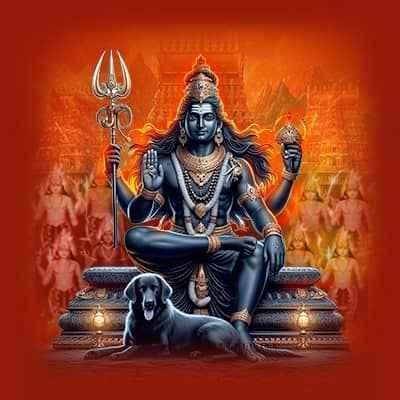
Krodh Bhairav is traditionally identified as the fourth of these eight forms. The supplied traditional descriptions associate him with the South-West direction, also known as Nairrutya Disha, and depict him with a dark blue or smoke-coloured complexion, four arms, and attributes such as a conch, discus, mace, and bowl. Garuda is described as his vehicle, Vaishnavi as his consort, and Saturn (Shani) as his astrological association in the referenced tradition.
The word Krodha means anger. In this spiritual context, however, Krodh Bhairav is associated not with uncontrolled personal rage but with divine righteous anger: the symbolic force that confronts wrongdoing and restores order.
This distinction is important. Krodh Bhairav worship is not an encouragement to act out of revenge or hostility. Instead, devotees may interpret the tradition as a reminder to channel intense emotions through discipline, discernment, and dharma.
The Meaning of Divine Righteous Anger
Anger can arise when a person experiences injustice, violated boundaries, or circumstances that conflict with deeply held values. How that anger is expressed can influence whether it contributes to constructive action or causes further harm.
The traditional symbolism of Krodh Bhairav provides a framework for contemplating this distinction:
-
Recognise the emotion: Acknowledge anger rather than ignoring or denying it.
-
Understand its source: Reflect on whether the feeling arises from injustice, fear, frustration, or personal offence.
-
Respond with discipline: Direct attention toward appropriate action instead of impulsive reactions.
-
Release unnecessary hostility: Avoid allowing anger to become a lasting source of resentment or harm.
From a psychological perspective, anger can sometimes signal perceived boundary violations or unmet needs. However, the traditional spiritual concept of divine anger is not identical to a clinical model of emotion regulation.
The Krodh Bhairav Yantra can serve as a visual focal point during meditation and reflection. Practitioners may use it to reinforce their intention to act with courage, clarity, and self-control.
What Is the Krodh Bhairav Yantra?
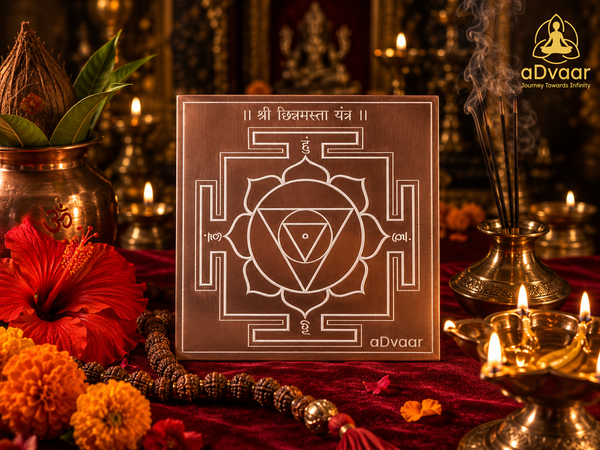
A yantra is a sacred geometric instrument traditionally used for worship, meditation, and spiritual contemplation. Its design may include geometric lines, triangles, circles, lotus motifs, and a central point called the Bindu.
The Krodh Bhairav Yantra represents the spiritual qualities associated with Krodh Bhairav through a geometric form.
Within traditional yantra practice, the Bindu is contemplated as a focal point of concentrated awareness, while surrounding geometric elements are interpreted according to the symbolism of the particular yantra.
The aDvaar product description identifies the Krodh Bhairav Yantra as part of the broader Bhairav Sadhana tradition. The brand describes its design as following traditional Yantra Shastra standards and being suitable for Trataka meditation.
Specific geometric details, including the precise number of triangles or petals in this particular design, should be confirmed against the manufacturer's current documentation rather than assumed from general yantra conventions.
Why the Krodh Bhairav Yantra?
Different yantras are associated with different spiritual traditions and intentions. The Krodh Bhairav Yantra is traditionally connected with anger transformation, protection, boundary-setting, and justice.
According to the supplied aDvaar product description, Krodh Bhairav represents the force that arises when justice must be served. The brand associates this form with transforming destructive anger into focused power and supporting those who feel wronged or suppressed.
The principal traditional associations include:
Transforming Destructive Emotions
Practitioners may use the yantra as a focus for reflecting on anger and cultivating more deliberate responses to difficult situations.
Protection and Courage
Krodh Bhairav's fierce form is traditionally associated with protection and the ability to confront adversity. Devotees may find this symbolism meaningful when facing personal or professional challenges.
Establishing Boundaries
The tradition can serve as a reminder to recognise personal boundaries, communicate them clearly, and respond appropriately when they are violated.
Justice and Dharma
Krodh Bhairav is associated with righteous action and the restoration of order. This makes the tradition meaningful to practitioners contemplating fairness, accountability, and responsibility.
These are traditional religious and spiritual associations, not guaranteed outcomes. A yantra should not be regarded as a substitute for practical action, professional support, or appropriate legal assistance.
The Krodh Bhairav Yantra is included in the Bhairav Sadhana Collection, although it may also be explored individually by those interested in this particular Bhairav form.
Sacred Geometry and Material: The Science Behind the Yantra
Copper: Why This Material Matters
Copper is widely used in electrical engineering because of its high electrical conductivity. Its conductivity is a measurable physical property, while traditional yantra practices attach additional symbolic and spiritual significance to copper.
According to the supplied aDvaar product information, the Krodh Bhairav Yantra is manufactured using 95%+ electrolytic copper, with a thickness of 1mm or more. The product is described as having a natural matte copper finish and a raw back without coating or plating.
The stated dimensions are approximately 4 × 4 inches (10.16 × 10.16 cm), with a weight of 90–95 grams. These specifications should be checked against the current product listing before publication.
In traditional yantra practice, copper is associated with the material foundation of a sacred object. Claims that copper stores or transmits subtle spiritual energies belong to the traditional belief system and should be distinguished from experimentally established material properties.
Precision Geometry and Traditional Standards
Traditional yantra craftsmanship emphasises proportion, symmetry, and the relationships between geometric elements.
The supplied product description states that the Krodh Bhairav Yantra follows traditional Yantra Shastra standards and has been reviewed by qualified practitioners.
For a precise product description, any claim of certification should be supported by current documentation identifying the standard, certifying authority, or review process.
The geometric design also provides a stable visual reference for meditation. Its central Bindu can be used as a focal point during concentration exercises.
Trataka Meditation
Trataka is a traditional fixed-gaze meditation practice in which the practitioner gently focuses on a visual object.
For yantra-based Trataka, the central Bindu is often used as the point of attention. Practitioners can begin with a short duration and increase gradually as comfortable.
The aDvaar product description identifies the Krodh Bhairav Yantra as suitable for Trataka. Claims about improved concentration or spiritual connection should be presented according to the evidence available and distinguished from traditional interpretations of the practice.
How to Use and Worship the Krodh Bhairav Yantra
The following steps reflect the supplied aDvaar instructions and commonly described yantra worship practices. Specific rituals may vary according to family tradition, sampradaya, or a guru's guidance.
Step 1: Prepare the Yantra
Gently rinse the yantra with clean water and pat it dry with a soft cotton cloth. Gangajal may be used according to your devotional practice.
Step 2: Prepare the Worship Space
Place the yantra on a clean red or yellow cloth in a puja room, altar, or dedicated meditation space.
Step 3: Light the Offerings
Light a ghee lamp and incense if these form part of your usual worship practice.
Step 4: Sit in Position
The supplied instructions recommend sitting facing East, with the yantra positioned at eye level or slightly above while seated.
The recommended placement direction for the yantra itself should be followed according to the manufacturer's instructions or the practitioner's established tradition.
Step 5: Chant the Mantra
The supplied instructions refer to chanting the Mul Mantra 108 times while gently focusing on the central Bindu.
Because the specific Mul Mantra was not identified in the supplied research, consult the mantra card accompanying the product or follow the guidance of a qualified practitioner rather than assuming a particular mantra.
Placement of the Krodh Bhairav Yantra
The supplied traditional description associates Krodh Bhairav with the South-West direction, or Nairrutya Disha.
For placement, follow the product instructions or the guidance of your spiritual tradition. The supplied aDvaar instructions also mention positioning the yantra so that it faces East and remains at a comfortable viewing height during seated practice.
Keep the yantra in a clean, respectful space where it can be used consistently for worship or meditation.
Daily Practice
A simple daily routine may include:
-
Offering fresh flowers.
-
Lighting incense or a lamp, if customary.
-
Reciting the mantra prescribed for your practice.
-
Spending a few minutes in quiet contemplation.
-
Reflecting on one practical way to respond to challenges with greater discipline.
The duration can be adapted to personal circumstances. Regularity and a clear intention may be more practical than attempting a long ritual that is difficult to maintain.
Trataka Meditation with the Krodh Bhairav Yantra
-
Sit approximately 1.5–2 feet from the yantra.
-
Position it so the central Bindu is comfortably visible.
-
Gaze softly at the Bindu without forcing your eyes to remain open.
-
Begin with approximately 1–2 minutes and increase gradually if comfortable.
-
Stop if you experience eye strain or discomfort.
Trataka is a traditional concentration practice. Its spiritual interpretations should be distinguished from claims about measurable psychological or physiological outcomes.
Care and Maintenance
To maintain a copper yantra:
-
Avoid harsh chemical cleaners.
-
Clean gently with water when needed.
-
Pat dry with a soft cotton cloth.
-
Store in a clean, respectful location.
-
Follow the manufacturer's current instructions for polishing or removing tarnish.
Copper naturally changes colour over time. A patina can develop on its surface, and this is a normal characteristic of copper.
Before using acidic cleaning methods or abrasive materials, check the manufacturer's care guidance to avoid unwanted changes to the finish.
Who May Find the Krodh Bhairav Yantra Meaningful?
Those Facing Difficult Situations
The symbolism of Krodh Bhairav may be meaningful to people reflecting on conflict, perceived injustice, or difficult personal and professional circumstances.
Those Working on Emotional Self-Regulation
Practitioners may use the yantra as a reminder to pause, understand the source of anger, and choose a deliberate response rather than acting impulsively.
Spiritual Practitioners Following Bhairav Sadhana
Those studying or following Bhairav worship may explore the yantra as part of their devotional practice, according to the guidance of their tradition.
Those Reflecting on Protection and Boundaries
Krodh Bhairav's traditional association with fierce protection may be meaningful to people contemplating courage, responsibility, and the importance of maintaining healthy boundaries.
The yantra is a devotional object, not a guaranteed solution to conflict, emotional distress, or injustice. Where anger or conflict is affecting daily life, appropriate practical support can complement spiritual practice.
Choosing Between Different Bhairav Yantras
Different Bhairav forms carry different traditional associations. The supplied aDvaar content describes:
-
Kaal Bhairav Yantra: Associated with time, discipline, and confronting fear.
-
Batuk Bhairav Yantra: Associated with daily worship, protection, and an accessible devotional form.
-
Krodh Bhairav Yantra: Associated with righteous anger, protection, and the transformation of emotional intensity.
-
Akash Bhairav Yantra: Associated in the supplied content with space and elemental symbolism.
For broader exploration, visit the Bhairav Sadhana Collection.
The Bhairav Sadhana Tradition in Maharashtra
Bhairav worship has a place in the religious and cultural traditions of Maharashtra. In several communities, Bhairav or Bhairavnath is worshipped as a local guardian deity, sometimes referred to as a gram devata.
The supplied research identifies the Bhairavnath Temple in Saswad, Pune district, as a site associated with regional Bhairav traditions. It also references the Shri Kalbhairavnaith Mandir near Pune Junction and a Kalbhairavnath temple in Erandwane.
Historical accounts, temple dates, legends, and claims about specific figures visiting these places should be checked against reliable temple or heritage sources before publication.
For practitioners in Pune and Maharashtra, the Krodh Bhairav Yantra may provide a personal connection to a broader regional tradition of Bhairav worship.
Why Consider aDvaar's Krodh Bhairav Yantra?
When choosing a yantra, consider the material specifications, dimensions, craftsmanship, documentation, care instructions, and the transparency of the seller's claims.
According to the supplied aDvaar product information:
Material
The yantra is described as using 95%+ electrolytic copper, with a thickness of 1mm or more and a stated weight of 90–95 grams.
Design
The product is described as following traditional yantra geometry and being suitable for Trataka meditation.
Craftsmanship
The supplied information identifies Pune, Maharashtra, as the manufacturing location and describes a natural copper finish with a raw back.
Product Support
The supplied content mentions a mantra card, care instructions, and a lifetime material quality guarantee.
Delivery and Business Information
The supplied content also mentions pan-India delivery, GST-compliant invoices, and business credentials for Lakhlani International Pvt. Ltd.
Specifications, guarantees, certifications, customer-review counts, shipping timelines, and company credentials should be confirmed on the current product page or through official documentation before publication.
Explore the Krodh Bhairav Yantra, the Bhairav Sadhana Collection, and the aDvaar Knowledge Hub for additional educational content.
Scientific Perspective
Copper's electrical conductivity is a measurable material property. Its use in a yantra, however, does not by itself establish that the object stores or transmits a specific spiritual frequency.
Trataka is a traditional visual concentration practice. Any claims about its effects on attention, mind-wandering, or cognitive control should be supported by relevant research before being presented as established scientific findings.
Similarly, the spiritual concept of righteous anger is a traditional religious interpretation. Although anger can signal perceived boundary violations, that observation does not establish that the religious and psychological frameworks are identical.
The Krodh Bhairav Yantra is best presented as a devotional and contemplative instrument whose meaning is rooted in the Bhairav tradition.
Traditional References
-
Rudrayamala Tantra: Cited in the supplied research for descriptions of the Ashta Bhairavas and Krodh Bhairav's attributes.
-
Shilpashastra: Traditional iconographic frameworks concerning divine forms, attributes, and vehicles.
-
Yantra Shastra: Traditional design principles associated with sacred geometry and yantra construction.
-
Kularnava Tantra: Cited in the supplied research in connection with the Kaula tradition and Bhairava forms.
-
Bhairavagama: Cited in the supplied research in connection with Shaiva Agamic traditions.
Specific verse numbers and the exact textual descriptions relevant to Krodh Bhairav were not independently verified in the supplied material. These references should therefore be treated as references to broader textual traditions, not as verified citations to specific verses.
References
-
aDvaar Krodh Bhairav Yantra — Official product page.
-
Bhairav Sadhana Collection — aDvaar.
-
Bhairavnath Temple, Saswad — Heritage Temples Pune Project.
-
Krodha Bhairava — Bhairav Aaradhyaa.
-
Krodha Bhairava Benefits and Worship — Bhairavapeedam.
-
64 Forms of Bhairav — KaalBhairav.org.
-
Description and Forms of Bhairava — Dharmavidya.
-
Ashta Bhairava — Wikipedia.
Frequently Asked Questions
1. What is the Krodh Bhairav Yantra and what is it used for?
The Krodh Bhairav Yantra is a sacred geometric instrument dedicated to Krodh Bhairav, traditionally described as the fourth of the Ashta Bhairavas. It is associated with righteous anger, protection, boundary-setting, and justice. Practitioners may use it as a focal point for worship, meditation, and reflection on how to respond to difficult situations with greater discipline.
2. How is Krodh Bhairav different from Kaal Bhairav or Batuk Bhairav?
In the supplied traditional descriptions, Kaal Bhairav is associated with time, discipline, and fear of impermanence. Batuk Bhairav is described as a child form associated with daily worship and protection. Krodh Bhairav is associated with righteous anger, confronting injustice, and transforming emotional intensity into disciplined action. These distinctions belong to the relevant religious traditions and may vary between lineages.
3. How do I activate and worship the Krodh Bhairav Yantra?
The supplied instructions recommend gently rinsing the yantra with clean water, drying it, placing it on a red or yellow cloth, lighting a lamp and incense, and chanting the prescribed Mul Mantra while focusing on the central Bindu. For the exact mantra and any formal Prana Pratishtha ritual, follow the accompanying product instructions or the guidance of a qualified practitioner.
4. Where should I place the Krodh Bhairav Yantra?
The supplied traditional description associates Krodh Bhairav with the South-West direction. It also mentions orienting the yantra toward East and placing it at a comfortable viewing height. Follow the current product instructions or the guidance of your spiritual tradition for the precise placement method.
5. Can I keep the Krodh Bhairav Yantra at home?
The yantra is presented as a devotional object for home worship and meditation. Keep it in a clean, respectful place. If your family or spiritual tradition has specific practices concerning fierce deity forms, follow that guidance.
6. What is Trataka meditation, and how do I practise it with the yantra?
Trataka is a traditional fixed-gaze concentration practice. Sit at a comfortable distance from the yantra and gently focus on its central Bindu. Start with a short duration and increase gradually if comfortable. Do not force yourself to maintain an unblinking gaze if it causes discomfort.
7. Is the copper in aDvaar yantras genuinely 95%+ pure?
The supplied aDvaar product description states that the Krodh Bhairav Yantra is made from 95%+ electrolytic copper and has a raw back without coating or plating. The source material also mentions material purchase bills on request and a material quality guarantee. For independent confirmation of purity, request current material documentation from the seller rather than relying solely on appearance or a scratch test.
8. How does the Bhairav Sadhana Collection differ from buying an individual yantra?
The supplied content describes the Bhairav Sadhana Collection as containing six Bhairav yantras: Batuk, Kaal, Krodh, Unmat, Akash, and Swarna Akarshan Bhairav. It also mentions a carrying case, a sadhana guide, and a sacred thread. The supplied prices are ₹5,299 against an MRP of ₹8,000 for the collection and ₹899 for an individual Krodh Bhairav Yantra. These prices and inclusions should be checked against the current product pages before publication.
9. Can the Krodh Bhairav Yantra help with anger management?
Some practitioners may use the yantra as a visual focus for reflecting on anger and cultivating a more deliberate response to challenging situations. It should not be presented as a clinically established treatment for anger-related difficulties. Where anger is affecting relationships, work, or daily functioning, appropriate professional support may also be useful.
10. How do I care for my copper Krodh Bhairav Yantra?
Avoid harsh chemical cleaners. Clean gently with water when needed and dry with a soft cotton cloth. Store it in a clean, respectful place and follow the manufacturer's current care instructions. Copper may naturally develop a patina over time.