
In the Navagraha tradition of Vedic astrology, Ketu is one of the two lunar nodes, paired with Rahu. While Rahu is often associated with desire, worldly ambition, and material pursuits, Ketu is traditionally linked to detachment, introspection, spiritual inquiry, and liberation.
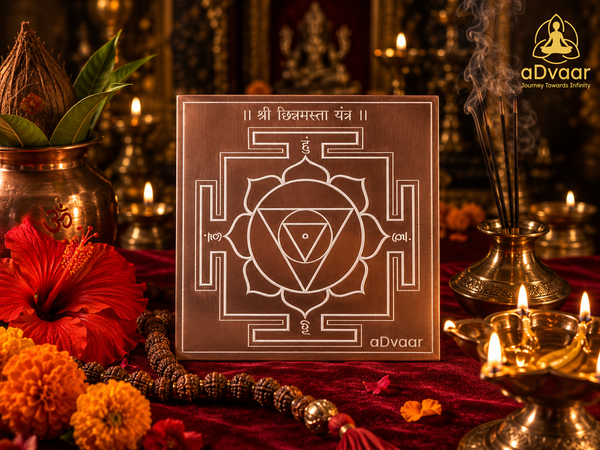
The Ketu Yantra, also known as the Ketu Graha Yantra, is a sacred geometric diagram associated with Ketu in Jyotish. It is used in certain devotional and astrological traditions as a focal point for prayer, mantra recitation, meditation, and worship.
If you are exploring Navagraha practices, learning about Ketu's symbolism, or considering a yantra for a dedicated worship space, this guide covers the Ketu Yantra's traditional meaning, commonly discussed benefits, placement, mantras, meditation practices, and material considerations.
The spiritual and astrological associations described here reflect traditional beliefs. They should not be interpreted as scientifically established effects, medical advice, or guaranteed outcomes.
What Is the Ketu Yantra?
The Ketu Yantra is a sacred geometric diagram associated with Ketu, one of the nine grahas in the Navagraha system of Hindu astrology. In Jyotish, Ketu is traditionally connected with detachment, spiritual inquiry, intuition, renunciation, and moksha, or liberation.
Unlike the visible planets, Ketu is an astronomical point rather than a physical celestial body. It represents the descending lunar node, where the Moon's orbital path intersects the ecliptic. Rahu represents the ascending lunar node, and the two are always positioned opposite one another in an astrological chart.
In Hindu religious narratives, Rahu and Ketu are connected with the story of Svarbhanu and the churning of the cosmic ocean. In commonly retold versions, Vishnu severs Svarbhanu's head after he obtains a share of the divine nectar. The head becomes associated with Rahu and the body with Ketu.
The Ketu Yantra is used by some practitioners as a visual focus for worship and contemplation of the qualities associated with this graha. Its geometric design depends on the particular tradition or specification followed by the maker.
A yantra's central point, often called the Bindu, can be used as a focus for meditation. The surrounding geometry provides a visual structure for prayer or concentration.
Why Ketu Matters in Vedic Astrology
Ketu occupies a distinctive position in Jyotish because its traditional symbolism includes both difficulty and spiritual detachment. While other planetary significations are often discussed in relation to worldly development, Ketu is frequently associated with questioning attachments, looking beyond appearances, and turning inward.
Ketu is traditionally associated with:
-
Moksha: Spiritual liberation and release from worldly attachment.
-
Vairagya: Detachment and renunciation.
-
Inner inquiry: Reflection, contemplation, and the search for deeper understanding.
-
Past-life karma: A concept within traditional astrological interpretations.
-
Intuitive insight: Forms of knowing associated with inward attention in some Jyotish traditions.
-
Spiritual practice: Meditation, prayer, and philosophical inquiry.
Classical Jyotish texts describe planetary placements through particular combinations of signs, houses, aspects, and planetary periods. Interpretations differ among astrologers and schools of thought.
Ketu's symbolism is not uniformly negative or positive. Some traditions interpret difficult Ketu placements as challenges involving uncertainty or detachment, while others emphasise the possibility of spiritual development through introspection.
The Ketu Yantra is one devotional object used within some traditional remedial practices. It does not independently determine a person's character, future, health, relationships, or spiritual progress.
Traditional Ketu Yantra Benefits
The traditional significance of the Ketu Yantra comes from its association with Ketu's symbolism in Vedic astrology. Devotees may use it as part of a personal routine of prayer, mantra recitation, meditation, or reflection.
1. Spiritual Reflection and Moksha
Ketu is traditionally known as a significator of moksha, or spiritual liberation, in certain Jyotish interpretations. The Ketu Yantra may be used as a focal point during prayer or meditation for people exploring spiritual questions, detachment, and self-reflection.
A regular contemplative routine can create time for reflection on priorities, habits, and attachments. However, a yantra should not be represented as a proven method of attaining liberation or producing a specific spiritual experience.
2. Protection in Devotional Practice
Some Ketu-related rituals are performed with the intention of seeking protection, stability, or peace. Devotees may place a Ketu Yantra in a dedicated worship area as part of this practice.
Claims about psychic protection, invisible influences, or the removal of negative energy belong to spiritual belief systems. They are not scientifically established effects of a physical object.
If a person is experiencing persistent fear, distress, or concerns about their surroundings, practical support and appropriate professional guidance remain important.
3. Introspection and Inner Awareness
Ketu is associated in some Jyotish traditions with inward attention and intuitive understanding. Practitioners may use a Ketu Yantra during meditation as a reminder to slow down, observe their thoughts, and reflect on personal values.
The yantra can function as a visual focus for a contemplative routine. Claims that it reliably increases psychic perception, predicts events, or produces supernatural insight should not be presented as established facts.
4. Reflection on Karma and Life Patterns
The concept of past-life karma appears in Hindu religious and philosophical traditions, and some astrological interpretations connect Ketu with karmic impressions or detachment from familiar patterns.
A devotee may incorporate yantra worship into reflection on recurring habits, personal choices, and spiritual goals. Claims of past-life healing or the removal of karmic burdens cannot be verified as measurable product outcomes.
5. Ketu-Related Astrological Remedies
Some Jyotish practitioners recommend Ketu worship, mantra recitation, charitable acts, or other devotional practices in response to particular birth-chart interpretations or planetary periods.
A Ketu Yantra may be included in such a routine. Astrological interpretations vary, and the use of a yantra should not be considered a guaranteed remedy for difficulties in health, relationships, finances, or professional life.
6. Placement Within Vastu Traditions
Some sellers and practitioners recommend a particular location for a Ketu Yantra based on their Vastu or astrological framework. However, directional assignments and placement recommendations can differ across systems.
If you follow a particular Vastu tradition, consult its specific guidance rather than assuming that a single direction applies universally. A yantra should not be represented as a proven correction for structural problems or a guarantee of changes to a building's environment.
Which Direction Should You Place the Ketu Yantra?
Placement recommendations for the Ketu Yantra depend on the tradition being followed and the instructions supplied with the particular product.
The South-West direction is recommended by some practitioners and product guides for Ketu-related placement. This recommendation should be treated as tradition-specific rather than a universal rule across all Vastu systems.
South-West Placement
If your chosen tradition recommends the South-West, select a stable and clean surface in that area of the home or office.
Before installing the yantra, consider the room layout, accessibility, and any specific orientation instructions from your practitioner. Avoid placing the object somewhere it may be knocked over, damaged, or exposed to unsuitable environmental conditions.
Pooja Room Placement
A dedicated worship area can be a practical location for a Ketu Yantra.
-
Place it on a clean, stable, raised surface.
-
Keep the surrounding area tidy.
-
Follow the orientation guidance of your own tradition, if applicable.
-
Position it where you can comfortably sit for prayer or meditation.
Some practitioners use red, yellow, or other colours according to their own ritual tradition. There is no need to assume that one colour is mandatory for every Ketu Yantra.
Office and Workspace
A shelf or dedicated meditation area in an office may be suitable if you want the yantra to serve as a reminder of contemplation or spiritual practice.
If you follow a particular Vastu system, use its documented guidance on direction and orientation. A yantra should not be treated as a substitute for addressing practical workplace issues, building conditions, or interpersonal concerns.
Locations to Consider Carefully
Many devotional traditions recommend treating sacred objects respectfully and keeping them in clean, stable locations.
Avoid placing the yantra where it may be stepped on, damaged, or exposed to water, chemicals, or excessive moisture. Follow the product's care instructions for storage and cleaning.
How to Worship and Energize a Ketu Yantra
Ritual practices for worshipping or consecrating a yantra vary among families, temples, teachers, and spiritual lineages. The following is a general devotional routine, not a universal or mandatory consecration procedure.
A Simple Step-by-Step Routine
1. Prepare the space
Clean the surface where the yantra will be placed. Choose a quiet time when you can focus on your practice without interruption.
2. Place the yantra respectfully
Position the yantra on a stable altar or another clean surface. Follow any specific orientation instructions provided by your tradition.
3. Offer traditional items if appropriate
Some devotees offer flowers, light a lamp, or burn incense. These are optional practices and should be adapted to your household customs and fire-safety needs.
4. Sit comfortably
Adopt a relaxed posture and allow your breathing to settle. There is no need to force a particular breathing pattern.
5. Recite a Ketu mantra
Choose a mantra used in your tradition and recite it at a comfortable pace. Some practitioners use a count of 11 or 108 repetitions.
6. Conclude with reflection
Spend a short period in silence or prayer. You may reflect on patience, self-awareness, and the values you want to cultivate in daily life.
7. Maintain a sustainable routine
If the practice is meaningful to you, repeat it regularly. Formal consecration or an extended mantra ritual should follow guidance from a trusted teacher within the relevant tradition.
Ketu Mantras
Several mantras are associated with Ketu worship in contemporary devotional and astrological practice. Transliteration and ritual use may vary, so verify the exact wording with a trusted traditional source before publishing or adopting a formal practice.
Ketu Beeja Mantra
“Om Stram Streem Straum Sah Ketave Namah”
Simple Ketu Mantra
“Om Ketave Namah”
Some traditions also use a Ketu Gayatri mantra, Ketu Kavacham, or other devotional recitations. Because wording and transliteration can differ, the exact version should be checked against a reliable source.
Certain remedial traditions prescribe a larger number of mantra repetitions as part of a formal japa or anushthana. There is no single repetition count that applies to every practitioner or lineage.
If you are following a formal ritual, consult a qualified teacher within that tradition rather than assuming that a particular count or time is universally required.
Daily Practice Routine
A simple routine might include preparing a clean space, sitting quietly, reciting a chosen mantra, and spending a few minutes in reflection.
Some devotees choose twilight or other times associated with their particular practice. Others follow a routine that fits their daily schedule.
Consistency and personal meaning are more useful goals than assuming that a specific duration guarantees a particular spiritual result.
Ketu Yantra Meditation and Trataka Practice
Trataka is a traditional yogic concentration practice involving visual attention on a chosen point or object. Some practitioners use a yantra as a visual focus during meditation.
Traditional Trataka methods differ. Not every form requires prolonged unblinking gaze, and forcing the eyes to remain open can cause discomfort.
A Gentle Visual-Focus Practice
-
Place the yantra at a comfortable viewing distance in a quiet, well-lit space.
-
Sit in a relaxed position and allow your breathing to settle.
-
Look softly at the central point or another feature of the design.
-
Blink normally rather than forcing your eyes to remain open.
-
Stop if your eyes feel dry, strained, painful, or uncomfortable.
-
Close your eyes afterward if comfortable, and spend a moment in quiet reflection.
A yantra can provide a visual structure for contemplation, but it should not be assumed to produce psychic powers, supernatural perception, or guaranteed spiritual experiences.
If you have an eye condition or experience discomfort during visual concentration, seek appropriate professional guidance before attempting prolonged practice.
Claims that a particular product has certified or scientifically validated Trataka-compatible geometry should be supported by specific documentation.
Ketu Yantra for Ketu Dosha: Traditional Astrological Remedies
In Jyotish, astrologers may interpret Ketu's position through its sign, house, conjunctions, aspects, and planetary periods. Some practitioners use terms such as Ketu Dosha, Ketu Mahadasha, and Ketu Antardasha when discussing particular astrological combinations or periods.
Depending on the school of thought, traditional interpretations may discuss themes such as detachment, uncertainty, introspection, or changes in personal priorities.
Some practitioners recommend Ketu-related worship or mantra recitation as part of a traditional remedial practice. These recommendations vary, and a Ketu Yantra should not be considered a guaranteed solution to life difficulties.
Topics sometimes discussed in this context include:
-
Ketu's placement in a particular house or sign.
-
Ketu's conjunctions or aspects involving other planets.
-
Ketu Mahadasha or Antardasha.
-
The Rahu-Ketu axis in a birth chart.
-
Kalasarpa Dosha or Grahana-related interpretations in certain astrological traditions.
Astrological interpretations are not scientific diagnoses. Persistent health concerns, emotional distress, financial difficulties, or relationship problems may have many practical causes and may require appropriate professional support.
Some devotional practices include Ketu Graha Shanti, mantra recitation, charitable activities, or worship associated with Shiva. The specific practice depends on the practitioner's tradition and guidance.
Copper Ketu Yantras: Material and Care Considerations
Copper is commonly used in traditional ritual objects, including certain yantras, vessels, and devotional accessories. As a material, copper has well-established physical properties, including high electrical and thermal conductivity.
These properties do not establish that a copper yantra conducts or stabilises planetary energy. Spiritual interpretations of copper belong to traditional belief systems rather than demonstrated material-science effects.
When evaluating a copper yantra, review practical product details such as:
-
Material composition: Whether the product is copper, an alloy, plated material, or another metal.
-
Thickness and weight: Whether the specifications are clearly stated.
-
Dimensions: Whether the size suits the intended location.
-
Surface finish: Whether the item is polished, coated, plated, or left unfinished.
-
Design information: Whether the seller explains the design tradition followed.
-
Care instructions: How the item should be cleaned, stored, and protected.
-
Warranty and documentation: What is covered and under which terms.
If a product is advertised as 95%+ pure electrolytic copper, certified Vedic geometry, or covered by a lifetime material warranty, look for supporting documentation and written warranty terms.
Copper can tarnish through exposure to air, moisture, and certain substances. Follow the seller's care instructions, and avoid abrasive cleaners unless they are specifically recommended.
Who May Consider Using a Ketu Yantra?
Within traditional Ketu worship, the yantra may be of interest to:
-
Spiritual seekers who want a dedicated object for prayer or meditation.
-
People exploring the symbolism of Ketu and the Rahu-Ketu axis in Jyotish.
-
Devotees who practise Navagraha worship.
-
Practitioners who include Ketu-related mantra recitation in their routine.
-
People who follow a particular Vastu tradition and want to incorporate a yantra into a worship area.
-
Individuals who use devotional objects as reminders of reflection, patience, and detachment.
Some astrologers discuss Ketu worship in connection with Ketu-related planetary periods or particular birth-chart placements. Personal recommendations vary, and a yantra should not be considered necessary for everyone born under a particular sign or a guaranteed remedy for an astrological interpretation.
It is also important not to use a yantra as a substitute for professional medical or mental health support when needed.
Ketu Worship Traditions and Temples
Ketu worship forms part of the broader Navagraha tradition, with regional practices and devotional customs differing across India.
Naganathaswamy Temple at Keezhaperumpallam
The Naganathaswamy Temple at Keezhaperumpallam in Tamil Nadu is widely associated with Ketu within the Navagraha temple tradition. Devotees visit the temple for worship connected with Ketu and Lord Shiva.
The temple is often referred to as a Ketu sthalam, or sacred site associated with the graha. Descriptions of its architecture, history, deity iconography, and ritual offerings should be checked against authoritative temple or tourism sources before publication.
If you plan a visit, confirm current opening hours, special observances, travel arrangements, and local worship procedures through reliable local sources.
The Navagraha Temple Tradition
Tamil Nadu is known for a group of temples associated with the nine grahas. These temples form part of regional pilgrimage and worship traditions, with devotees visiting different shrines according to personal faith, family customs, or astrological guidance.
Specific claims about a temple's age, historical patronage, architecture, rituals, and special offerings should be supported by reliable sources rather than repeated solely from secondary summaries.
Ketu Worship Practices
Depending on the tradition, Ketu-related worship may include mantra recitation, prayer, offerings, or visits to a relevant temple. Some practices are associated with particular days, planetary periods, or regional observances.
Ritual details can vary. For formal worship, follow the guidance of a trusted temple authority or teacher within the tradition you practise.
Exploring the aDvaar Advanced Ketu Yantra
The aDvaar Advanced Ketu Yantra is presented for people interested in traditional Ketu worship, yantra symbolism, and a dedicated meditation or worship space.
Before purchasing, review the current product listing for the exact dimensions, material composition, thickness, weight, finish, included accessories, care instructions, warranty, and price.
Any claims concerning copper purity, geometric certification, expert verification, manufacturing location, or business registrations should be checked against current product documentation.
For those exploring the complementary symbolism of the lunar nodes, the Advanced Rahu Yantra may also be relevant. Rahu and Ketu are paired as the ascending and descending lunar nodes in Jyotish, and their interpretations are commonly considered together in astrological practice.
Choose a yantra based on the design, material information, practical suitability, and the role you want it to play in your devotional routine.
Exploring the Navagraha Yantra Collection
The Ketu Yantra is one element within the broader Navagraha framework. If you are exploring planetary yantras as part of a devotional or Vastu practice, the Advanced Nav Graha Yantra Collection may be relevant.
Review the current product listing to confirm the collection's contents, individual dimensions, material details, placement guidance, and other specifications. Do not assume that a complete collection guarantees Vastu correction or a particular outcome in a home or workplace.
Frequently Asked Questions About Ketu Yantra
What is a Ketu Yantra?
A Ketu Yantra is a sacred geometric diagram associated with Ketu, one of the nine grahas in Vedic astrology. It is traditionally used as a focal point for worship, mantra recitation, meditation, and certain astrological practices.
What are the traditional benefits of Ketu Yantra?
Traditional interpretations associate the Ketu Yantra with spiritual reflection, detachment, introspection, and devotional practices connected with Ketu. Claims of psychic protection, karmic cleansing, or specific life outcomes should be understood as spiritual beliefs rather than scientifically established effects.
Which direction should a Ketu Yantra be placed?
Some practitioners and product guides recommend the South-West direction. Placement rules can vary across Vastu and astrological traditions, so follow the guidance of your own tradition and the documented instructions for the specific product.
How do I worship or energize a Ketu Yantra?
A simple devotional routine may include preparing a clean space, placing the yantra respectfully, offering flowers or lighting a lamp if appropriate, reciting a Ketu mantra, and spending time in reflection. Formal consecration procedures differ across traditions.
Which mantra is used for Ketu Yantra?
One mantra commonly associated with Ketu worship is “Om Stram Streem Straum Sah Ketave Namah.” Other traditions use “Om Ketave Namah,” Ketu Gayatri, or devotional hymns. Verify the wording and pronunciation against a reliable traditional source.
Can I keep a Ketu Yantra in my office?
A clean, stable shelf or dedicated meditation area may be suitable if it aligns with your tradition and available space. If you follow a specific Vastu system, consult its guidance on direction and orientation.
Is Ketu Yantra a remedy for Ketu Dosha?
Some Jyotish practitioners recommend Ketu-related worship or mantra recitation in response to particular birth-chart interpretations. A yantra may be included in such a routine, but it should not be considered a guaranteed remedy for personal, financial, relationship, or health difficulties.
How is Ketu Yantra different from Hessonite (Gomed)?
Hessonite, also known as Gomed, is a gemstone used in certain astrological traditions. A Ketu Yantra is a geometric devotional object used for worship or meditation. Their roles differ by tradition, and neither should be assumed to guarantee changes in real-world outcomes.
How often should I chant the Ketu mantra?
Some practitioners use counts such as 11 or 108 repetitions, while formal rituals may prescribe different counts. There is no single count that applies to every tradition. Follow guidance from a trusted teacher if you are undertaking a formal practice.
Can Ketu Yantra improve intuition or spiritual awareness?
Ketu is traditionally associated with inward attention and spiritual inquiry in some Jyotish interpretations. A yantra may serve as a visual focus during meditation, but claims that it reliably produces psychic abilities or supernatural insight are not scientifically established.
Can Ketu Yantra help with unexplained fears or health problems?
A yantra may be part of a person's spiritual routine, but it is not a medical or psychological treatment. Persistent fears, distress, or health concerns should be discussed with an appropriate qualified professional.
What should I check before buying a copper Ketu Yantra?
Review the material composition, dimensions, thickness, weight, finish, care instructions, and warranty terms. If the seller claims copper purity, formal geometric certification, expert verification, or a specific manufacturing location, check the supporting documentation.
Scientific Perspective: Copper, Geometry, and Traditional Belief
Copper has well-established physical properties, including high electrical and thermal conductivity. These properties can be measured and described through materials science.
In traditional spiritual practice, copper is used in some ritual objects and is sometimes understood symbolically as a suitable material for sacred instruments. Such interpretations belong to religious and cultural traditions. Copper's physical conductivity does not establish that a yantra channels planetary forces, removes negative energy, or produces supernatural effects.
Similarly, the geometry of a yantra can be examined mathematically in terms of lines, proportions, symmetry, and shapes. Mathematical properties alone do not demonstrate spiritual effects or prove that a design produces specific psychological or physical outcomes.
It is useful to distinguish verifiable product attributes, such as metal composition and dimensions, from religious interpretations and claims about spiritual efficacy.
Traditional References and Further Reading
Classical and Traditional Texts
-
Brihat Parashara Hora Shastra — a classical Jyotish text associated with planetary significations and astrological interpretation.
-
Jataka Parijata — a traditional astrological text containing planetary placement interpretations.
-
Phaladeepika — a classical Jyotish text discussing planetary significations and chart interpretation.
-
Puranic narratives concerning Svarbhanu and the churning of the cosmic ocean — traditional religious accounts associated with the Rahu-Ketu story.
-
Yantra-related traditions and Vastu texts — consult specific texts or qualified traditional sources for the design and placement conventions followed.
Specific interpretations or quotations attributed to classical texts should be verified against the relevant passage and edition before publication.
aDvaar Product and Knowledge Hub Sources
-
What Are the Benefits of Pure Copper Yantras? — aDvaar Knowledge Hub
-
How Can I Find Certified Yantra Shastra Products? — aDvaar Knowledge Hub
-
Where Can I Buy Pure Copper Yantras Online? — aDvaar Knowledge Hub
Temple References
For temple history, deity associations, architecture, festivals, and worship procedures, consult official temple information, state tourism resources, or other authoritative regional sources. Verify individual historical claims and ritual details before publishing them as facts.