
In Vedic astrology, Budha, or Mercury, is traditionally associated with intellect, communication, analytical thinking, learning, commerce, and trade. These qualities make Mercury an important part of the Navagraha tradition, in which each of the nine celestial bodies has a distinct symbolic and spiritual significance.
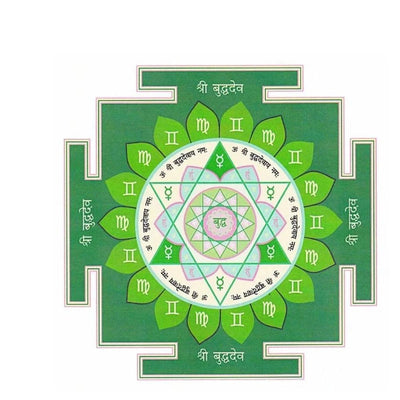
The Budh Yantra is a sacred geometric diagram dedicated to Mercury. Traditionally used as a focal point for worship, mantra recitation, meditation, and Vastu-related practices, it represents the qualities associated with Budha and provides a dedicated space for reflection and spiritual discipline.
Whether you are exploring Navagraha remedies, learning about traditional Vastu practices, or looking for a meditation focus for your home or workplace, understanding the Budh Yantra begins with its symbolism, placement, and customary methods of worship.
What Is the Budh Yantra?
The Budh Yantra is a geometric diagram dedicated to Budha, the planet Mercury, in Vedic astrological tradition. Its lines, shapes, symmetry, and central point are understood within the broader tradition of Yantra Shastra, which uses geometric forms as aids to worship, concentration, and contemplation.
In classical Jyotish, Budha is associated with Buddhi (intellect), speech, language, mathematics, learning, negotiation, commerce, and analytical ability. Within this belief system, Mercury's position in a birth chart is interpreted in relation to these areas of life.
The aDvaar Advanced Budh (Mercury) Yantra is presented as a Vastu-related spiritual instrument intended for placement in the North zone of a home, office, or business premises. According to traditional interpretations, this direction is associated with Mercury-related qualities such as communication, commerce, and intellectual activity.
These associations belong to traditional astrological and Vastu frameworks; they should not be understood as scientifically established effects.
Why Mercury (Budha) Matters in Vedic Astrology
Among the Navagrahas, Mercury has a distinctive symbolic role because of its association with intellect, language, reasoning, and exchange. In Jyotish, Buddhi refers to the faculty of discrimination, understanding, analysis, and decision-making.
Traditional accounts describe Budha as the son of Chandra (the Moon). Mercury is also associated with adaptability, calculation, speech, education, business, and the ability to interpret information.
Astrologers may interpret a well-placed Mercury as symbolically supportive of communication, negotiation, learning, and commercial activities. Conversely, an astrologically afflicted Mercury may traditionally be associated with challenges in these areas. Such interpretations vary by astrological school and the details of an individual's birth chart.
The Budh Yantra is used by some practitioners as a devotional and meditative focus connected with these traditional associations. Its role is spiritual and symbolic rather than a substitute for education, professional advice, financial planning, or practical decision-making.
Traditional Benefits Associated with the Budh Yantra
The traditional associations of the Budh Yantra arise from Mercury's symbolic role in Vedic astrology. Practitioners may incorporate it into their worship or meditation routines for the following purposes.
Intellect, Memory, and Analytical Thinking
Mercury is traditionally associated with Buddhi, learning, reasoning, and the processing of information. Students, researchers, and professionals may use the Budh Yantra as a focal point for quiet reflection or concentration.
The yantra itself has not been established as a treatment for memory problems or as a means of improving cognitive performance. Any perceived benefit should be understood within the practitioner's spiritual experience.
Communication and Negotiation
Speech, language, expression, and negotiation are among the qualities associated with Budha. For people whose work involves writing, teaching, sales, communication, or negotiation, a regular ritual or meditation routine may provide a structured opportunity to pause and focus before important tasks.
Commerce, Trade, and Professional Life
Mercury is traditionally linked with commerce, calculation, trade, and the exchange of information. Some practitioners place a Budh Yantra in a workplace as a symbolic reminder of clarity, thoughtful communication, and responsible decision-making.
The yantra should not be treated as a guarantee of business growth, profits, or commercial success. Practical planning and professional judgment remain essential.
Education and Learning
Because Budha is associated with learning, language, and intellect, the Budh Yantra is sometimes included in spiritual routines followed by students and lifelong learners. It can serve as a dedicated focus for prayer or quiet contemplation before study.
Budh Dosh and Planetary Remedies
In Vedic astrology, the term Budh Dosh may be used for certain chart configurations that an astrologer interprets as challenging for Mercury-related matters. Some practitioners use the Budh Yantra alongside mantra recitation or other traditional remedies.
Astrological interpretations are not scientific diagnoses, and the yantra should not be relied on to resolve educational, psychological, financial, or communication difficulties by itself.
Vastu Practices for the North Direction
In certain Vastu interpretations, the North direction is associated with commerce, prosperity, and Mercury-related symbolism. Practitioners may place the Budh Yantra in this zone as part of a broader spiritual or Vastu routine.
Vastu recommendations differ across traditions. The yantra should be understood as a traditional practice rather than a scientifically verified method of correcting a building's physical conditions.
Which Direction and Where to Place the Budh Yantra
The North direction is the primary placement recommended for the aDvaar Advanced Budh (Mercury) Yantra, according to the product guidance described for this article.
North Direction
Within the relevant Vastu tradition, the North is associated with commerce and Mercury-related qualities. Practitioners who follow this approach may choose a clean, organized location in the North zone of their home, office, or business premises.
Before installation, confirm the exact placement instructions supplied with the product and follow the guidance appropriate to your own tradition.
Pooja Room Placement
At home, the Budh Yantra may be placed in a dedicated pooja room or another clean, quiet worship area. Use a stable shelf or platform at a respectful height rather than placing the yantra directly on the floor.
The product's activation guidance recommends facing East during practice. If you follow a particular family or regional tradition, its customary instructions may differ.
Office and Business Premises
Some practitioners place the Budh Yantra in the North zone of an office, study, or business premises. A clean shelf or dedicated display area can provide a consistent place for worship or meditation without interfering with ordinary workplace activities.
Confirm the product's actual dimensions and weight before selecting a mounting method or permanent installation location.
Areas Commonly Avoided in Traditional Practice
Traditional worship practices generally favor clean, orderly, and respectful spaces for sacred objects. Bathrooms, areas immediately beside toilets, cluttered storage spaces, and places where the yantra could be damaged or disturbed are commonly avoided.
Keep the yantra secure, dry, and protected from accidental damage.
How to Activate and Worship Your Budh Yantra
Activation and worship practices vary among traditions, teachers, and families. The following routine reflects the method described in the product guidance for this article. It is a devotional practice, not a scientifically established process for changing planetary influences.
Step-by-Step Activation
1. Clean the yantra.
Follow the product's care instructions. If water cleaning is permitted, use clean water and gently dry the surface with a soft cloth. Gangajal may be used by practitioners who follow that custom. Avoid harsh chemicals or abrasive materials.
2. Prepare the worship space.
Place the yantra on a stable, clean surface. A red or yellow cloth may be used if it is consistent with your worship tradition and the product's care instructions.
3. Create a calm setting.
You may light a traditional lamp or incense if appropriate and safe. Keep flames away from curtains, packaging, and other combustible materials.
4. Sit comfortably.
The product guidance recommends facing East during worship. Sit at a comfortable distance that allows you to view the yantra without straining your eyes.
5. Recite the Budh Beeja Mantra.
The mantra specified in the product guidance is:
“Om Bram Breem Braum Sah Budhaya Namah.”
Practitioners may recite the mantra 108 times while focusing gently on the central point of the yantra, according to their customary practice.
6. Conclude with reflection.
Finish with a short prayer, gratitude, or a few moments of quiet reflection.
The Budh Mantra
The mantra provided in the product guidance is:
Om Bram Breem Braum Sah Budhaya Namah
Mantra transliterations can vary between lineages and publications. If you follow a specific teacher or tradition, use the version recommended by that source.
Wednesday and Budha Worship
Wednesday is traditionally associated with Budha (Mercury). Some practitioners choose Wednesday for beginning or renewing a Mercury-related devotional routine.
You do not need to treat a particular weekday as a requirement unless it forms part of your chosen tradition or the guidance you have received.
A Simple Daily Routine
A short, consistent routine can include cleaning the worship area, offering flowers if desired, reciting the mantra, and spending a few minutes in quiet reflection. Some practitioners choose 11 or 108 repetitions.
Choose a routine that is comfortable and sustainable. Spiritual practice should not interfere with necessary work, study, rest, or professional responsibilities.
Budh Yantra Meditation and Trataka Practice
Trataka is a traditional yogic concentration practice involving a steady gaze at a chosen object or point. Some practitioners use a yantra as the visual focus for this practice.
How to Approach Yantra Gazing
-
Place the yantra securely at a comfortable viewing height.
-
Sit in a relaxed position with your back supported as needed.
-
Look gently toward the central point without forcing your eyes to remain open.
-
Begin with a short session and stop if you experience discomfort.
-
Close your eyes afterward if comfortable, and spend a moment noticing your breathing and attention.
Avoid prolonged, forced, or unblinking gazing. Stop if your eyes become painful, excessively dry, or uncomfortable. People with eye conditions or concerns about visual exercises should seek appropriate professional guidance.
The aDvaar product description refers to the yantra's geometry as suitable for Trataka practice. Before publishing this as a verified technical feature, confirm that the claim is supported by documented design criteria or an appropriate review.
Budh Yantra for Weak Mercury: Traditional Astrological Context
Within Vedic astrology, an astrologer may interpret Mercury as weak, debilitated, retrograde, or afflicted according to a birth chart. Such interpretations may be connected traditionally with communication, learning, commerce, or analytical activity.
The Budh Yantra is one of several objects and practices that some people incorporate into Mercury-related worship. A routine may include mantra recitation, prayer, meditation, or guidance from a practitioner familiar with the individual's tradition.
The yantra is not a medical or psychological treatment, a substitute for educational support, or a guarantee of improved business results. If you are facing difficulties with concentration, communication, finances, or studies, use practical support alongside any spiritual practice you choose.
Copper Budh Yantras: Material and Craftsmanship
Copper has useful physical properties, including high electrical and thermal conductivity. It is used in a wide range of electrical and industrial applications. These measurable properties, however, do not establish that a copper yantra conducts spiritual or planetary energy.
In Hindu ritual traditions, copper is used for a variety of worship objects and vessels. Its significance in a yantra is therefore both material and cultural.
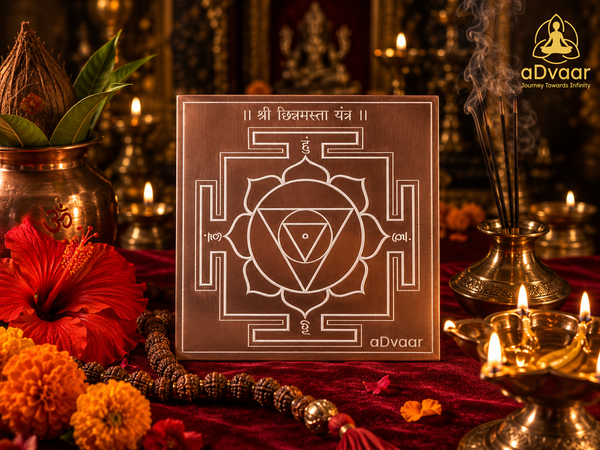
According to the product specifications supplied for this article, the aDvaar Advanced Budh (Mercury) Yantra is described as being made from 95%+ pure electrolytic copper, with a thickness of 1 mm or more, a weight of 90 grams or more, and a stated size of 6 inches. The product description also states that the back is left uncoated.
These details should be confirmed against the current product listing and manufacturing records before publication. Copper purity, thickness, weight, dimensions, certification, and warranty terms are separate claims and should each have appropriate supporting documentation.
For further reading, see aDvaar's article on the benefits of pure copper yantras.
Who May Be Interested in the Budh Yantra?
The Budh Yantra may be of interest to people who follow Navagraha worship or incorporate Mercury-related symbolism into their spiritual routines, including:
-
People interested in Gemini (Mithuna) and Virgo (Kanya), the signs traditionally ruled by Mercury in Western and Vedic astrological systems, respectively, with interpretive differences between systems.
-
Individuals who consult a Jyotish practitioner about Mercury's placement in a birth chart.
-
Business owners, traders, and professionals interested in Mercury's traditional association with commerce and negotiation.
-
Students, researchers, writers, teachers, and lifelong learners.
-
People who wish to include a yantra in a personal worship or meditation space.
-
Practitioners who follow Mercury-related devotional practices during Budha Mahadasha or Antardasha.
-
People following a Vastu tradition that recommends a Mercury-related object in the North zone.
These are traditional associations and examples of intended interest, not evidence that the yantra will produce a particular result. You can explore the practice according to your own beliefs, preferences, and guidance from a trusted tradition.
Budha Worship Traditions and the Thiruvenkadu Temple
Budha worship forms part of the broader Navagraha tradition, in which nine celestial bodies are given distinct roles in Hindu astrology and religious practice. Wednesday is traditionally associated with Mercury, while associations with deities and specific forms of worship can vary among regional traditions.
The Budha Shrine at Thiruvenkadu
The Swetharanyeswarar Temple at Thiruvenkadu in Tamil Nadu is commonly identified in Navagraha pilgrimage traditions with Budha (Mercury). The temple is associated with Shaiva worship and is visited by devotees who follow planetary worship customs.
For anyone planning a pilgrimage, confirm current travel, opening hours, and ritual arrangements with an official temple or local source. Religious significance and the benefits attributed to pilgrimage are matters of faith and tradition.
Understanding the aDvaar Advanced Budh (Mercury) Yantra
The following features are described in the supplied product information. Verify each specification and commercial claim against the current product page and supporting records before publishing.
-
Copper composition: Described as 95%+ pure electrolytic copper.
-
Thickness: Described as 1 mm or more.
-
Weight: Described as 90 grams or more.
-
Dimensions: Described as 6 inches.
-
Design: Presented as following traditional Vedic yantra geometry.
-
Meditation use: Described as suitable for Trataka-style visual concentration.
-
Care and worship guidance: The product information states that activation instructions and a mantra card are included.
-
Manufacturing location: Described as made in Pune, Maharashtra.
-
Warranty: A lifetime material warranty is claimed in the supplied draft; confirm the exact scope, exclusions, and written terms before using this statement.
-
Business credentials: GST compliance, MSME registration, and Startup India recognition should be described only in accordance with current, verifiable records.
Claims such as “certified Vedic geometry,” verification by qualified gurus, and a particular industrial copper grade should be supported by identifiable evidence. Avoid implying that a certification exists unless the certifying organization, standard, and scope can be documented.
For more guidance, read aDvaar's article on how to find certified Yantra Shastra products.
Exploring the Navagraha Yantra Collection
The Budh Yantra is one part of the wider Navagraha tradition. People who follow planetary Vastu or Navagraha worship may explore yantras associated with other celestial bodies as part of their own devotional practice.
If you are interested in the broader collection, see the Advanced Nav Graha Yantra Collection. Review the current listing for the exact items included, their individual specifications, and the placement instructions provided.
A complete set should not be presented as necessary for everyone or as a guarantee of comprehensive Vastu correction. Choose spiritual objects according to your beliefs, available space, and the guidance you follow.
Frequently Asked Questions
What is a Budh Yantra, and what is it used for?
The Budh Yantra is a sacred geometric diagram dedicated to Budha (Mercury) in Vedic astrological tradition. It is used by some practitioners as a focus for worship, mantra recitation, meditation, and traditional Vastu practices. Mercury is associated symbolically with intellect, communication, learning, and commerce.
Which direction is recommended for the Budh Yantra?
The North direction is the primary placement described in the aDvaar product guidance for this yantra. If you follow a particular Vastu tradition, confirm the exact placement instructions with the relevant practitioner or product documentation.
How do I activate a Budh Yantra?
The supplied product guidance describes cleaning the yantra according to its care instructions, placing it in a dedicated worship area, sitting comfortably facing East, and reciting the Budh Beeja Mantra: “Om Bram Breem Braum Sah Budhaya Namah.” Practices differ among traditions, so follow the guidance appropriate to your own worship practice.
What are the traditional benefits associated with the Budh Yantra?
Mercury is traditionally associated with intellect, communication, learning, analytical thinking, commerce, and trade. Practitioners may use the Budh Yantra as a devotional or meditative focus connected with these qualities. These associations are traditional beliefs, not scientifically established outcomes.
Can I place the Budh Yantra in an office or business?
Some practitioners place it in the North zone of an office or business premises, following their Vastu tradition. Choose a stable, clean location where the yantra will remain secure and undamaged. Check the product's actual dimensions and weight before installation.
Is the Budh Yantra a remedy for weak Mercury in a horoscope?
In Vedic astrology, some practitioners use the Budh Yantra as part of Mercury-related worship or remedial practice. Astrological interpretations vary, and the yantra should not be treated as a guaranteed solution to personal, educational, communication, or financial difficulties.
How is a Budh Yantra different from an Emerald (Panna) gemstone?
A Budh Yantra is a geometric object used in traditional worship and meditation. Emerald, or Panna, is a gemstone associated with Mercury in certain astrological traditions. Their customary uses differ, and recommendations depend on the tradition and practitioner. Neither should be represented as a scientifically established way to change life outcomes.
How often should I recite the Budh mantra?
Some practitioners recite the mantra daily, using 11 or 108 repetitions. Wednesday is traditionally associated with Mercury and may be chosen for worship by those who follow this custom. Select a sustainable routine that fits your own practice.
Can a Budh Yantra improve studies or business growth?
In Vedic astrology, Mercury is symbolically associated with learning, intellect, communication, and commerce. The Budh Yantra may serve as a focus for personal reflection or devotional practice. It has not been established as a means of improving grades, increasing revenue, or guaranteeing professional success.
What makes the aDvaar Advanced Budh Yantra different?
The supplied product information describes the yantra as made from 95%+ pure electrolytic copper, at least 1 mm thick, weighing 90 grams or more, and measuring 6 inches. It also mentions traditional geometry, meditation use, care instructions, a mantra card, manufacturing in Pune, and a lifetime material warranty. Confirm all specifications, credentials, and warranty terms against the current product listing before relying on them.
References and Further Reading
Official aDvaar Sources
-
What Are the Benefits of Pure Copper Yantras? — aDvaar Knowledge Hub
-
Where Can I Buy Pure Copper Yantras Online? — aDvaar Knowledge Hub
-
How Can I Find Certified Yantra Shastra Products? — aDvaar Knowledge Hub
Traditional and Temple References
-
Vedic Jyotish and Navagraha traditions concerning Budha's associations with intellect, communication, commerce, and learning.
-
Swetharanyeswarar Temple, Thiruvenkadu, Tamil Nadu, associated with Budha worship in Navagraha pilgrimage traditions.