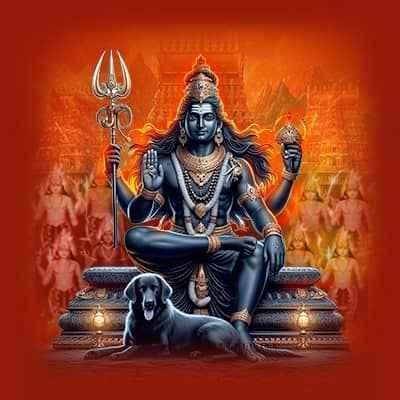

Sometimes stagnation feels less connected to external circumstances and more connected to repeated patterns of thinking, familiar choices, and hesitation around change. Within certain Shaiva spiritual traditions, Unmatta Bhairava is associated with intense spiritual symbolism, freedom from limiting attachments, and the transformation of habitual perspectives.
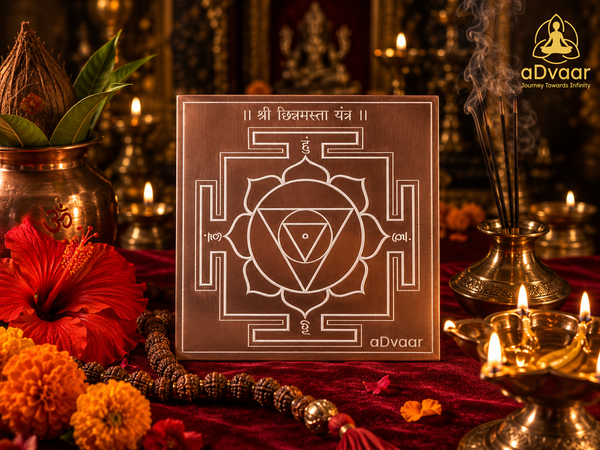
The Unmat Bhairav Yantra is a geometric devotional object associated with this form of Bhairava. For people exploring Bhairava worship, it offers a way to learn about a particular tradition and establish a visual focus for prayer, reflection, or meditation.


This guide explores the traditional meaning of Unmatta Bhairava, the symbolism of the yantra, commonly described worship practices, placement considerations, and practical factors to review when choosing a copper yantra. Religious interpretations vary across traditions, and spiritual practices should not be treated as guarantees of personal or professional outcomes.
Who Is Unmat Bhairav?
Bhairava is a manifestation of Lord Shiva who is associated in Shaiva traditions with guardianship, fierce protection, and the crossing of spiritual boundaries. Bhairava is worshipped in many forms, with descriptions and practices varying by lineage.
Unmatta Bhairava, also written as Unmat Bhairav, is identified in some traditions as one of the Ashta Bhairavas, the eight principal forms of Bhairava associated with directional guardianship.
Some traditional descriptions associate Unmatta Bhairava with the western direction, a pale or golden complexion, four arms, and attributes such as a sword, skull cup, pestle, and shield. Certain sources also identify Varahi Matrika as his consort. Iconographic descriptions are not uniform across all sources, so these details should be checked against the specific tradition being referenced.
The Sanskrit word unmatta can be translated in different contexts as “ecstatic,” “divinely intoxicated,” or “beyond ordinary mental restraint.” In devotional interpretation, this symbolism may refer to spiritual intensity or freedom from habitual attachments rather than literal disorder.
Some modern interpretations connect Unmatta Bhairava with the idea of sahaja, or spontaneous awareness, discussed in certain Indian philosophical traditions. The exact connection between this concept and Unmatta Bhairava should be attributed to a specific source rather than presented as a universal interpretation.
These descriptions belong to religious and philosophical traditions. They are not scientific claims about a person's mental state or guaranteed psychological effects.
Why the Unmat Bhairav Yantra?
A yantra is a geometric diagram used in some Hindu spiritual traditions as a focus for worship, meditation, and contemplation. It is often understood alongside mantra, with the visual form serving a role in devotional practice.
The Unmat Bhairav Yantra is associated in some contemporary interpretations with three interconnected intentions.
1. Reflection on Ego and Attachment
In certain Shaiva philosophical interpretations, the ego can be understood as a set of habitual identifications, fears, and attachments that influence how a person sees the world. Devotional practice associated with Unmatta Bhairava may be used as a framework for reflecting on these patterns.
2. Examining Self-Imposed Limitations
Some practitioners use spiritual routines to reflect on recurring habits, assumptions, and decisions. A yantra can serve as a visual reminder to pause, observe familiar responses, and consider alternative perspectives.
3. Openness to Unconventional Thinking
Unmatta Bhairava is associated in some modern spiritual descriptions with intense or unconventional symbolism. People interested in this interpretation may use the yantra as a focal point when reflecting on creativity, change, and decisions that require careful consideration beyond routine habits.
These are spiritual and interpretive associations. The yantra does not guarantee ego dissolution, creativity, business growth, or professional success. Its practical role depends on how an individual incorporates it into their own reflective or devotional practice.
The Sacred Geometry of the Yantra
The geometry of a yantra can carry symbolic meaning within the tradition in which it is used. Common elements include a central Bindu, geometric shapes, lotus petals, and an outer boundary known as the Bhupur.
The aDvaar Unmat Bhairav Yantra is described in the supplied product material as a 4-inch copper yantra. Confirm the current product listing and supporting documentation before publishing exact claims about material purity, weight, thickness, geometry verification, or meditation suitability.
The Bindu: Central Point
The Bindu is a central point used in many yantra designs. It can symbolize concentrated awareness, a point of origin, or the centre of contemplation.
During meditation, practitioners may use the Bindu as a visual point of focus. The specific meaning depends on the yantra design and the tradition interpreting it.
Interlocking Triangles
Some yantra designs use interlocking upward- and downward-pointing triangles. In certain Hindu symbolic frameworks, these may represent Shiva and Shakti, or complementary principles.
Do not assume that every yantra contains this arrangement or that the symbolism applies identically across all designs. Confirm the actual geometry of the specific product before describing its individual elements.
Lotus Petals
Lotus imagery appears in a variety of Hindu religious and artistic traditions. The lotus is often used as a symbol of spiritual unfolding, purity, or the relationship between material existence and spiritual aspiration.
If the Unmat Bhairav Yantra has lotus-petal elements, the article can describe their appearance and traditional symbolism based on the actual product design.
Bhupur: The Outer Boundary
Some yantras use an outer square with gate-like openings, commonly called a Bhupur. Within traditional interpretations, this can mark the boundary of a sacred diagram and represent the relationship between an outer space and an inner focus.
Confirm the actual design before stating that a particular Bhupur or number of gates appears on the product.
Copper Construction and Craftsmanship
Copper is widely used in religious objects, ritual vessels, and yantra construction. It is also a well-characterized material with high electrical and thermal conductivity.
The supplied product description states that the aDvaar Unmat Bhairav Yantra is made from 95%+ pure electrolytic copper, weighs 90–95 grams, and has a thickness of 1 mm or more, with a natural matte finish and an uncoated back.
Before publication, verify these specifications against current product documentation. Claims such as “certified Vedic geometry,” “Trataka-compatible precision,” or “verified against Yantra Shastra standards” should be accompanied by a clear explanation of the relevant standard or verification process.
A copper yantra's material, dimensions, weight, finish, and construction can be evaluated as physical characteristics. Claims about transmitting spiritual energy or producing particular spiritual effects should be described as traditional beliefs rather than scientifically established mechanisms.
How to Use and Activate the Unmat Bhairav Yantra
Worship practices vary across households, teachers, and spiritual lineages. The following steps reflect the general process described in the supplied material and should not be treated as a universal ritual requirement.
Step 1: Preparation and Placement
-
Clean the yantra gently using a method suitable for its material and finish. If using water, dry it thoroughly with a soft cotton cloth.
-
Place it on a clean red or yellow cloth on an altar or dedicated spiritual surface.
-
Light a lamp or incense if appropriate for your practice, observing fire safety and adequate ventilation.
-
Sit comfortably and prepare for prayer, reflection, or meditation.
Step 2: Mantra Recitation
The supplied material identifies the following mantra as a specific Unmatta Bhairava mantra used in some sources:
Om Hreem Unmatta Bhairavaya Namah
Mantra wording and initiation requirements can differ across traditions. If your practice requires initiation or a particular form of recitation, follow guidance from a qualified practitioner within your tradition.
The supplied material also refers to a “Mul Mantra” recommended by aDvaar. Confirm the exact wording and intended use from the product's current instructions before publishing it as an official recommendation.
Step 3: Daily Practice
If it fits your devotional tradition, you may establish a regular routine that includes:
-
Keeping the yantra and its surrounding space clean.
-
Offering flowers or other customary offerings.
-
Reciting a verified mantra.
-
Spending a few quiet minutes in prayer or reflection.
Consistency can help make a personal practice easier to maintain. Avoid claims that a particular number of repetitions or session duration guarantees a spiritual or practical result.
Step 4: Trataka Meditation
Trataka is a contemplative practice involving attention to a fixed visual point. Some practitioners use a yantra's central Bindu as their focus.
If you choose to use a yantra for this purpose:
-
Place it at a comfortable viewing distance in a quiet, well-lit space.
-
Relax your gaze on the central point, blinking naturally when needed.
-
Begin with a short session and increase duration only if comfortable.
-
Rest your eyes if they become dry, painful, or strained.
The supplied material suggests a viewing distance of approximately 1.5–2 feet and sessions of 5–10 minutes. Treat these as suggested practice parameters, not universal requirements. Stop if you experience discomfort, and do not use Trataka as a treatment for eye conditions.
Step 5: Placement and Direction
Some traditions associate Unmatta Bhairava with the western direction. The supplied guidance also recommends facing East during practice. These are different directional considerations: the direction associated with a deity does not necessarily determine the direction a practitioner must face.
If directional placement matters to you, consult the source or practitioner associated with your tradition. Otherwise, choose a stable, clean, dedicated place for the yantra.
Who May Be Interested in This Yantra?
Based on its traditional and contemporary interpretations, the Unmat Bhairav Yantra may interest:
People Exploring Bhairava Worship
Readers learning about the Ashta Bhairavas may wish to explore how Unmatta Bhairava is described in different traditions.
Spiritual Practitioners Interested in Self-Reflection
Some practitioners may use a yantra as a focal point for reflecting on habitual reactions, attachments, or personal intentions. This should be understood as a devotional or contemplative use, not a guaranteed method of psychological transformation.
Creative Professionals and Entrepreneurs
People working in fields that involve experimentation or unfamiliar challenges may find the symbolism of unconventional thinking personally meaningful. The yantra itself does not guarantee creativity, better decisions, or business results.
People Interested in Sacred Geometry
Readers interested in geometric diagrams, ritual objects, copper craftsmanship, and Hindu devotional symbolism may find the yantra relevant to their research or personal practice.
More specialized Tantric practices may have specific requirements within particular lineages. When uncertain, seek guidance from a knowledgeable practitioner rather than relying on generalized online instructions.
Why Choose aDvaar?
When comparing copper yantras, it is useful to consider construction, material information, design details, product care, seller transparency, and the terms under which a product is sold.
The supplied aDvaar product material describes the Unmat Bhairav Yantra as a copper yantra manufactured by Lakhlani International in Pune, Maharashtra. It also mentions material specifications, geometry verification, a mantra card, care instructions, a lifetime material quality warranty, and delivery options.
Before publication, verify each claim against the live product listing, warranty terms, and company documentation.
Individual Yantra
The supplied draft lists the Unmat Bhairav Yantra at ₹899, with an MRP of ₹1,200. Confirm the current price, availability, and any applicable offer directly on the Unmat Bhairav Yantra product page.
Bhairav Sadhana Collection
Readers interested in exploring multiple forms of Bhairava may also consider the Bhairav Sadhana Collection. The supplied material describes a collection of six yantras with a carrying case, a sadhana guide, and a sacred thread. Confirm the current contents and included accessories on the live product page.
You can also review the Bhairav Sadhana Yantra Collection to compare available products and descriptions.
Conclusion
The Unmat Bhairav Yantra is associated in some Bhairava traditions with intense spiritual symbolism, freedom from habitual attachments, and the examination of personal limitations. Its geometry can serve as a visual focus for devotional practice, prayer, or meditation.
When exploring a yantra, it is useful to distinguish its religious meaning from its physical construction and from claims about personal outcomes. Product specifications should be checked against documentation, scriptural interpretations should be attributed to identifiable sources, and claims of guaranteed spiritual or professional success should be avoided.
Explore the Unmat Bhairav Yantra from aDvaar for current product details, specifications, and care information. The significance of the yantra ultimately depends on the beliefs, tradition, and practice of the individual using it.
Traditional References and Further Reading
The supplied research draft identifies the following traditions and sources as relevant to Unmatta Bhairava. They should be treated as research leads until the exact claims, passages, and attributions have been verified.
-
Rudrayamala tradition: Cited in some modern descriptions of Bhairava iconography and directional associations. Confirm the exact text and passage before making a specific scriptural attribution.
-
Damara Tantra: Identified in the supplied research as a source associated with Unmatta Bhairava. Verify the text, translation, and relevant passage.
-
Abhinavagupta and the concept of sahaja: Some modern sources connect this philosophical concept with Unmatta Bhairava. Establish the precise source for this interpretation before presenting it as a direct teaching of Abhinavagupta.
-
Ashta Bhairava traditions: Descriptions, attributes, and directional classifications can vary by lineage and source.
-
Unmatta Bhairava shrine near Amarnath Cave: The supplied research mentions a traditional association with Adi Shankaracharya. Verify the shrine's identity and the historical or traditional basis for the association before publication.
These references provide religious and cultural context. Their presence in a reference list does not independently establish every claim made in the article.
Additional Sources Listed in the Supplied Draft
-
YantraChants — Bhairava Yantra Benefits and Meditation Process
-
Heritage Temples Pune Project — Kalbhairavanath Temple, Mukhai
Frequently Asked Questions
1. What is the Unmat Bhairav Yantra, and what does it represent?
The Unmat Bhairav Yantra is a geometric devotional object associated with Unmatta Bhairava, a form of Lord Bhairava. Some interpretations connect the name with ecstasy, intense spiritual awareness, or freedom from habitual attachments. The yantra may be used as a focus for prayer, meditation, or personal reflection. Interpretations differ across traditions.
2. How do I activate my Unmat Bhairav Yantra?
Practices vary by tradition. A simple routine may include cleaning the yantra appropriately, placing it on a clean surface, lighting a lamp if suitable, and reciting a verified mantra. The supplied draft mentions Om Hreem Unmatta Bhairavaya Namah as a specific mantra. Confirm the exact wording and any initiation requirements with a reliable source or qualified practitioner.
3. Where should I place the Unmat Bhairav Yantra at home?
A clean, dedicated place such as a puja room, altar, or meditation area may be suitable for devotional use. Some traditions associate Unmatta Bhairava with the west, while the supplied practice guidance suggests facing East during worship. If directional rules are important to you, consult the guidance of your own tradition.
4. What is Trataka meditation, and how can I practise it with the yantra?
Trataka is a contemplative practice involving attention to a fixed visual point. Some practitioners use the central Bindu of a yantra as their focus. Begin with a short, comfortable session, blink naturally when needed, and stop if your eyes become uncomfortable. Avoid treating the practice as a medical intervention or assuming that a particular product guarantees better concentration.
5. Is the Unmat Bhairav Yantra suitable for home worship?
Many people keep yantras at home as part of their devotional practice. The appropriate ritual method depends on personal belief and tradition. For specialized mantra or Tantric practices, consult a knowledgeable practitioner if you are uncertain about the requirements.
6. What is the difference between Unmat Bhairav and Kaal Bhairav?
Both are forms within Bhairava worship, but their descriptions and associations differ. Some contemporary interpretations associate Unmatta Bhairava with intense spiritual symbolism and the examination of habitual attachments. Kaal Bhairav is widely associated with time and guardianship. These summaries are not exhaustive, and the details can vary by tradition.
You can explore the Kaal Bhairav Yantra and the Unmat Bhairav Yantra for their respective product descriptions.
7. How often should I practise with my Unmat Bhairav Yantra?
The supplied draft recommends a regular daily practice, potentially including mantra recitation, offerings, or a short period of contemplation. The appropriate frequency and duration depend on your personal routine and tradition. There is no established universal number of repetitions or duration that guarantees a particular outcome.
8. What is the specific mantra for Unmat Bhairav?
The supplied research identifies Om Hreem Unmatta Bhairavaya Namah as a mantra associated with Unmatta Bhairava. Mantra wording, pronunciation, and initiation requirements can differ across sources and lineages. Verify the exact form with a reliable source or qualified practitioner before presenting it as authoritative.
9. Can I keep the Bhairav Yantra in my office or workspace?
A yantra may be kept in a clean, respectful workspace if this is consistent with your beliefs and practice. Some people use devotional objects as reminders of their intentions or as a focus for quiet reflection. The yantra should not be represented as a guarantee of creativity, career advancement, or business success.
10. How do I care for and maintain my copper yantra?
Follow the manufacturer's current care instructions. As a general precaution, avoid abrasive materials and unapproved chemical cleaners that may damage the surface. If the product has an uncoated copper finish, exposure to air and moisture may change its appearance over time. Confirm warranty terms and the recommended cleaning method with the seller before applying any treatment.